FAISALABAD: Pakistan Textile Exporters Association (PTEA) Patron-in-Chief Khurram Mukhtar has urged the government to introduce bold structural reforms in the upcoming Budget 2026-27 to unlock the true potential of Pakistan’s textile sector and enhance export competitiveness.
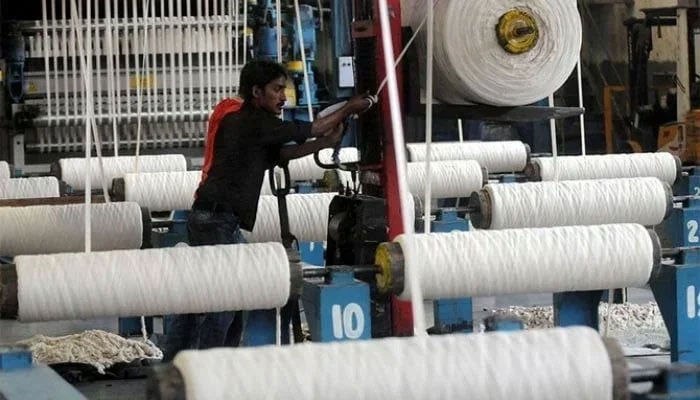
He said textile exports are expected to close at around $18 to $18.2 billion this year, adding that with the right policy environment, the country had the potential to reach $23 billion. “This gap reflects a missed opportunity that must now be addressed with urgency,” he remarked.
Khurram Mukhtar stressed that the budget must go beyond incremental measures and focus on improving cost competitiveness. He called for aligning energy tariffs with regional benchmarks based on cost of service, eliminating cross-subsidies on industry, and removing peak-hour restrictions for industrial consumers. He also demanded abolition of the grid transition levy on gas, stating that combined heat and power (CHP) remains one of the most efficient energy solutions for industry.
Highlighting taxation challenges, he proposed shifting exporters to a Final Tax Regime (FTR) to ensure simplicity and predictability. He also called for eliminating super tax, minimum tax, and advance tax, terming them multiple layers that increase the cost of doing business. He stressed the need for fast and automated refunds to ease liquidity constraints and reduce the cascading impact of unrecovered taxes and levies.
On export facilitation, he urged the restoration of the Export Facilitation Scheme (EFS) in its true spirit for both local and imported inputs, along with zero-rating of utilities under EFS to eliminate embedded energy costs. He further proposed targeted Duty Drawback of Taxes and Levies (DLTL) of around 5 per cent for value-added segments to offset additional costs.
Mukhtar also underscored the importance of strengthening the cotton value chain by increasing cultivation area, revamping testing labs, and ensuring standardisation and traceability. He highlighted the need to address a 22-24 per cent tax arbitrage that encourages informality and called for incentivising digital transactions to create a level playing field.
Referring to social cost pressures, he proposed freezing EOBI contributions for two years and later reducing them to 3 per cent for sustainability. He also urged provincial governments to exempt export-oriented sectors from Workers Welfare Fund (WWF) and Workers Profit Participation Fund (WPPF) to reduce the cost burden.
He recommended aligning the definition of SMEs to a uniform threshold of Rs2 billion turnover to ensure consistent policy application and improve access to financing and incentives. Stressing policy stability, he called for a 3- to 5-year export policy framework linked with incremental export growth targets.
Khurram Mukhtar further stressed the need to expand financing facilities, including Export Refinance Facility (ERF) and Long-Term Financing Facility (LTFF), at competitive rates. “With a supportive financing framework, Pakistan can unlock idle capacity, accelerate investment, and create up to one million new jobs in the textile and apparel sector,” he said. He added that while government support is essential, the private sector must also focus on improving efficiency, adopting modern technologies, and promoting innovation across the value chain. He noted that while value-added textile exports have shown resilience, significant untapped potential exists in technical textiles and apparel. “With the right balance of policy support and industry transformation, Pakistan can realistically achieve $30 billion in textile exports in the coming years,” he concluded.