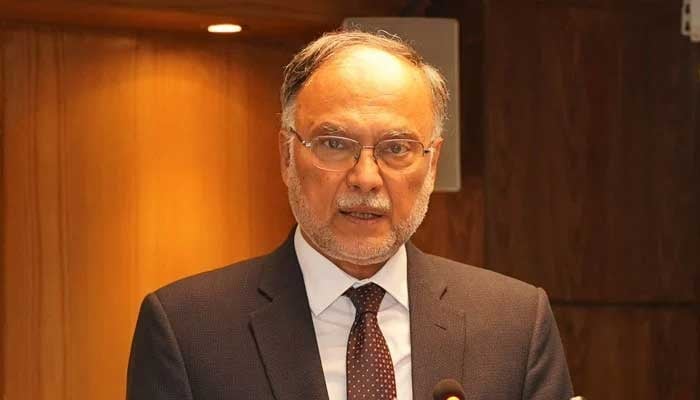
ISLAMABAD: Federal Minister for Planning, Development and Special Initiatives, Ahsan Iqbal, on Monday said Pakistan’s economy had demonstrated remarkable stabilisation during the first eight months of the current fiscal year despite challenging global conditions, with inflation easing and growth gaining momentum.
Addressing media representatives virtually at the launch of the Ministry’s Monthly Development Report, the minister highlighted key macroeconomic indicators, development, and progress and policy responses to emerging global challenges.
The briefing was attended by Secretary Planning Awais Manzur Sumra, Chief Economist Dr Imtiaz Ahmad and senior officials.
The minister said inflation declined to 5.5 percent while average inflation stood at 5.7 percent during July–March FY2025-26, compared to 5.3 percent last year, adding that economic growth improved to 3.8 percent in the first half against 1.9 percent in the corresponding period.
He said large-scale manufacturing posted a strong recovery of 5.9 percent during July–February, compared to contraction last year, reflecting broad-based industrial improvement across 15 out of 22 sectors.
Referring to global developments, Ahsan Iqbal said the ongoing Middle East conflict had emerged as a major external shock, impacting global growth and inflation.
He said the International Monetary Fund had revised global growth projections downward to 3.1 percent for 2026 from 3.3 percent, while global inflation was projected to rise to 4.4 percent.
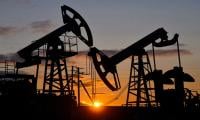
He said the conflict posed risks to Pakistan through higher oil prices, increased import bills and pressure on the external sector. Pakistan, being heavily dependent on imported oil (around 70–80 percent), remained vulnerable to disruptions in global energy markets and shipping routes, particularly through the Strait of Hormuz.
The minister said domestic inflationary pressures also increased, with March inflation rising to 7.3 percent compared to 0.7 percent a year ago, mainly driven by higher energy and transport costs linked to global oil price shocks, while food inflation remained relatively contained.
Highlighting government measures, he said a balanced approach was adopted to manage energy price volatility. The government partially passed on Rs55 per litre increase in petroleum prices while absorbing a fiscal cost of around Rs129 billion to shield consumers. Subsequent increases in global prices led to further adjustments, followed by relief measures including reduction in petroleum levy and cuts in fuel prices in April 2026.
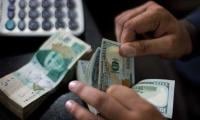
On the external front, he said remittances remained strong at $30.3 billion, showing an 8.2 percent increase, while exports of goods and services stood at $30.6 billion during July–March FY2026. Services exports grew by 17 percent to $7.3 billion, reducing the services deficit by 7 percent.
Imports rose to $56.3 billion, widening the trade deficit, though improved remittances and services exports provided support to the external account. The current account posted a surplus of $1.07 billion in March, while the cumulative surplus for July–March remained marginal at $8 million compared to $1.67 billion last year.
On fiscal performance, the minister said Federal Board of Revenue collections reached Rs9.3 trillion during July–March, reflecting a 10.1 percent increase due to improved enforcement and administrative measures.
Highlighting development spending, he said PSDP utilisation reached about Rs415 billion, representing around 41–42 percent of allocations, higher than last year’s level, indicating increased development activity.
He said the Central Development Working Party (CDWP) considered 16 agenda items in March, approving 10 and recommending six to ECNEC. These projects are expected to generate around 2,550 direct and 7,621 indirect jobs over the medium term.
The minister said cost rationalisation efforts resulted in savings of Rs10.5 billion during July–February FY2025-26, reflecting improved efficiency in public investment.
Ahsan Iqbal also highlighted key initiatives including the Jinnah Medical Complex & Research Center, Pakistan–China cooperation in artificial intelligence and human capital development, and ongoing international engagements with development partners including the Islamic Development Bank and Türkiye.
He said Pakistan’s proactive diplomatic engagement in the Middle East had contributed to easing geopolitical tensions, helping stabilise global oil markets.
The minister said that despite global uncertainty, Pakistan was moving towards sustained economic stabilisation through disciplined reforms, prudent fiscal management and continued development efforts aimed at long-term growth and prosperity.