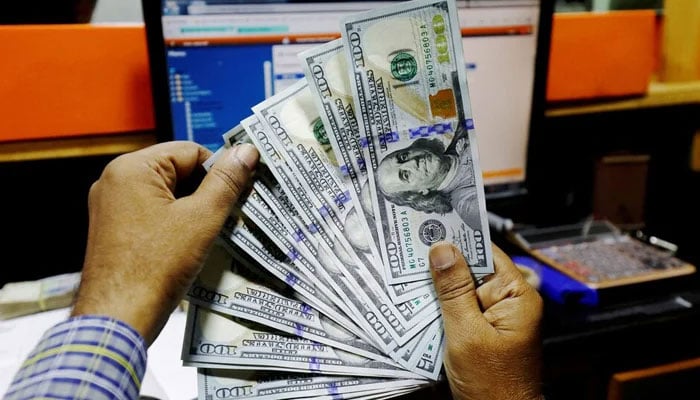
For decades, remittances from overseas Pakistanis have stood as one of the most reliable pillars of the country’s economic stability. They have supported millions of households, strengthened foreign exchange reserves and repeatedly helped Pakistan navigate periods of acute macroeconomic stress.
In times of external pressure, these inflows provided critical breathing space, preventing sharper currency depreciation, cushioning reserve depletion and sustaining consumption when domestic opportunity lagged. Yet over time, a deeper and more complex dynamic has quietly taken shape. What began as relief gradually evolved into reliance. And that reliance, left unexamined, has taken on the characteristics of something more dangerous, an intoxicant for the economic system and, increasingly, for policymakers themselves.
The problem is not remittances. The problem lies in how predictable inflows began shaping policy behaviour. Regular foreign currency injections created a false sense of security. Policymakers began assuming that whenever pressure built, external inflows would cushion the shock. This reduced the urgency for difficult reforms. Survival began to resemble stability, and short-term relief replaced long-term discipline.
Instead of being treated as transitional support, remittances became embedded in fiscal expectations and external-sector assumptions. The implicit belief was simple: when reserves weaken, the diaspora will compensate. This mindset dulled reform momentum and allowed structural inefficiencies to persist. Remittances began acting like an intoxicant for four reinforcing reasons. They provided short-term relief without reform. They created artificial confidence. They offered political convenience by deferring difficult decisions. And they distorted incentives, rewarding consumption over investment and survival over competitiveness.
Pakistan’s consumption-driven economic structure amplified this effect. With low savings rates, remittances were largely absorbed into lifestyle spending, housing, imports and everyday consumption, rather than being channelled into productive sectors. This created a structural imbalance: demand surged while supply lagged. The result was predictable: inflation rose, imports expanded, trade deficits widened and the currency weakened. Remittances, instead of strengthening the economy, began masking its weaknesses.
Over time, this created a self-reinforcing cycle. Remittances arrive, pressure eases, reforms are delayed, consumption continues, inflation rises, household stress intensifies, more workers migrate – and remittances increase again. The deeper risk lies in external vulnerability. Remittance inflows are dependent on global labour markets, immigration policies and geopolitical stability. Any disruption, economic downturns, policy shifts or regional conflict can sharply reduce inflows. An economy reliant on transfers rather than production remains exposed to shocks it does not control.
This vulnerability is now more visible than ever. The ongoing geopolitical tensions have intensified global uncertainty. Rising oil prices, disrupted trade flows and financial volatility are increasing inflationary pressures and widening deficits. For an import-dependent economy like Pakistan, this environment highlights a critical reality: reliance on external inflows is no longer sustainable. Structural reform, export growth, and productivity are essential.
Comparative evidence from other economies reinforces this lesson. Bangladesh, for instance, has paired remittances with strong industrialisation, particularly in garments. In 2024, its exports stood at approximately $47 billion compared to around $27 billion in remittances, clearly establishing exports as the primary driver. The Philippines has maintained an even stronger model, with export-to-remittance ratios near 3.0x through its services and BPO sectors. Egypt, despite high remittance inflows, recorded exports of about $75 billion, against $19 billion in remittances in 2023.
Pakistan’s position, by contrast, is structurally weaker. Its exports and remittances remain almost at parity, with ratios around 1.1x to 1.3x. This signals an economy tilted towards consumption financed by external inflows rather than competitiveness driven by production. The contrast is clear: successful economies use remittances as support, not as a substitute for growth.
Encouragingly, there are early signs of a shift in thinking. Repeated macroeconomic crises, IMF conditionalities and external shocks have forced a reassessment. Policymakers increasingly acknowledge that remittances alone cannot sustain an economy that does not produce enough, export enough or tax itself adequately. I had reflected on this transition earlier as well. In August, writing on Pakistan’s Independence Day, I argued that the country must move towards a highly skilled, knowledge-driven economic model. Drawing lessons from Dubai’s evolution, from a trading hub to a global centre of logistics, finance and innovation, the central idea was simple: sustainable prosperity comes from productivity, skill and value creation, not from dependence on external inflows. That argument has only grown more relevant. The future lies in shifting from labour export to skill export, from manpower to mindpower.
Today, remittances are gradually being reframed as a bridge rather than a crutch, as a transition buffer rather than a permanent substitute for reform. The export narrative is returning to the centre of policy discourse. There is also a growing recognition that overseas Pakistanis must be viewed not just as senders of money, but as investors, partners and connectors to global markets.
The way forward requires redesigning the role of remittances within the economic architecture. Policy discipline must be anchored in production metrics, exports, productivity, taxation and investment. Remittances should be channelled into structured investment platforms. Incentives must gradually shift behaviour from consumption towards savings and capital formation.
At the same time, the labour-export model must evolve. The focus should move towards higher-value skills in technology, healthcare, engineering, finance and digital services. Remittances should buy time for reform, not replace it.
Pakistan stands at an inflexion point. Global supply chains are shifting and new economic opportunities are emerging. But only economies anchored in discipline and competitiveness will benefit. Prosperity must be built at home. Remittances are not the problem. Dependency is.
The choice is clear: continue using remittances as an intoxicant that delays reform, or transform them into disciplined capital that strengthens the economy’s foundations. If this shift is sustained, it will mark not just economic adjustment, but economic maturity.
The writer is a former global corporate executive (Unilever, PepsiCo, Yum! Brands), a mental health advocate and a founding board member of Taskeen, a pioneering organisation focused on emotional well-being in Pakistan.