WASHINGTON/ ISLAMABAD: Iran said it was tightening control over the Strait of Hormuz on Saturday, warning mariners the vital energy route was again closed, but President Donald Trump said Tehran could not blackmail the United States by shutting the waterway.
Tehran said it was responding to a continued US blockade of Iranian ports, calling it a violation of their ceasefire, while Supreme Leader Mojtaba Khamenei said Iran’s navy was ready to inflict “new bitter defeats” on its enemies.
The navy of Iran’s Revolutionary Guards warned that any ship approaching the Strait of Hormuz would be treated as a target.
“We warn that no ship, of any kind, should leave its anchorage in the Persian Gulf and the Sea of Oman. Any attempt to approach the Strait of Hormuz will be considered cooperation with the enemy, and the offending vessel will be targeted,” said the statement published on the Guards’ official Sepah News website.
Shipping sources said at least two vessels reported coming under fire and being hit while trying to transit the waterway. India later said the Iranian ambassador in New Delhi had been summoned and that it had expressed deep concern to him that two Indian-flagged ships had come under fire in the strait.
State media in Iran quoted the Supreme National Security Council as saying Iranian control over the strait included demanding the payment of costs related to security, safety and environmental protection services.
There was no immediate sign of direct US-Iran talks taking place at the weekend, despite Trump saying on Friday that negotiations would take place.
Tehran’s renewed tough messaging caused fresh uncertainty around the Iran conflict, raising the risk that oil and gas shipments through the strait could remain disrupted just as Washington weighs whether to extend the fragile ceasefire.
Trump said the US was having “very good conversations” with Iran but that Tehran wanted to close the strait again. Iran could not blackmail the US, he said.
Maritime security and shipping sources said some merchant vessels had received radio messages from Iran’s navy saying no ships were allowed through the waterway, reversing Friday’s signs that traffic might resume.
Maritime trackers had earlier shown a convoy of eight tankers transiting the narrow passage in the first major movement of ships since the US-Israeli war on Iran began seven weeks ago.
Hours earlier, Trump had cited “some pretty good news” about Iran, declining to elaborate. But he also said fighting might resume without a peace deal by Wednesday, when the two-week ceasefire expires.
Iran had announced its temporary reopening of the Strait of Hormuz following a separate U.S.-brokered 10-day ceasefire agreement on Thursday between Israel and Lebanon. Israel invaded parts of southern Lebanon after the Iran-allied Hezbollah militant group joined the fighting in early March.
But on Saturday Iran’s armed forces command said transit through the strait had reverted to a state of strict Iranian military control, citing what it described as repeated US violations and acts of “piracy” under the guise of a blockade.
The spokesperson said Iran had earlier agreed, “in good faith,” to the managed passage of a limited number of oil tankers and commercial vessels following negotiations, but said continued US actions had forced Tehran to restore tighter controls on shipping through the strategic chokepoint.
US Central Command said in a statement that American forces were enforcing a maritime blockade of Iran, but did not comment on the latest Iranian actions.
The war with Iran began on February 28 with a US-Israeli attack on the Islamic Republic. It has killed thousands, spread to Israeli attacks in Lebanon and sent oil prices surging because of the de facto closure of the strait.
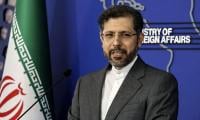
Despite the initial movement of ships, Iran’s deputy foreign minister, Saeed Khatibzadeh, said no date had been set for the next round of negotiations, adding that a framework of understanding must be agreed first.
Pressure for a way out of the war has mounted as Trump’s fellow Republicans defend narrow majorities in Congress in the November midterm elections with US gasoline prices high, inflation rising and his own approval ratings down.
“The main thing is that Iran will not have a nuclear weapon. You cannot let Iran have a nuclear weapon, and that supersedes everything else,” Trump said on Friday.
Trump also said he might end the ceasefire with Iran unless a long-term deal to end the war was agreed before it expires on Wednesday, adding that a US blockade of Iranian ports would continue.
There were no signs of preparations early on Saturday for talks in the Pakistani capital, where the highest-level US-Iran negotiations since the 1979 Islamic Revolution ended without agreement last weekend.
Separately, a senior Iranian official said Tehran hoped a preliminary agreement could be reached in the coming days. The head of Russia’s state atomic energy company, Rosatom, Alexei Likhachev, said on Saturday that Rosatom was ready to help with the removal of enriched uranium from Iran, and that the company was closely following the progress of U.S.-Iran talks. The Wall Street Journal, meanwhile, citing US officials reported that the US military is preparing in coming days to board Iran linked oil tankers and seize commercial ships in international waters. Reuters could not immediately verify the report.
Iran’s top national security body warned that its negotiators would cut no compromises with Washington. It said that Iran’s negotiating delegation “will not make even the slightest compromise, retreat or leniency, and will defend with all its strength the interests of the Iranian nation”, according to a statement carried by state media.
The Supreme National Security Council said “Iran is determined to enforce supervision and control over traffic through the Strait of Hormuz until the definitive end of the war”, insisting the US blockade would preclude even a “conditional and limited reopening”.
The council said such a reopening would involve Tehran issuing transit certificates to vessels, “as well as requiring payment of fees related to services for security, safety and environmental protection”.
Iran’s Deputy Foreign Minister Saeed Khatibzadeh said that no date has been set for the next round of Iran-US peace talks. “Until we agree on the framework, we cannot set a date,” Saeed Khatibzadeh told journalists on the sidelines of an annual diplomatic forum in Turkiye’s southern Antalya province.
“We hope that as soon as we can finalise that, then we can move on to the next step”. Khatibzadeh said both sides were currently focused on finalising a framework of understanding before proceeding with further negotiations.
“We do not want to enter into any negotiation or meeting that is destined to fail and could serve as a pretext for another round of escalation,” he said. “I can assure you that Iran is very much committed to diplomacy”.
Iran’s deputy foreign minister said US President Donald Trump “tweets a lot”, after Washington threatened fresh strikes if no deal was reached with Tehran.
“The American side tweets a lot, talks a lot. Sometimes confusing, sometimes, you know, contradictory,” Saeed Khatibzadeh said.
Iran partially reopened its airspace on Saturday to international flights crossing the eastern part of its territory, the country’s Civil Aviation Authority said. “Air routes in the eastern section of the country’s airspace are open for international flights transiting through Iran,” it said, adding that some airports had also reopened at 7:00 am (0330 GMT). More than three hours later, however, flight tracker websites still showed no international flights crossing Iran, and several avoiding its airspace by making long detours.
The internet blackout imposed by Iranian authorities at the start of the Middle East war entered an “unprecedented” 50th day, according to the monitor NetBlocks. “Iran has now been isolated from the global internet for seven weeks with the digital blackout entering its 50th day after 1176 hours,” NetBlocks said on X.
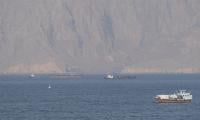
Commercial ships came under fire and threats from Iran’s military as they tried to cross the Strait of Hormuz on Saturday, security monitors said.
A UK maritime security agency said Iran’s Revolutionary Guards (IRGC) fired at a tanker, while security intelligence firm Vanguard Tech reported the force threatened to “destroy” an empty cruise ship that was fleeing the Gulf after Tehran on Friday announced a brief respite. A handful of oil and gas tankers crossed the strait early Saturday during the brief reopening, tracking data showed, but others retreated and tracking platforms showed hardly any vessels crossing the waterway by the late afternoon.
IRGC gunboats fired on the tanker in the strait northeast of Oman, the UK Maritime Trade Operations Centre (UKMTO) said in an online statement, adding the vessel and crew were safe. Vanguard identified the tanker as the India-flagged tanker Sanmar Herald.
Turkiye wants to extend a natural gas supply contract with Iran that is due to expire in the coming months, but negotiations have not yet begun due to the ongoing war in the Middle East, Energy Minister Alparslan Bayraktar said on Saturday.
UK counter-terror police were on Saturday investigating an arson attack on a London building that was formerly used by a Jewish charity, following similar incidents in recent weeks. No one was injured in the fire late Friday in Hendon, in the northwest of Britain’s capital, the Metropolitan Police said in a statement, without specifying the premises targeted.
A French soldier was killed and three others wounded in an attack Saturday on UN peacekeepers in Lebanon that appeared to have been carried out by Hezbollah, French President Emmanuel Macron said, an accusation the group has denied.
Hezbollah — which is strongly opposed to the planned talks with Israel — denied involvement in the attack that killed the French peacekeeper, identified as staff sergeant Florian Montorio.
Lebanon’s president and prime minister discussed preparations for the first direct negotiations with Israel in decades, as southerners headed home after the ceasefire in the Israel-Hezbollah war.
In a statement, the office of President Joseph Aoun said he and Prime Minister Nawaf Salam conducted “an assessment of the post-ceasefire phase and the ongoing efforts to consolidate it”, and discussed “Lebanese readiness for the anticipated negotiations” with Israel.
Meanwhile, President Trump convened a White House Situation Room meeting on Saturday morning to discuss the renewed crisis around the Strait of Hormuz and negotiations with Iran, according to two US officials.
A senior US official said that if there is no breakthrough soon, the war could resume in the coming days, Axios reported. Behind the scenes: The situation room meeting was attended by Vice President Vance — who is expected to participate in the next round of negotiations with Iran — Secretary of State Marco Rubio, Defence Secretary Pete Hegseth, and Treasury Secretary Scott Bessent, according to a US official.
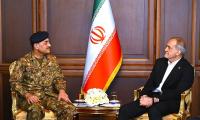
White House Chief of Staff Susie Wiles, White House envoy Steve Witkoff, CIA Director John Ratliffe and Joint Chiefs chairman Dan Caine also attended, the official said. The White House declined to comment for this story. Driving the news: Pakistani army chief Asim Munir held mediation talks between the US and Iran in Tehran this week, and U.S. officials said Trump spoke by phone at least once with Munir and the Iranians.
State of play: According to a source familiar with the details of the talks, the renewed crisis in Hormuz arose after the parties made progress in narrowing the gaps regarding Iran’s uranium enrichment and its enriched uranium stockpile.
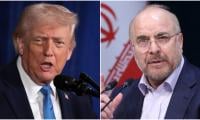
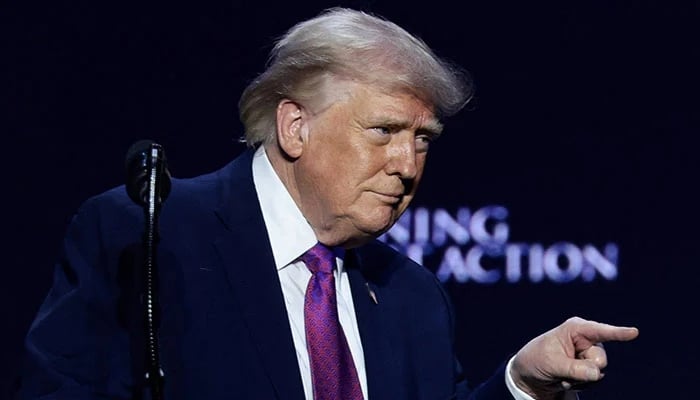
What they’re saying: Speaking to reporters in the Oval Office Saturday, Trump said Iran “got a little cute ... they wanted to close up the Strait again,” and later added that the nation “can’t blackmail us.”
Trump said the US is still talking to Iran and noted he will know by the end of the day if the parties are going to move forward with a deal.
Iran’s parliament speaker, Mohammad Baqer Qalibaf, in remarks on Saturday, said he personally warned a US delegation in Islamabad against escalation in the Strait of Hormuz, PressTV reported.
In a television interview, Qalibaf said he warned the US delegation that had come to the Pakistani capital for ceasefire talks that Iranian forces would open fire at minesweepers if they moved “an inch” from their position in the strategic waterway.
The top Iranian lawmaker and lead negotiator laid out a detailed account of the confrontation between the Iranian naval forces and the US military in the Strait of Hormuz, asserting that the Islamic Republic has full control over the vital waterway and has already pushed the United States into a retreat.
“I told the American delegation that if their minesweeper moved even a fraction from its position, we would definitely fire at it,” he said, adding that the US delegation asked for 15 minutes to relay the order to turn back.
Qalibaf added that the Islamic Revolution Guards Corps (IRGC) Navy decisively foiled an attempt to conduct minesweeping operations, which violated the ceasefire. “We advanced to the point of confrontation, but the enemy retreated,” he noted.
Iran’s parliament speaker, who led the Iranian delegation for talks with the US delegation in Islamabad last week, said the Strait of Hormuz is under the control of the Islamic Republic.
He also dismissed the Trump administration’s recent move of a “naval blockade” in the Strait of Hormuz as “a clumsy decision born of ignorance.”
Qalibaf issued a warning regarding global energy transit through the strait, a chokepoint through which about 20 per cent of the world’s oil passes. “It is impossible for others to pass through the Strait of Hormuz but not us. If the US does not abandon the blockade, traffic in the Strait of Hormuz will certainly be restricted,” he said. “If any traffic is taking place in the strait today, control of the strait is in our hands.”
The next round of negotiations between the US and Iran is not going to take place in Islamabad on Monday as the day and date for talks have not been finalised so far, senior official sources told Geo News.