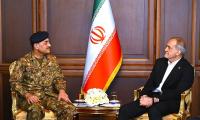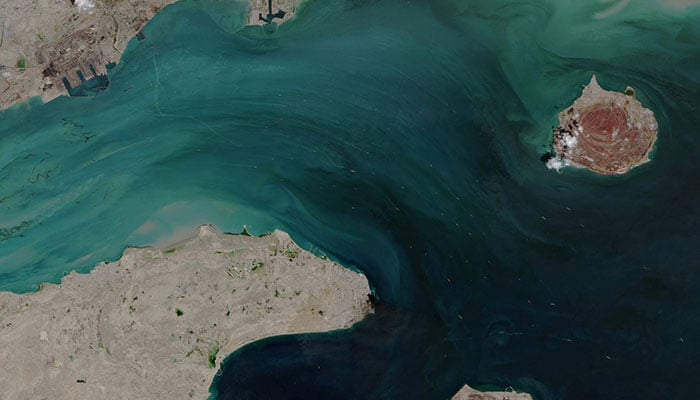
ISLAMABAD: Global financial markets rallied sharply on Friday after Iran announced that the Strait of Hormuz would remain open to commercial shipping during a temporary ceasefire linked to regional tensions involving Israel and Lebanon. The announcement came from Iran’s Foreign Minister, Seyed Abbas Araghchi, who stated that commercial vessels would continue transiting the Strait under coordinated maritime routes for the duration of the ceasefire period. The statement immediately triggered a broad repricing across global energy and financial markets.
Crude oil prices fell more than 10% in a single trading session as traders’ rapidly unwound positions that had been built around geopolitical risk in the region. West Texas Intermediate (WTI) dropped into the low-$80s per barrel range, while Brent crude declined toward the high-$80s. Regional benchmarks, including Dubai and Oman crude, also weakened sharply, with traders reporting a broad-based decline across global pricing hubs. The move reflected a rapid collapse of the so-called “war-risk premium” that had been embedded in oil prices due to fears of potential disruption in the Strait of Hormuz, a route responsible for roughly one-fifth of global seaborne oil trade.
However, for Pakistan—heavily dependent on imported Arab Light crude—the key reference prices remain crucial for domestic fuel cost expectations. According to fuel market experts, diesel prices closed on Friday at around $163 per barrel, while motor gasoline (Mogas) was priced near $113 per barrel.
Pakistan and several Asian countries rely heavily on AG grade pricing by Platts for petroleum imports. A senior Pakistani oil refinery official said, “With supply concerns easing, Dubai crude may retreat below $90 per barrel, while diesel has the potential to slip under $120 by the end of next week.”
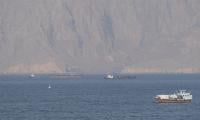
However, market participants raised concerns over physical delivery constraints. They noted that the Strait of Hormuz typically handles the passage of roughly 120–150 vessels per day, but at present more than 900 vessels are reportedly waiting or congested in the region due to security risks and navigation restrictions. The presence of naval mines laid during the conflict has further complicated clearance operations, meaning that restoring normal shipping flows through the Strait may take considerable time even after prices begin to stabilize.
Meanwhile, Federal Minister Ali Pervaiz Malik, speaking to The News, said that QatarEnergy currently has 8–10 loaded LNG vessels available, and Pakistan will seek to secure maximum possible volumes from these cargoes in the short term.
He added that once QatarEnergy withdraws its force majeure conditions, Pakistan is expected to resume a more regular schedule of LNG imports.
Equity markets responded with strong gains as falling oil prices improved the inflation outlook and strengthened expectations that central banks may face less pressure to maintain restrictive monetary policy. In the United States, the Dow Jones Industrial Average rose 1.33%, gaining 648 points, while the S&P 500 advanced 0.8%, adding 55.6 points. The Nasdaq Composite climbed 0.49%, or 128 points, with technology stocks helping lead the advance. Energy stocks, however, lagged significantly due to the sharp decline in crude prices.
Commodities and digital assets also moved higher in response to the improved risk sentiment. Gold rose 1.28%, or $61.3, while silver surged 4.3%, gaining $3.39. In cryptocurrency markets, Bitcoin advanced 1.37%, rising by $1,032, and Ethereum climbed 1.9%, adding $44.8.
Overall, analysts characterized the market reaction as a classic geopolitical “risk unwind,” in which asset prices quickly reverse once the probability of a major supply disruption declines.