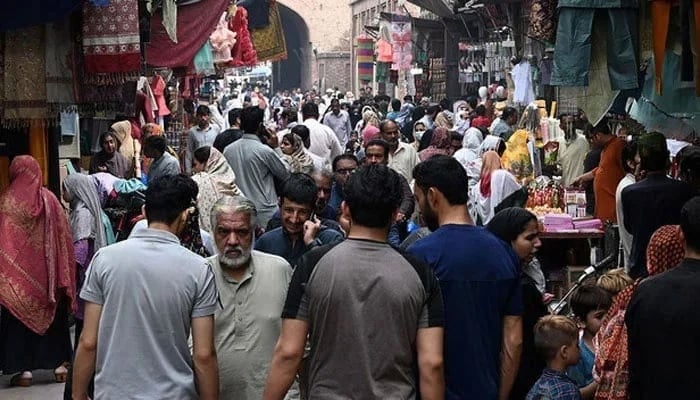
LAHORE: While the American middle class is gradually shrinking, it remains economically relevant and structurally supported. Pakistan, by contrast, is witnessing something far more alarming: a middle class that is not just under pressure, but increasingly at risk of slipping into economic insecurity.
In the US, while the middle class has declined, it continues to anchor consumption, savings and economic stability. In Pakistan, the problem is not simply a declining share, it is the absence of a stable and resilient middle class to begin with. What exists is fragile, easily reversible and highly vulnerable to shocks.
The most immediate threat is inflation. Persistently high prices, particularly of food, energy and utilities, have eroded purchasing power to such an extent that salaried households, once considered secure, are now struggling to maintain basic living standards. Unlike in advanced economies, where income growth has at least partially kept pace with inflation over time, Pakistan’s middle class has experienced a steady decline in real incomes. Wage adjustments, when they occur, lag far behind the cost of living.
Compounding this is the nature of employment. In developed economies, middle-class stability is underpinned by formal jobs, social protection, and access to credit. Pakistan’s middle class, however, is largely dependent on informal or semi-formal employment, small family businesses, and remittances. These sources of income are inherently volatile. There is little in the way of unemployment insurance, pension coverage, or institutional support. A single economic shock, a job loss, a health emergency or a currency depreciation, can push a middle-class household into financial distress.
Asset ownership, often considered a hallmark of middle-class security, provides limited comfort in Pakistan. Wealth is typically concentrated in real estate or gold, assets that are illiquid and, in times of crisis, difficult to monetise without significant loss. Meanwhile, rising expenditures on private education, healthcare, and utilities leave little room for savings. The result is a class that appears asset-rich on paper but is cash-constrained in practice.
The consequences extend beyond household welfare. A weak middle class undermines the broader economy. It constrains domestic demand, discourages investment, and limits the growth of small and medium enterprises. At a time when Pakistan needs consumption-driven growth to complement exports, the erosion of middle-class purchasing power is particularly damaging.
Equally troubling is the question of economic mobility. In theory, the middle class should represent a pathway to upward mobility through education, hard work, and entrepreneurship. In Pakistan, this pathway is narrowing. Unequal access to quality education, combined with weak governance and limited job creation, has created a perception, often justified, that economic advancement depends more on connections than on merit. This perception is corrosive. It weakens incentives, encourages capital flight and fuels brain drain.
The policy implications are clear and urgent. First and foremost, inflation must be brought under control. Price stability is not merely a macroeconomic objective; it is a social imperative. Without it, no middle class can survive, let alone grow.
Second, there must be a concerted effort to formalise the economy. Expanding documented employment and broadening the tax base will not only improve fiscal stability but also provide workers with greater security and access to financial services.