On any given day, there are plenty of things you can put your finger on that are going wrong. However, occasionally in our history, we decided to set aside the all-too-common attitude of applying a ‘jugaar’ to do the minimum needed to get out of an immediate bind just to keep things rolling.
On rare occasions, when faced with a problem on the scale of an existential challenge that required our best shot, we did what was needed and followed up with tight and professional execution.
The most persistent example that comes to my mind is the development of Pakistan’s nuclear programme: Zulfiqar Ali Bhutto originally made the decision, uttering the now-famous line, “If India builds the bomb, we will eat grass or leaves – even go hungry – but we will get one of our own.” In 1974, India detonated a nuclear bomb codenamed ‘Smiling Buddha’, which its officials labelled a “peaceful nuclear device”. That day, not only did irony die, but it gave Bhutto the final push to put Pakistan’s own nuclear programme on the front burner.
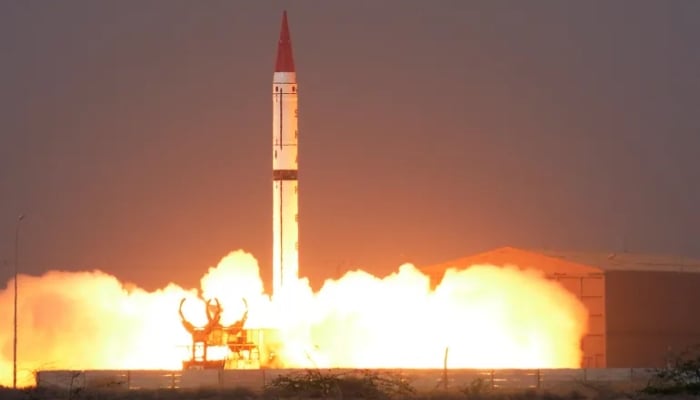
Sometime by the middle of the 1980s, Pakistan’s enrichment programme was humming, and the goal of developing an atomic bomb had been achieved. In the years that followed, Pakistan presumably miniaturised the device and redirected its efforts towards developing delivery systems – the Ghauri and Shaheen missiles. By the spring of 1998, India and Pakistan conducted tit-for-tat missile tests that escalated to nuclear testing – India first – prompting Pakistan to conduct Chagai-1 on May 28, 1998, fully coming out as a nuclear weapons power, and the rest, as they say, is history.
This was a multi-decade effort and, based on public accounts, an incredible display of disciplined execution by a country that had been derided for being unable to produce a sewing needle or a decent bicycle. It showed us what the state is capable of achieving when it fully commits itself to an all-of-government effort in which everyone pulls in the same direction.
Of course, this is not to say that this is necessarily the only time we over-delivered on expectations we had of ourselves. The goal is not to produce an exhaustive list of such achievements and events but to acknowledge that, from time to time, we are capable of making concerted efforts in the service of national priorities.
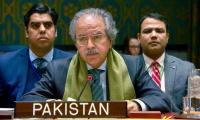
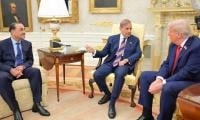
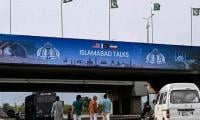
The most recent achievement by a government that could only have been possible if multiple government departments got their act together was last week, when Islamabad brought together top-level officials from the US and Iranian governments for the first time in 46 years. The Islamabad Talks did not conclude with the signing of an MoU or accord or announcement for further talks (yet), but they did not end in a breakdown either – the ceasefire is holding and the door to further negotiations appears to remain open with diplomacy continuing behind the scenes.
Expectations for a breakthrough after just 21 hours of talks were always unrealistic. If it wasn’t, the Kashmir issue would be resolvable in no more than a weekend. As of the writing of this article, multiple news outlets are reporting the possibility of a second round of talks before the ceasefire deadline expires.
Barring a flaming tweet by the defence minister just prior to the start of the Islamabad Talks, all elements of state machinery that had a visible role appeared to have done their parts without hiccups. That includes political and military leaderships, the Ministry of Foreign Affairs, all security forces, the Punjab and ICT police, the CDA, even the spring foliage and the weather.
Most local media, not part of the government machinery, did their part well by maintaining an airtight lid on information leaks, frustrating some in the press and refraining from spreading gossip. If any local outlet had gleaned any information, they seem to have kept it to themselves. Some journalists were later mocked for tweets in the early hours of the morning hinting at an agreement and a joint statement that did not come to pass, but, as has been reported later, things were headed towards an ‘Islamabad MoU’ until one side got cold feet.
Some in the media, both foreign and domestic, were critical of the government for not providing running updates about the talks. The world, and I, would rather wait for a few hours and hear from the parties at the conclusion, if that raises the probability of a positive outcome. Journalists milling around the media centre set up in the Convention Centre, who were complaining about having nothing to report, could have used that opportunity to provide analysis from experts closer to the ground.
Several news outlets I watched (all foreign) went that route and spoke with retired Pakistani diplomats, foreign ministers, and academics in international relations from Quaid-e-Azam University, just down Constitution Avenue. There was no reason why local journalists could not have roped in local experts to provide viewers with analysis and background in the meantime. Still, they did better than most Indian media, which, until the end, remained hung up on the distinction whether Pakistan’s role was that of a ‘facilitator’ or a ‘mediator’ – not a very high bar to clear.
The development of Pakistan’s nuclear programme and the organisation of the Islamabad Talks were not achieved by throwing money at people or the problem. These are instances when people across institutions put mission and duty over monetary gain and personal interests, and in stark contrast to our usual way of doing business – making decisions guided by convenience, an urge to check that box. And since I have not mentioned the topic of education once yet, let me make the point that, on most days, our approach to dealing with problems in the education sector is just that.
These rare episodes in our history show that national achievement is possible only when we reject the allure and convenience of ‘jugaars’ in favour of sustained commitment and an all-of-government resolve. I wish we could see more of that.
The writer (she/her) has a PhD in Education.