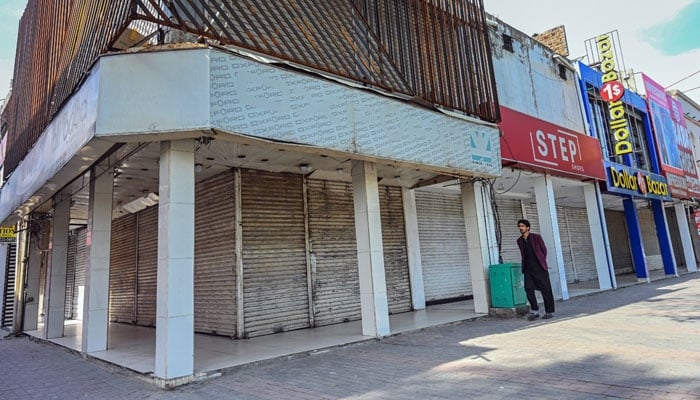
LAHORE: The Chainstore Association of Pakistan (CAP) has warned that newly enforced early retail closures are beginning to strain the formal retail sector, threatening sales, employment and government tax revenues.
After the first week of implementation, the association said reduced operating hours, particularly the 8pm closing time across most of the country and 9pm in parts of Sindh and Khyber Pakhtunkhwa (KP), are disrupting business during a critical trading window.
The organised retail sector, comprising more than 30,000 outlets and supporting over one million jobs, makes a significant contribution to the economy and accounts for a notable share of the trade sector’s 18 per cent contribution to GDP. Initial data gathered from member retailers indicates a sharp decline in peak-hour activity. Sales between 8pm and 10pm, traditionally the busiest period, have fallen by an estimated 25-30 per cent.
“Consumer footfall remains concentrated in post-work hours, typically after 7pm,” the association said, adding that in comparable urban markets across Asia and the Middle East, retail outlets commonly remain open until at least 10pm to capture evening demand.
The impact is already being reflected in financial terms. CAP estimates revenue losses could be as high as Rs100 billion per week, while reduced retail activity is also weighing on tax collection. The sector contributes roughly Rs3 trillion annually in sales and income taxes, and current disruptions could be reducing revenues by up to Rs25 billion per week.
Beyond revenues, the association warned of rising operational stress. Retailers are beginning to scale back staffing levels and adjust inventory cycles, signalling mounting financial pressure.
CAP Patron-in-Chief Rana Tariq Mehboob said the organised retail sector is already grappling with rising operational costs, including high rents, overheads and what he described as a disproportionate tax burden on Tier-1 retailers.
“These challenges are disrupting business sustainability and supply chains, including manufacturers and allied industries,” he said. “Frequent changes in retail timings are adding further uncertainty for compliant businesses.”
He also questioned the policy’s effectiveness in achieving energy savings, arguing that reduced commercial activity may simply shift consumption to households, which are generally less energy-efficient.
“There should be alignment between retail and restaurant timings,” he added. “Otherwise, any gains in energy or fuel savings remain minimal, particularly when dining outlets continue to operate later into the night.”
CAP Chairman Asfandyar Farrukh echoed these concerns, saying the impact extends beyond retailers to the broader economy.“Reduced operating hours not only affect businesses but also lower government tax collection,” he said. “A balanced approach is needed to support both revenue generation and business continuity.”
The association has proposed revising retail hours by allowing businesses to open later — around 12pm — while extending closing times to 10pm. It said this would better align with consumer patterns while still supporting energy conservation goals.
With the retail sector supporting an estimated 10 million jobs nationwide, CAP warned that prolonged restrictions could put a significant portion of the workforce, particularly second-shift employees, at risk.
For now, the association has appealed to the prime minister and provincial chief ministers for immediate intervention, urging policymakers to introduce flexibility in operating hours to stabilise the sector, protect jobs and safeguard tax revenues.