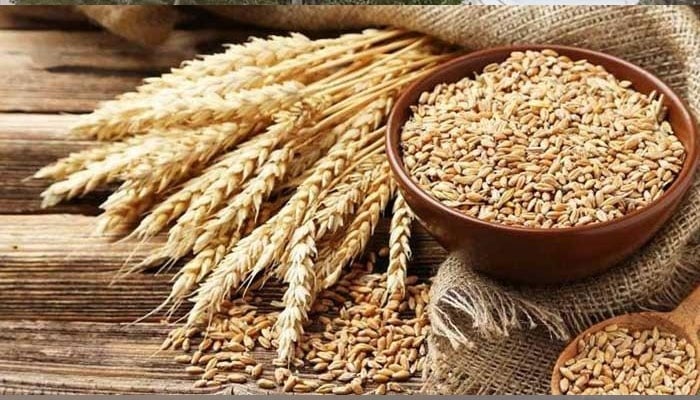
ISLAMABAD: Wheat production for the Rabi 2025-26 season is estimated at 29.31 million tonnes, cultivated over 9.385 million hectares, the Federal Committee on Agriculture (FCA) was told on Tuesday.
The committee, chaired by Minister for National Food Security and Research Rana Tanveer Hussain, reviewed the performance of Rabi crops and set targets for the upcoming Kharif season.
On Rabi output, onion production was estimated at 2.7 million tonnes from 163,750 hectares, slightly down from last year. Tomato output was put at 555,720 tonnes from 41,990 hectares, reflecting an 11.9 per cent decline due to reduced cultivation area.
Potato production was estimated at 12.17 million tonnes from 466,560 hectares, up 23.2 per cent year-on-year (YoY), while gram output was projected at 262,030 tonnes from 782,240 hectares, a 52.4 per cent increase.
For Kharif 2026-27, the FCA set a rice production target of 9.17 million tonnes over 3.39 million hectares and maize output at 9.77 million tonnes over 1.5 million hectares. Sugarcane production was targeted at 80.3 million tonnes on 1.14 million hectares, while cotton output was fixed at 9.64 million bales over 2.16 million hectares.
The committee was informed that water availability at canal heads is expected to be 67.45 million acre-feet during the Kharif season. The Pakistan Meteorological Department said above-average rainfall in March and early April had improved conditions, though soil moisture remains under stress following earlier dry months.
Expected rains in April and May, along with rising temperatures in northern areas, may improve reservoir levels. However, isolated heavy rain, hailstorms and strong winds could disrupt Rabi harvesting in upper and central regions.
The FCA stressed the need for efficient water use, particularly in the lower parts of the country.Officials said seed availability for rice and maize is expected to meet requirements, while urea supplies will remain adequate due to local production and existing stocks.
The State Bank of Pakistan said agricultural credit is projected to rise to Rs3.06 trillion in FY26, up 19 per cent from Rs2.58 trillion last year.The minister said improving per-acre yields was key to achieving food security, noting that while food availability is generally sufficient, affordability remains a challenge for low-income groups.
He added that the government is promoting modern farming techniques, climate-resilient practices and better market access, alongside broader reforms under the Prime Minister’s economic transformation agenda.The committee expressed satisfaction with the overall food security situation and called for stronger research and coordination to sustain progress in the agriculture sector.