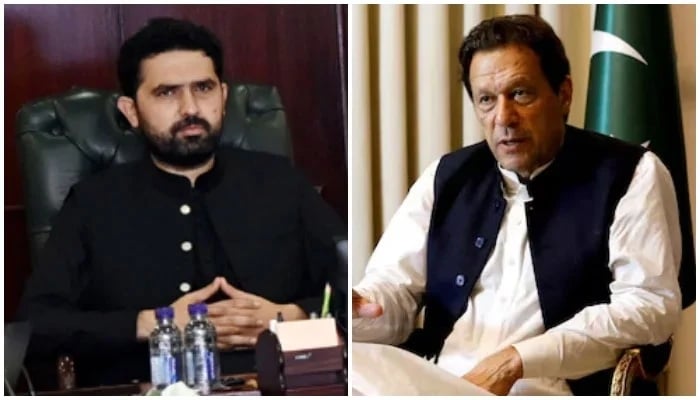
PESHAWAR: As global powers turn to diplomacy to resolve conflicts, Khyber Pakhtunkhwa (KP) Chief Minister Muhammad Sohail Afridi on Saturday said world events validated the foresight of former prime minister Imran Khan, who long advocated dialogue over war.
He was speaking on the evolving geopolitical climate during the parliamentary party meeting at the Chief Minister’s House here, said a handout.
Afridi said that throughout the Afghanistan conflict, Imran Khan maintained that military intervention could never deliver lasting peace and that sustainable stability could only emerge through diplomacy and political settlement.
“Throughout the two-decade Afghanistan war, Imran Khan repeatedly urged the international community to give peace a chance, warning that war alone would only deepen instability,” he added. He claimed that history had since vindicated Imran Khan’s position, as the conflict claimed hundreds of thousands of Afghan lives, vast majority of them civilians, cost the United States more than $2.3 trillion and left over 2,400 American service members dead before ending in a negotiated withdrawal that underscored the limits of military force.
The prolonged war has left behind lasting humanitarian, economic and security repercussions across the broader region, he went on to add.
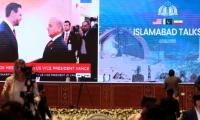
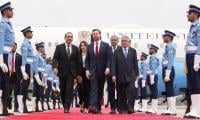
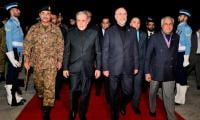
Referring to recent diplomatic engagement in Islamabad regarding escalating Iran and US tensions, the chief minister stated that the international community was increasingly moving toward the very doctrine Imran Khan advocated long before it became politically fashionable.
Despite Imran Khan’s now vindicated global vision, the chief minister said the former prime minister remained incarcerated in one of the most sweeping acts of political victimisation in Pakistan’s democratic history for no reason other than speaking the truth and standing firmly by his principles.
Baseless and politically motivated cases continue to be weaponised against Imran Khan and his wife, Bushra Bibi, many of them so implausible that they have become a mockery of justice itself. “These cases are deliberately not being fixed for timely hearings, reflecting a calculated effort to prolong their incarceration, which has now exceeded 950 days, through procedural manipulation and denial of due process, he added.
“This is no longer law enforcement; it is procedural hostage taking through the courts,” the chief minister said. He stated that Imran Khan was being denied the basic rights afforded to ordinary prisoners, including access to family, legal counsel, personal doctors and his sons, describing his continued “solitary confinement and torture in a death cell” as a deliberate campaign of psychological pressure.
The chief minister alleged that the situation had deteriorated to such an extent that even court orders were being openly defied, with the Punjab government and Adiala jail authorities ignoring directives of the Islamabad High Court and obstructing court-mandated meetings, exposing a collapse of constitutional authority and rule of law.
He stated that peaceful protests outside the Adiala jail have been criminalised, with Imran Khan’s sisters, PTI workers and supporters repeatedly subjected to violence, and force for expressing solidarity.
The chief minister said the extraordinary lengths taken to keep Imran Khan imprisoned, including judicial restructuring, constitutional changes and institutional manipulation, have no precedent in Pakistan’s democratic history and reflect a systematic effort to eliminate him from the political arena. Institutions meant to safeguard constitutional order, he said, have instead been bent and weaponised for political engineering.
He alleged that the illegal incarceration of Imran Khan and Bushra Bibi constituted a calculated campaign of political revenge aimed at silencing the most popular political voice in the country.
Referring to the broader political environment, the chief minister said Pakistan Tehreek-e-Insaf, despite being the country’s largest political party, was systematically being stripped of its democratic freedoms and denied the right to assemble, campaign, and express itself freely before the people of Pakistan.
He further alleged that fabricated cases continue to be weaponised against political opponents in a desperate bid to suppress democratic dissent and manipulate the political landscape.
The chief minister stated that, beyond political victimisation, Khyber Pakhtunkhwa was being subjected to systematic economic injustice through persistent financial strangulation of the province by the federal government, largely because the province remained under a PTI-led administration.
He stated that the federation currently owed Khyber Pakhtunkhwa over Rs2,200 billion in unpaid Net Hydel Profit, while an additional Rs1,375 billion remained outstanding under the NFC share for merged districts. The total liabilities currently exceeded Rs4,375 billion. He added that although the federal government committed Rs100 billion annually for the development of merged tribal districts, only Rs168 billion had been released over the past seven years, leaving Rs532 billion unpaid.
He termed these figures clear evidence of deliberate fiscal injustice against a province that has rendered the greatest sacrifices for Pakistan’s peace and stability.