ISLAMABAD: High-stakes peace talks between the United States and Iran entered a second day early Sunday, as Washington piled pressure by saying it had sent minesweeping ships through the vital Strait of Hormuz, while Iran’s government said the negotiations would continue despite some remaining differences.
History was made in the Pakistan capital on Saturday when Iran and the United States entered into direct, face-to-face talks at the highest level, with the host Pakistan hoping that the talks would act as a “stepping stone” to take the peace initiative forward.
Pakistan was working to ensure that there would be a peace agreement between Iran and the United States taking advantage of the temporary two-week truce that Pakistan had initiated.
The Islamabad parleys are the highest-level direct talks between the two countries since the 1979 Islamic Revolution, and after several hours of talks around the table, the delegates went for a two hours break, to resume again. Talks continued for over four hours, with possibly a working dinner and the possibility that the technical talks could continue on Sunday. Just before 10pm, the first round of face-to-face talks was wrapped up. At the conclusion of Saturday’s talks, teams of experts from two sides exchanged written texts after in-person meeting.
Law Minister Azam Nazeer Tarar said earlier in the day that peace talks between the US and Iran in Islamabad may extend beyond Saturday if the ongoing engagement remains positive. In a statement, he highlighted the complexity of the situation, saying that there had been tensions between the two countries for 47 years, making quick resolution unlikely. He added that such longstanding disputes cannot be settled in brief sessions lasting just a few hours.
Both parties were maintaining contact with their respective governments throughout the process, he said, adding that neither side would finalise any agreement without prior consultation with their leadership. The law minister said that the talks were initially scheduled for April 10 with an expectation that discussions would span a single day.
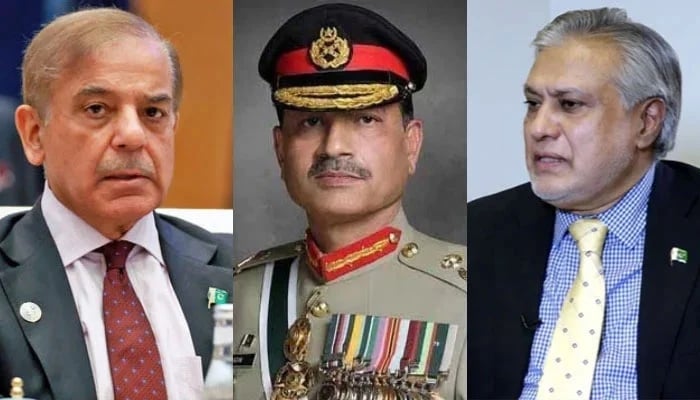
Chief of Army Staff and Chief of Defence Forces Field Marshal Syed Asim Munir and Deputy Prime Minister/Foreign Minister Muhammad Ishaq Dar joined the Iranian and US delegations at the talks.
While social media was abuzz with the direct talks, the first official confirmation was made by the state media which said, “Peace talks of historic significance between Iran and the United States have commenced in Islamabad, where for the first time after tensions, representatives from both sides are sitting directly at the same table.
“The arrival of high-level delegations, Pakistan’s effective diplomacy and positive statements from global leaders have further strengthened hopes for a ceasefire and lasting peace in the region, while the eyes of the world are focused on the outcomes of these crucial negotiations”.
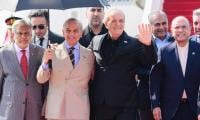
The US delegation is led by US Vice President JD Vance, who is accompanied by Jared Kushner and Middle East envoy Steve Witkoff. The Iranian delegation is led by Parliamentary Speaker Mohammad Bagher Ghalibaf and Foreign Minister Abbas Araghchi. Both sides are accompanied by members of their technical committees.
The White House said high-level in-person trilateral talks with Iran and Pakistan were “ongoing” in Islamabad late on Saturday. A senior White House official said in a brief statement that the talks were continuing, after Iranian state media earlier reported that two rounds had taken place and a third was expected.
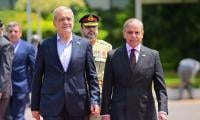
Earlier, US Vice President JD Vance, and Iran’s Parliamentary Speaker Mohammad Bagher Ghalibaf, at the head of their delegations, separately called on Prime Minister Shehbaz Sharif at PM House here. PM Shehbaz Sharif was accompanied by DPM Ishaq Dar and Interior Minister Senator Mohsin Raza Naqvi.
Commending the commitment of both delegations to engage constructively, the prime minister expressed the hope that these talks would serve as a stepping stone towards durable peace in the region. He reiterated that Pakistan looks forward to continuing its facilitation of both sides in making progress towards sustainable peace in the region.
Appreciating Iran’s engagement in the Islamabad talks, the PM affirmed Pakistan’s sincere resolve to continue playing its role as a mediator to help build momentum towards achieving meaningful results in the interest of regional and global peace and stability. Deputy PM Ishaq Dar, Chief of Army Staff and Chief of Defence Forces Field Marshal Asim Munir and Interior Minister Mohsin Raza Naqvi attended the meeting from the Pakistani side.
US President Donald Trump said he was not bothered about the outcome of US-Iran talks, insisting the United States had come out ahead from the war.
“Whether we make a deal or not makes no difference to me. The reason is because we’ve won,” Trump told reporters. “We’re in very deep negotiations with Iran. We win regardless. We’ve defeated them militarily,” Trump said.
Trump also repeated the US military’s statement that US Navy warships on Saturday transited through the Strait of Hormuz. The account was denied by Iran. “We have minesweepers out there. We’re sweeping the strait,” Trump said. “We’ll open up the strait even though we don’t use it, because we have a lot of other countries in the world that do use it that are either afraid or weak or cheap,” Trump said.
He again voiced frustration with allies from Nato, who stayed on the sidelines during the war, and who were not consulted in advance. “We were not helped by Nato, that I can tell you,” Trump said.
Earlier, President Trump said the US had started “clearing out” the strategic Strait of Hormuz, which Iran had virtually blocked and through which one-fifth of the world’s crude passes at peace time, as US media reported that two US warships had crossed it on Saturday. The US leader called it “a favour” to other countries, but a senior Iranian military official quoted by state television denied the reports of US ships crossing the key waterway.
CENTCOM commander Admiral Brad Cooper said, “Today, we began the process of establishing a new passage and we will share this safe pathway with the maritime industry soon to encourage the free flow of commerce.”
The USS Frank E Peterson and the USS Michael Murphy are the guided-missile destroyers involved in the operation, but CENTCOM said that “additional US forces including underwater drones” could join the effort in coming days.
Iran’s Revolutionary Guards threatened to deal “severely” with any military vessels transiting the Strait of Hormuz, state TV reported, after the US Central Command said two US Navy warships had transited the strategic waterway to clear mines laid by Tehran.
”Any attempt by military vessels to pass through the Strait of Hormuz will be dealt with severely. The IRGC Navy has full authority to manage the Strait of Hormuz intelligently,” the Guards’ Navy Command said, according to state broadcaster IRIB, adding passage of the strait would only be “granted to civilian vessels under specific conditions”.
Experts said Iran’s delegation showed it was serious about leaving Pakistan with a deal. “The size, seniority and breadth of the Iranian delegation... signal both Tehran’s sincerity in these negotiations and its expectations and confidence,” said Trita Parsi, executive vice president of the Quincy Institute for Responsible Statecraft.
Security was tight in the Pakistani capital on Saturday, with a heavy police and paramilitary presence on the streets and road diversions around the “red zone” where government and diplomatic buildings are located. The negotiations will be closely watched by other key regional players, with Egypt and Turkey having helped with mediation, along with China, all of which Pakistan was still coordinating closely with for the talks, the source said.
As the talks were in progress, there was a message from Iranian President Masoud Pezeshkian on X, who said the Iran’s delegation remained “fully committed” to safeguarding the country’s interests, while expressing the hope that the delegation would “negotiate courageously”. He added that regardless of the outcome of the negotiations, the government will “stand by its people”.
Meanwhile, Iranian embassy officials tweeted that their red lines to Pakistan Prime Minister Shehbaz Sharif, included:
1. The Strait of Hormuz is under complete Iranian control; 2. Iran will receive war reparations; 3. Frozen Iranian assets will be released; 4. A stable ceasefire in all sectors related to Iran.
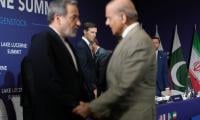
Foreign Minister Ishaq Dar also commended the US commitment to achieving lasting regional and global peace and stability. “He expressed the hope that the parties would engage constructively, and reiterated Pakistan’s desire to continue facilitating the parties towards reaching lasting and durable solution to the conflict,” said the Foreign Office.
As the talks progressed, it was clear that headway was being made and there was no deadlock. The Iranian government on X gave this indication when it stated, “The dialogue between Iran and the American delegation which began in Islamabad with Pakistan mediation, has entered into expert level topics with the arrival of members of the specialised economic, military, legal and nuclear committees at the venue as negotiations keep ongoing at Serena.”
Earlier, a White House correspondent tweeted, “The trilateral meeting included DS Andrew Baker, Deputy National Security Advisor to the President, Michael Vance, special advisor to Vice President Vance for Asian affairs. A full suite of US experts on relevant subject areas are present in Islamabad. Additional experts are supporting from Washington.”
On the side-lines of Islamabad talks, the Foreign Office said Governor of the Central Bank of Iran, Dr Abdolnasser Hemmati, called on Deputy Prime Minister Ishaq Dar.
“Both sides emphasised the importance of sustained dialogue and noted that peace and stability in the region remain essential for economic cooperation and shared progress,” said the statement.
Separately, Iran’s Ambassador to Pakistan, Reza Amiri Moghadam, praised Islamabad’s role in hosting talks between the United States and Iran, aimed at defusing tensions in the Middle East.
In a statement on X, the envoy described the conflict as an “illegal war” against Iran, warning it threatens regional and global security. He also expressed uncertainty over whether Washington would fully support Pakistan’s mediation efforts.
Meanwhile, Russia urged all parties involved in the Islamabad talks to act responsibly and seize what it called a “window of opportunity” for peace in the Persian Gulf. Moscow said most countries support diplomatic efforts, with Pakistan playing a key mediating role.
However, Russia criticised forces it said were obstructing progress and blamed those who initiated aggression against Iran for escalating tensions, including disruptions around the Strait of Hormuz.
The Russian Foreign Ministry stressed the need to address root causes of the conflict and called for an immediate halt to military actions across the region, including tensions involving Israel and Lebanon. It reaffirmed support for a political solution and proposed broader regional dialogue to ensure long-term stability.
US Secretary of State Marco Rubio said he has revoked the residency statuses of several individuals related to Iran’s former Vice President for Women and Family Affairs, Masoumeh Ebtekar.
In a post on X, Rubio announced he terminated the visas of Ebtekar’s son, Eissa Hashemi, along with his wife and son, saying they “should never have been allowed to benefit from the extraordinary privilege of living in our country”. The individuals are currently in the custody of US Immigration and Customs Enforcement (ICE), pending their deportation, Rubio said.
The move comes after Rubio also stripped the residency statuses of several Iranian women earlier this month, claiming they were relatives of the late Iranian Major-General Qassem Soleimani. Iranian media quoted Soleimani’s daughter, Zeinab Soleimani, as issuing a denial that the two women arrested had any ties whatsoever to the late Quds Force leader.
US intelligence indicates that China is preparing to deliver new air defence systems to Iran within the next few weeks, according to three people familiar with recent intelligence assessments, CNN reported.
The intelligence also underscores how Iran may be using the ceasefire as an opportunity to replenish certain weapons systems with the help of key foreign partners.
Two of the sources told CNN there are indications that Beijing is working to route the shipments through third countries to mask their true origin.
The systems Beijing is preparing to transfer are shoulder-fired anti-air missile systems known as MANPADs, the sources said, which posed an asymmetric threat to low-flying US military aircraft throughout the course of the five-week war and could again if the ceasefire falls apart.
A spokesperson for the Chinese embassy in Washington said, “China has never provided weapons to any party to the conflict; the information in question is untrue.”
“As a responsible major country, China consistently fulfills its international obligations. We urge the U.S. side to refrain from making baseless allegations, maliciously drawing connections, and engaging in sensationalism; we hope that relevant parties will do more to help de-escalate tensions.”
Meanwhile, US President Donald Trump on Saturday told reporters that China will have “big problems” if it ships arms to Iran. In a post on X, Democrats on the House Foreign Affairs Committee noted that the US delegation engaged in Iran talks includes Trump’s “son-in-law and his real estate developer golf buddy”, referring to Kushner and Witkoff.
The pair are “the same two whose last ‘diplomatic’ effort was cover for starting this pointless and costly war”, the post reads. “Not a great way to signal a diplomat reset.”
Qatar’s Ministry of Transport said on Saturday that maritime navigation will fully resume for all types of vessels and ships in the Persian Gulf starting Sunday (today).
In a statement, the ministry said sailing will be permitted from 6 a.m. to 6 p.m. for all vessel types. It added that, in line with a previous announcement, vessels licensed for fishing are allowed to sail throughout the day. The ministry urged operators to comply with the directive and to ensure all required safety and security equipment is available and functioning before and during voyages, to maintain the highest levels of safety for all trips.
There has been no official statement from Iran, which controls the Strait of Hormuz, on whether there is any coordination with Qatar.