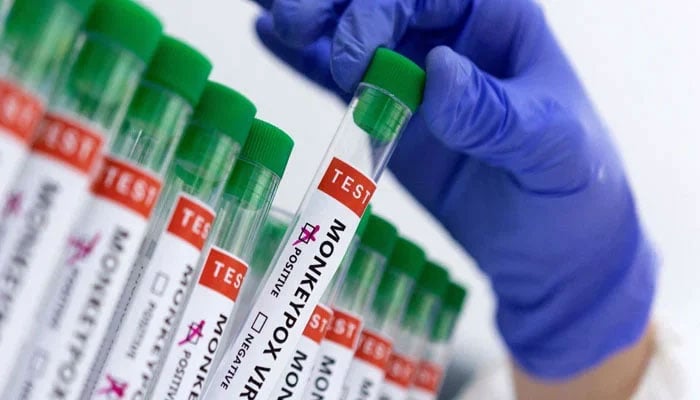
Mpox cases have been rising across Sindh with infections now confirmed beyond Khairpur, including a second laboratory-confirmed case in Karachi, as health authorities acknowledge at least 16 confirmed infections in the province and move to contain what experts say is an expanding outbreak driven by gaps in infection control and delayed detection.
The latest case involves a 20-year-old resident of Buffer Zone in District Central of Karachi whose infection was confirmed through PCR testing at the Dow University of Health Sciences. He has been shifted to the Sindh Institute of Infectious Diseases where he is in a stable condition under isolation.
Officials say the Karachi case is part of a broader pattern with a majority of confirmed infections reported from Khairpur where most patients are children, along with at least two affected women. The situation has raised serious concerns about possible local transmission, particularly in health care and community settings.
In a significant administrative move amid the worsening situation, the Sindh government has removed the Khairpur district health officer and posted a new officer with immediate effect, according to an official notification issued by the health department.
Health authorities confirmed that a joint investigation had been launched by the National Institute of Health, Dow University of Health Sciences and Sindh health department to trace contacts, assess transmission patterns and identify failures in infection prevention and control.
At the same time, leading healthcare institutions have stepped up preparedness. The Aga Khan University Hospital has issued an infection alert to healthcare providers, warning that Mpox spreads through close contact including face-to-face interaction, contaminated materials and exposure without appropriate protective equipment.
The advisory emphasises that healthcare workers are at particular risk and calls for strict use of personal protective equipment, early identification and isolation of suspected cases. The advisory also highlights that Mpox can easily be confused with chickenpox and stresses the need for clinicians to first rule out chickenpox before confirming Mpox, noting that lesions in Mpox typically appear uniform at the same stage of development .
The Indus Hospital and Health Network has also initiated targeted training sessions for paediatricians and infectious diseases teams to improve early detection, differentiate Mpox from other rash illnesses and ensure timely isolation of suspected patients to prevent further spread.
Public health experts warn that frontline healthcare workers remain among the most vulnerable, particularly in facilities where infection control practices are weak. Authorities have directed all hospitals to maintain a high index of suspicion in patients presenting with fever and unexplained rashes, especially in districts reporting cases. Contact tracing and surveillance have been intensified, while family members of confirmed cases are being monitored.
Experts say the evolving situation requires a coordinated response similar to Covid-19, including rapid detection, isolation, contact tracing and transparent reporting to prevent the outbreak from spreading further across Sindh.
Officials maintain that while the situation is being closely monitored, delays in recognising and reporting cases may have already allowed the virus to establish local transmission chains, particularly in Khairpur and now Karachi, raising the risk of wider spread if containment measures are not strictly enforced.