KARACHI: Parliamentarians, government officials and civil society representatives at a seminar on Thursday warned that the conflict in the Persian Gulf should not push Pakistan into greater reliance on fossil fuels, citing their vulnerability to supply disruptions and price volatility.
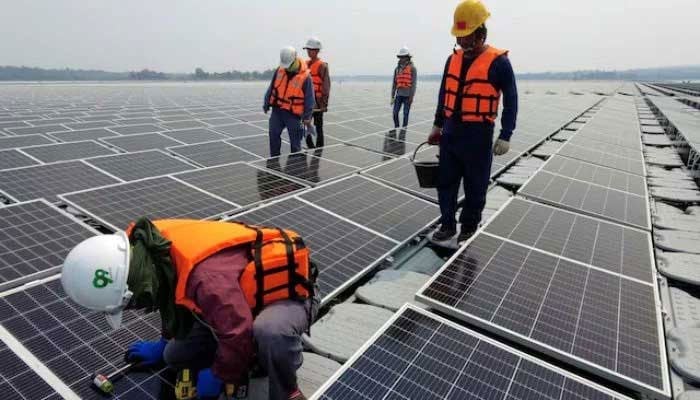
Speakers said such dependence undermines financial sustainability and argued that the government should instead use the crisis to accelerate a transition to renewable energy, particularly decentralised solar power.
The views were expressed at a seminar organised by the Policy Research Institute for Equitable Development (PRIED), titled ‘Pakistan’s just energy transition and climate agenda in the time of war in Iran’, according to a statement.
In her concluding remarks, Minister of State for Climate Change and Environmental Coordination Dr Shezra Mansab Ali Kharral said the government was managing the impact of supply disruptions and rising energy prices linked to the conflict. She said efforts had been made to limit the burden on consumers, while reiterating that Pakistan would avoid long-term, high-cost fossil fuel commitments.
She added that the government remained committed to phasing down fossil fuels in line with its international obligations and would continue to support decentralised solarisation as a viable pathway for sustainable and affordable energy.
Lidy Nacpil, a climate justice activist from the Philippines and convener of the Asian Peoples’ Movement on Debt and Development (APMDD), said the Gulf conflict had triggered energy and economic pressures across Asia, particularly in import-dependent countries such as the Philippines, Vietnam and Pakistan. She said rising prices and supply constraints were leading to shortages and adjustments in daily life.
Linking energy policy to debt and climate risks, she said future strategies should reduce exposure to external shocks, limit environmental damage and avoid adding to sovereign debt burdens. She stressed that expanding renewable energy, particularly wind and solar, was key to meeting these objectives.
Member of the National Assembly Dr Nafisa Shah called for long-term policymaking focused on energy autonomy, urging the government to promote renewables rather than discourage them through taxation. She said solar adoption should be incentivised, including through targeted subsidies for lower-income households.
Shaista Pervaiz Malik, convener of the Parliamentary Task Force on Sustainable Development Goals (SDGs), said equitable access to affordable and sustainable energy was central to the SDG agenda. She added that accelerating renewable energy deployment remained a government priority amid ongoing supply and pricing challenges.
Waqas Moosa, chairperson of the Pakistan Solar Association, said taxes on solar panels and battery storage systems should be reduced or removed. He noted that such systems currently face a cumulative tax burden of up to 48 per cent, and argued that easing these levies could support wider adoption and help address intermittency issues associated with renewable energy.