LAHORE: The first leg of the HBL Pakistan Super League 2026 in Lahore delivered exactly what the tournament promises every year—high-octane cricket, emerging stars, tactical evolution, and glaring inconsistencies.
Across 14 matches at Gaddafi Stadium, the league witnessed dominant batting displays, fluctuating bowling standards, and a clear separation between well-balanced teams and those struggling to find identity.
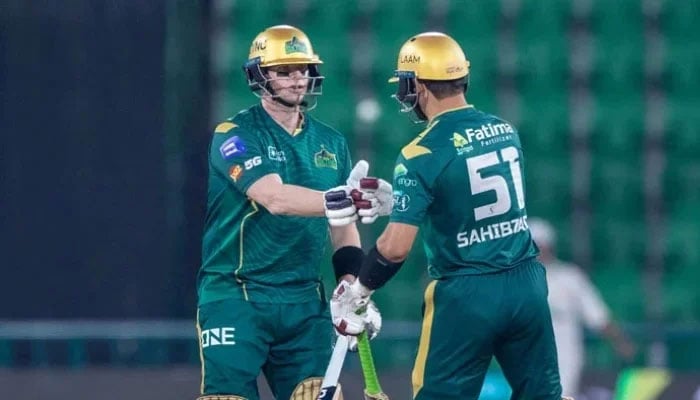
At the top stand Multan Sultans, whose four wins in five matches underline not just consistency, but clarity in role definition. Their success has been built around a settled batting core and a flexible middle order. Sahibzada Farhan has emerged as the standout performer of the phase, combining aggression with responsibility. His 232 runs at a strike rate above 180 reflect a modern T20 opener who not only capitalizes on powerplays but also anchors when needed. Alongside him, Josh Philippe and Shan Masood have provided structural stability, while Ashton Turner has been devastating in the finishing role.
However, Multan’s bowling remains a mixed bag. While Arafat Minhas and Mohammad Nawaz have delivered breakthroughs, their death bowling has occasionally leaked runs. This imbalance could become a concern in tighter contests moving forward.
In contrast, Karachi Kings have been the surprise package, winning all three of their matches to sit second. Their campaign has been defined by composure in chases rather than outright dominance. Hasan Ali has led the bowling charts with eight wickets, rediscovering rhythm and discipline. Meanwhile, the batting unit, led by experienced campaigners like David Warner, has shown adaptability under pressure. Yet, Karachi’s reliance on late recoveries and opposition errors—especially dropped catches—suggests their unbeaten run may not be entirely sustainable without sharper fielding and stronger top-order consistency.
Islamabad United occupy a slightly deceptive third position. With a high net run rate, they have looked dominant in patches, particularly in their chasing performances. The emergence of Sameer Minhas has been one of the biggest positives of the tournament. His fearless batting, highlighted by two rapid half-centuries, signals the arrival of a genuine young match-winner. Supported by the all-round brilliance of Shadab Khan, Islamabad have shown tactical flexibility. However, their bowling unit has been inconsistent, often conceding heavily despite picking wickets. This duality—dominant batting but unreliable bowling—remains their central challenge.
Lahore Qalandars, despite playing only three matches, have shown flashes of brilliance. Their record-breaking 13-over total of 185 demonstrated their explosive batting potential. Players like Mohammad Naeem and Parvez Hossain Emon have provided electric starts, while Shaheen Shah Afridi continues to lead from the front with the ball. Yet, Lahore’s issue lies in consistency—both in maintaining momentum and handling pressure in tight matches. Among the mid-to-lower tier teams, Quetta Gladiators have struggled with balance. While Hasan Nawaz and Saud Shakeel have contributed significantly with the bat.