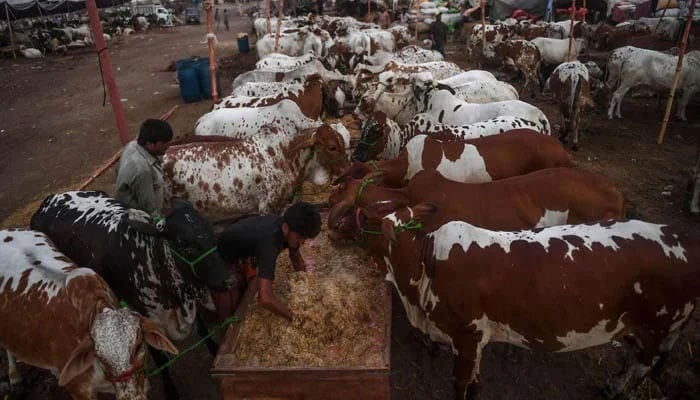
ISLAMABAD: The federal and Punjab governments have agreed on a joint strategy to modernise the livestock sector, aiming to unlock export potential, improve productivity and create jobs in one of the country’s largest but underdeveloped industries.
Minister for National Food Security and Research Rana Tanveer Hussain and Punjab Minister for Agriculture and Livestock Syed Muhammad Ashiq Hussain Shah Kirmani reached the understanding during a high-level meeting focused on coordinated policy reforms and sector-wide development.
Hussain said the livestock sector remains a key pillar of the agricultural economy but suffers from weak regulation and lack of structure, limiting its competitiveness in global markets. He stressed that closer coordination with Punjab, the country’s largest livestock producer, is critical for meaningful reforms.
He called for establishing large-scale modern farms, promoting scientific breeding through registered facilities and shifting toward export-oriented production. He also highlighted strong international demand for live animals, urging the adoption of a regulated and sustainable export framework.
Kirmani outlined Punjab’s initiatives, including the livestock card program that offers interest-free financing to farmers while ensuring animal tagging and vaccination to improve traceability and health standards. He said the province is also advancing livestock fattening and herd transformation programmes to enhance meat quality.
Efforts to establish disease-free zones, particularly in Bahawalpur, are underway to meet international sanitary standards and boost exports, he added.Both sides agreed that aligning federal and provincial policies is essential to build a modern, well-regulated and globally competitive livestock sector, pledging continued coordination and institutional support.