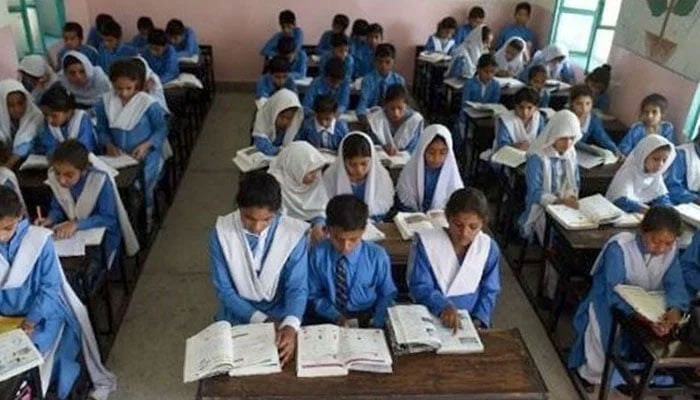
CHITRAL: Residents here on Monday urged the Khyber Pakhtunkhwa Elementary and Secondary Education Department to reconsider new school timings by taking into account ground realities, including rural living conditions, lack of transportation, poverty, and safety concerns for girls.
They warned that keeping children in schools for up to nine hours without proper nutrition was unlikely to improve academic performance and may instead have negative consequences.They called on policymakers to review the current schedule in light of students’ physical, psychological, and economic circumstances, to ensure that education becomes more accessible, effective, and beneficial for children.
The residents raised concerns over the new school timing, calling it unrealistic and inconsistent with principles of educational psychology.According to local community members, nearly 75 percent of students enrolled in public schools walk to school daily. Many of them leave their homes up to an hour and a half early, often without having breakfast.
They argued that imposing long school hours on children without considering their physical and mental condition was inappropriate.Experts in educational psychology emphasized that children cannot effectively engage in learning unless their basic needs were met. They maintained that students, who are hungry, fatigued, or under stress, were less likely to concentrate or absorb information in a meaningful way.
The issue is further compounded by the ban on tuck shops in schools, as well as restrictions on roadside vendors near school premises.Most students come from low-income families where providing lunch for multiple children is not always feasible. In girls’ schools, in particular, there are no tuck shops or alternative arrangements for food.
The situation is more severe in rural and mountainous areas, where transport facilities are scarce. Students are often required to walk long distances and, in some cases, do not return home until after 5 pm. This raises serious concerns, especially regarding the safety of female students.
Educational psychology also underscores the importance of adequate breaks to restore students’ mental energy. However, locals argued that even a 50-minute break became meaningless when students had nothing to eat.