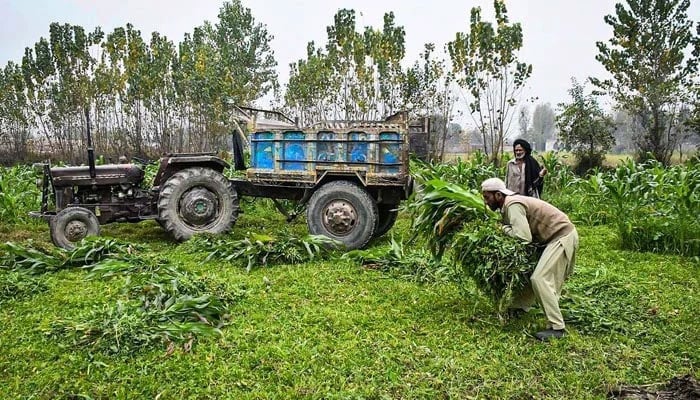
PESHAWAR: A collaborative initiative led by SABAWON, with scientific support from the University of Agriculture Peshawar, is demonstrating that high-quality, home-grown fodder can offer a sustainable solution to the severe shortage of green fodder during winter and peak summer months.
A communication stated that field trials supported by SABAWON and spearheaded by Prof Dr Nazir Ahmad Khan and Dr Owais Akhoonzada introduced two high-performance fodder crops — ryegrass and lucerne — into local farming systems.
Grown under real farm conditions in multiple villages, these crops have shown remarkable adaptability and productivity.
Lucerne, widely known as alfalfa, has emerged as a game-changer during the harsh winter months. With crude protein levels reaching up to 18.5 percent, it remains green and highly nutritious when most other fodders disappear.
When combined with maize silage in feeding trials, a 50:50 lucerne-maize silage mix increased milk yield by 2.0 to 2.4 litres per cow per day. Milk quality also improved significantly, with notable increases in fat, protein and lactose content.
“Cows that used to give eight litres are now producing nearly 11 litres a day-without extra concentrate,” said a farmer involved in the trials.While lucerne addresses winter shortages, ryegrass provides a critical solution during the summer feed gap. Known for its rapid growth and resilience, ryegrass produces lush green biomass when traditional pastures are dry.