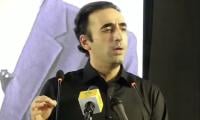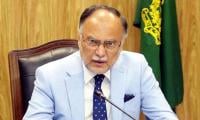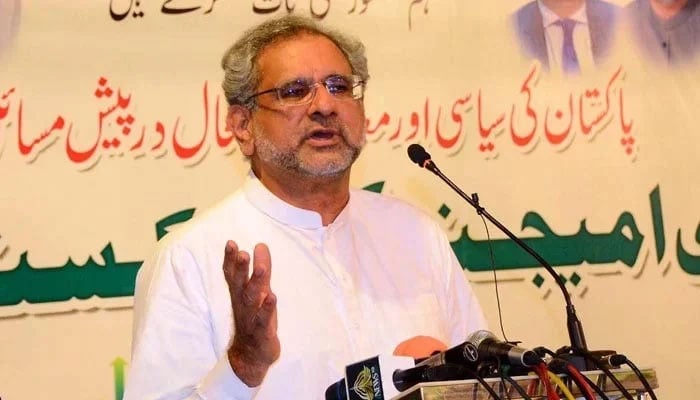
ISLAMABAD: Awaam Pakistan (AP) party convener, former prime minister Shahid Khaqan Abbasi, Saturday criticised the government over its alleged flawed governance, inconsistent policymaking and urged deregulating petroleum prices as it was beyond the government capability.
Speaking at a news conference here, he also strongly advocated promotion of electric vehicles (EVs) and to incentivise it to ease the economic burden side by side with oil prices’ deregulation.
He maintained that no country in the world fixed oil prices administratively, as these were determined by market forces. He underlined that petrol prices should be deregulated and left to private companies to import and sell the fuel.
Abbasi recalled that a similar discussion had taken place in the parliament in 2018, and the decision was considered appropriate. He stressed that a competitive market environment already exists and that deregulation would yield immediate results.
He remarked with confidence, “You will begin to see a difference from day one. Petrol and diesel cannot be sold below their purchase cost,” and recalled that a similar attempt had been made in 2022. He said such decisions must be taken in light of ground realities, particularly during periods of global uncertainty when prices fluctuate.
The Awaam Pakistan chief regretted the absence of a consistent long-term policy and pointed to abrupt changes in fuel prices, noting that petrol and diesel prices went up to Rs450, and within 24 hours they were reduced again.
He decried that Pakistan had yet to formulate a stable policy framework, particularly for electric motorcycles, as despite a decline in the cost of electric motorcycles, policy failures had made both conventional fuel and electric vehicles expensive, reflecting “our policy shortcomings”.