As a senseless war continues in the Middle East, we need to think of the consequences of what is happening in Iran and its neighbourhood, beyond the missiles and bombs and horror that all wars bring.
The reality beyond the drones and attacks is that the blockade of the Strait of Hormuz will prevent fertilisers from reaching countries which desperately need food. The prices of food are increasing everywhere, at least in the Asian region, as fuel prices go up, which is a disaster for the impoverished people of the region.
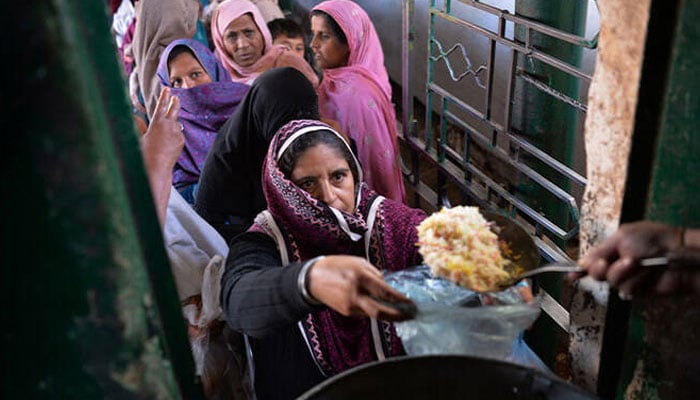
According to the World Food Program, 783 million people worldwide lack sufficient food. Many of them are children. Forty-seven million people in 54 countries live in a food emergency, defined as a lack of sufficient food to sustain life and health. This is the true disaster of the world we live in, and yet it can be solved if the world acts together and stops the lunacy we are currently seeing, unleashed in Iran by the US and its chief ally, Israel.
According to José Andrés, the Spanish-American chef who founded the World Central Kitchen in 2010, $2.5 trillion is currently spent on military budgets worldwide, while $80 billion would be enough to end world hunger. This is something to think about very seriously. It essentially means that if all countries around the world set aside just two per cent of their military budgets to fund food for their people, there would be an end to the unbearable, unmerciful suffering that hunger brings to households everywhere.
While the World Central Kitchen provides food on an immediate basis to as many people as possible, there are long-term solutions that need to be considered. Charity is not necessarily the answer. Charity is intended primarily for the giver, many of whom believe it brings them redemption, rather than for the receiver. A true programme to liberate those who need to receive help would benefit them and alter the picture of the world where few eat lavishly and the rest essentially manage on what they can scrape together. Those who cannot even scrape by simply starve.
The way to manage world hunger and prevent it from arising in nations around the world, including our own, is to improve crop yields and fertilisers, as well as other agricultural aids given to people, so that more food can be produced. At the same time, the concept of a world with borders of the kind that exists today needs to be rethought. After all, people move from one country to another essentially because they seek a better standard of living and better food.
With Pakistan currently experiencing the highest rate of departures from the country in many years, we should be more aware of this than anyone else. There can be questions asked over whether the kind of borders put in place in the US and made firmer by US President Trump, with his efforts to keep out immigrants, really serve any purpose, or if they act to increase hunger by pushing people back into desperate situations.
Essentially, the world as a whole has enough to provide people with what they need to combat hunger and the suffering it causes. It should not be difficult to find the money needed or to put aside a small part of what is spent on wars and military budgets. Doing this would help an extremely large number of people.
Countries also need to remember that while security and protection have become their most important needs in the world we live in today, with President Trump leading a unipolar setup, true security comes only when people are secure and able to live with dignity and without poverty. Solutions need to be found. We already know how we need to act. The question is to create enough will to do so. There is no reason at all why children should go hungry or why we should see the kind of desperation we most recently saw in Gaza and may see again in other nations. Without any discrimination on the basis of politics or political alignments, the world needs to act as a unit against hunger and stop hungry people from being forced to leave their own countries.
Contrary to the widespread opinion, surveys conducted by the World Central Kitchen and other organisations suggest that most people would, if given a choice, prefer to live in their own homelands and amongst their own people and culture. They are forced to move away only because they need to survive. This can change. The best means to do so need to be worked out by experts, and indeed, the groundwork already exists with organisations such as the WFP, which has a huge amount of data on how people can be helped to overcome hunger and to produce food locally so that they do not depend on other places to find it. The challenge now is much the same as those faced after natural disasters in Haiti in 2010, after the bushfires in America in 2017, the bushfires in Australia during the same period and more recently in the Middle East and other parts of the world.
Short-term action can only work for a limited time. This is not enough. We need more sustainable weapons to combat world hunger and end it. This would be the real victory of nations against a common enemy and a true victory for people, no matter where they live and what they do.
The writer is a freelance columnist and former newspaper editor. She can be reached at: [email protected]