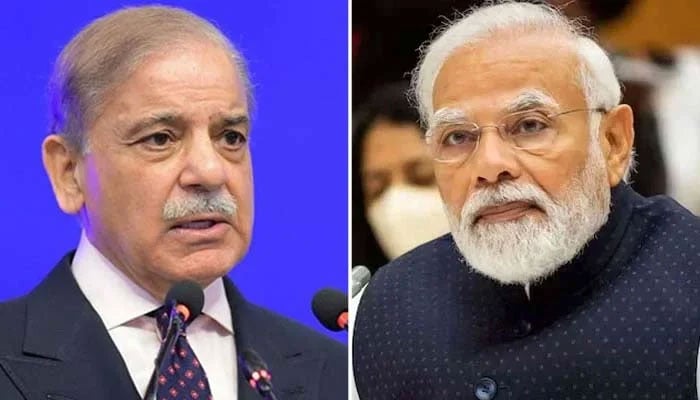
ISLAMABAD: When Indian External Affairs Minister S Jaishankar recently called Pakistan a fixer for acting as a messenger between the US and Iran, the insult betrayed a profound sense of marginalization.
In a sense, it was also an involuntary acknowledgment of reality: In the US President Donald Trump’s eyes, being a fixer is not a mark of shame but a badge of utility, international media said.
Trump boasts of his ability to secure the best deals in history, and he has found in Pakistan’s military chief Field Marshal Asim Munir exactly the sort of interlocutor that he likes—a hard-power operator with direct access to the White House. This has left Indian Prime Minister Narendra Modi in an awkward position, relegated to receiving a single phone call from Trump about the crisis in the Middle East (with Elon Musk listening in on the line).
Pakistan has outperformed India by securing diplomatic relevance. This moment highlights the fragility of the US-India relationship and underscores New Delhi’s poor standing in its extended neighborhood. As India remains tethered to the domestic political narrative of aspiring to global leadership, it is being bypassed in the real corridors of power.
Pakistan’s domestic problems do not make its diplomacy impossible, but whether these vulnerabilities make the current initiative too risky or simply unsustainable is the central question for Islamabad.
These challenges do not diminish the fact that Pakistan has successfully broken the diplomatic quarantine that Modi worked so hard to impose.
In off-the-record briefings, others have said that India should not expect the US to help if there is another border crisis with China, as it did in 2020. The Trump administration has also signaled its disinterest in the Quadrilateral Security Dialogue, which was supposed to be the cornerstone of US-India cooperation in the Indo-Pacific. The strategic alliance that New Delhi mistook for an enduring commitment has proved transient.
For more than a decade, Modi has aimed to render Pakistan diplomatically irrelevant. The current situation, however, shows how Modi’s foreign policy prioritized domestic narratives over the harsh realities of international power dynamics.
At the start of the Iran war, Modi chose to back Israel and thus the US—positioning New Delhi out of a role as a credible arbiter. As a result, it has been compelled to make requests by phone to Tehran to allow ships carrying cooking gas to India to pass through the Strait of Hormuz. Pakistan is now being treated as a credible conduit in the Middle East, where India once hoped to expand its own equities.
Furthermore, the emergence of a middle-power bloc consisting of Pakistan, Egypt, Turkey, and Saudi Arabia—packing three of the Middle East’s biggest armies, nuclear weapons, and financial heft—represents a significant challenge to Indian interests. These are early days, and the bloc possesses the collective diplomatic and economic weight to bypass traditional power centers.
Ultimately, the real embarrassment for India is not that Pakistan has become more active. It is that Field Marshal Munir is being welcomed in capitals where Modi once expected to be consulted, if not deferred to.