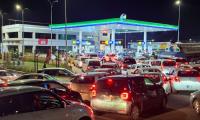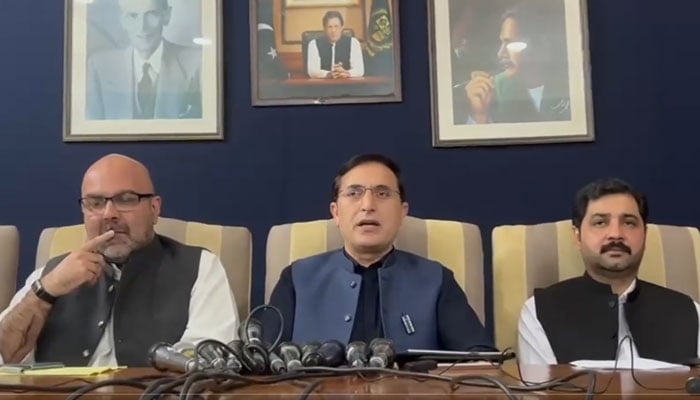
ISLAMABAD: The opposition alliance on Friday slammed the rulers for the unprecedented hike in petrol and diesel rates and their “lavish spending,” alleging they have no roots among the masses and cannot face them.
The opposition leaders accused the government of failing to fulfill its obligation of mobility management and conservation, among other issues.
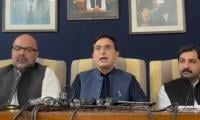
The Pakistan Tehreek-e-Insaf (PTI) and the Tehreek Tahaffuz Aiyeen-e-Pakistan leaders spoke to the media at a hurriedly called news conference and questioned the government over, what they said, its directionless policies.
PTI Chairman Barrister Gohar Ali Khan regretted that on Thursday night, petroleum product prices were massively increased, and warned that this hike will severely affect ordinary Pakistanis and poor farmers. He also lamented that the petroleum levy is not being reduced due to the rulers’ royal spending. “The government could not manage itself, for there was a lack of planning,” he maintained.
He contended that the government resorted to an unnecessary maximum increase, as petroleum products increased in 96 countries, but after Vietnam, prices increased the most in Pakistan, leaving even Nigeria behind.
The government, he claimed, failed to make a deal with the IMF; so how could it achieve a ceasefire between Iran and the US? Referring to the ongoing US-Israeli war on Iran, he questioned what the rulers were doing in the name of mediation. “You did not even take the parliament into confidence,” he charged.
Former Khyber Pakhtunkhwa finance minister Taimour Saleem Jhagra emphasised that if rulers had improved the economy, they would not have had to increase the tax on petrol in a sudden situation. Among other issues, the FBR had a shortfall in tax revenue, as it failed to collect taxes.
While people are being told to be frugal, he said the most expensive planes were bought. Every time, the tax shortfall is taken out of the pockets of the poor, and the hike in oil prices will have a massive impact on the people, with the agriculture sector being severely affected as well.
He continued that other countries have been planning for many years to freeze the price of petrol, but here the rulers are “controlling the judges and controlling the institutions, having priorities entirely different from ground realities.”
Jhagra said it is not understandable that when the price of petrol decreases, the prime minister himself tells the people about it, but when it increases, he sends ministers forward.
“The price of petrol has increased by Rs137 in one day. In March-April 2022, the price of petrol was Rs139, and today the price has increased by this much in one day. Now we need the dialogues that these people used to speak in our time,” he argued. He insisted that they (the rulers) came under pressure from the IMF, but he advised them to send a message to the masses: first sell the luxury planes; ban the 4,500cc vehicles of the IG and the chief secretary. “Whatever they do, free petrol is available, but abolish it now,” he underlined. Jhagra challenged the government to share the figures on how much investment has been made in the country and how much poverty has decreased. He claimed that poverty has increased, unemployment has increased, and people’s purchasing power has decreased — all of this is written in the report of Ahsan Iqbal’s ministry.
“No good is expected from this government, which has no roots in the people, as the PSL is closed to the public, but the Punjab chief minister can watch the match with her family and ministers,” he alleged, claiming this government has lost its credibility. Speaking on the occasion, opposition alliance spokesperson Akhunzada Hussain alleged that Pakistan has signed the worst IMF staff-level agreement ever, while it has faced the worst petroleum products crisis since 1973.
In the given scenario, he lamented that new vehicles were ordered for the Senate chairman and 28 bureaucrats, as Pakistan is in the clutches of this “imposed government”.
“The only solution to the country’s problems is the holding of fair and transparent elections,” he emphasised.
He contended that the Pakistani government always praised the US president and nominated him for the Nobel Prize, but if that is so, then why not use this in Pakistan’s favour — or is this friendship personal?
The alliance spokesman welcomed the talks between Afghanistan and Pakistan in China and insisted that peace should be given a chance and talks should be held with sincerity, for neighbours cannot be changed. He stressed that the situation should be normalised, underlining that Pakistan cannot afford to open a new front.
Majlis Wahdatul Muslimeen central leader Syed Nasir Shirazi — whose party is part of the opposition alliance and whose head, Leader of the Opposition in the Senate Allama Raja Nasir Abbas, is its vice-chairman — slammed the government’s energy policy, which has badly hit the public and all spheres of life.
He pointed out that countries like Turkey and India are benefiting from Iranian energy despite being US allies, but the present rulers in Pakistan, claiming to have good ties with President Trump, are unable to convince him to allow Iranian energy imports. Shirazi noted that despite having signed an agreement with Iran and having a gas pipeline at its border, Pakistan could not benefit from this cheap energy option. “For any economy to keep moving and thriving, uninterrupted and cheap energy is the key,” he emphasised.