ISLAMABAD: The Pakistan People’s Party will observe the 47th martyrdom anniversary party’s founding Chairman and former Prime Minister Shaheed Zulfikar Ali Bhutto today (Saturday) with full devotion and respect at district level.
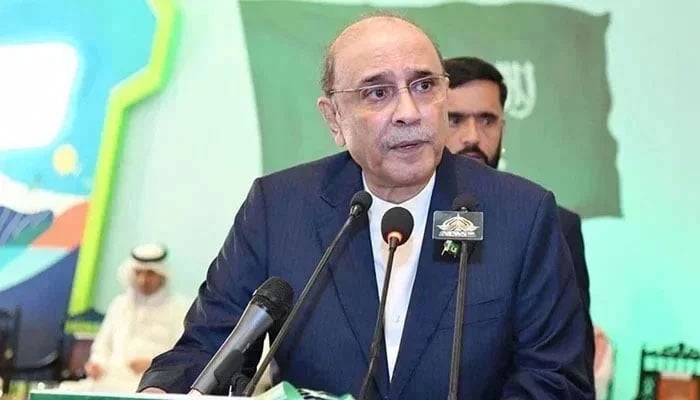
In a statement on eve of President Asif Ali Zardari 47th anniversary of the martyrdom of Shaheed Zulfikar Ali Bhutto said that we observe the 47th anniversary of the martyrdom of Shaheed Zulfikar Ali Bhutto, former Prime Minister and founder of the Pakistan Peoples Party, whose life was brought to an end unfairly on April 4, 1979 following a trial conducted under the martial law regime of General Zia-ul-Haq.
He said Shaheed Zulfikar Ali Bhutto occupies a central place in Pakistan’s political history. “His leadership during a difficult period after 1971 helped restore national confidence and chart a new constitutional course for the country.” The president said the adoption of the Constitution of 1973 remains one of the most enduring achievements of that period. His government also laid the foundations for policies and institutions that shaped Pakistan’s strategic direction and national outlook in the years that followed.
He said nearly half a century after his unfair, unlawful and unconstitutional execution, the Supreme Court of Pakistan, in its opinion delivered on March 6, 2024, held that Shaheed Zulfikar Ali Bhutto had not been afforded a fair trial and due process. “The court observed that legal proceedings “destroyed any semblance of due process and fair trial, and revealed that innocent” man was “rushed to the gallows.”
President Zardari said the Court’s opinion identified several serious departures from the requirements of fair procedure. He said the investigation into the murder had been officially closed in May 1976 after the police and investigative agencies failed to identify the perpetrators. “It was reopened without legal authorisation soon after 5 July 1977, “immediately after General Zia-ul-Haq’s coup d’état overthrowing Bhutto’s government.” He said the case was transferred to the Lahore High Court in an unprecedented manner, without notice to the accused, depriving him of “one right of appeal” and making redundant important procedural safeguards, including the statutory requirement under section 376 of the Code of Criminal Procedure that every death sentence be confirmed by the High Court. The court noted that this provision “has only once been disregarded, which was in this case.”
“The execution of Shaheed in 1979 also drew concern beyond Pakistan, with a number of international leaders and observers expressing unease about the circumstances surrounding the trial and sentence. The episode therefore occupies a place not only in Pakistan’s domestic political history but also in wider discussions about justice, law and political authority.”
“Let us also remember the courage and sacrifice of Shaheed Mohtarma Benazir Bhutto, who initially with the support of her mother, Begum Nusrat Bhutto, carried forward this struggle during years marked by political repression, imprisonment and exile. Through perseverance and democratic resistance, including the Movement for the Restoration of Democracy, she continued the effort to restore constitutional rule and ultimately gave her life in the service of democratic ideals.” As a nation, the President said we must draw clear lessons from this chapter of our history. Our institutions carry a lasting responsibility to uphold the rule of law, protect due process and ensure that justice is administered fairly and without prejudice. These principles remain essential for the strength of our democracy and for the trust that citizens place in the institutions of the state.
In the meanwhile, Chairman Pakistan People’s Party Bilawal Bhutto Zardari also paid glowing tribute to the party’s founding Chairman and former Prime Minister Shaheed Zulfikar Ali Bhutto, on his martyrdom anniversary, saying that he was a visionary statesman whose sacrifice became the eternal voice of democracy and the dignity of the people.
“The country’s first elected Prime Minister, Shaheed Zulfikar Ali Bhutto, was the architect of a Pakistan where power rests with the people and where the sun of hope rises each day from the hearts of the deprived. The martyrdom of Quaid-e-Awam was not the silencing of a voice, but the awakening of a nation’s conscience,” he said in a statement.
Bilawal described Shaheed Zulfikar Ali Bhuttoas a towering and multidimensional statesman in history, who reshaped Pakistan’s political and social course. He said Bhutto Shaheed gifted the nation the unanimously adopted Constitution of 1973, empowered the people with the strength of their vote, established institutions reflecting the will of the masses, introduced historic agrarian and industrial reforms to uplift workers and farmers, laid the foundation of the nuclear program to make national sovereignty inviolable, and strengthened Pakistan’s position on the global stage. This, he said, is a legacy that continues to guide Pakistan’s democratic journey.
The PPP Chairman also highlighted the struggle and sacrifices of Shaheed Mohtarma Benazir Bhutto saying that she carried forward Quaid-e-Awam’s legacy with unmatched courage and dignity, emerging as a symbol of resistance against dictatorship. He said her life was not only a continuation of Bhutto Shaheed’s mission, but also a powerful reaffirmation that the struggle for democracy, justice, and equality must endure across generations.
Chairman PPP Bilawal Bhutto Zardari said that on this solemn day of April 4, every patriotic Pakistani remembers Quaid-e-Awam with reverence and renews the resolve to build the Pakistan he envisioned—a strong, democratic, and welfare state. “His dream remains a sacred trust with us,” he said.