Islamabad:Experts at an international moot called for systemic reforms with robust regulations, transparency and governance autonomy to unlock the vast untapped potential of waqf and zakat.
They said that substantial resources, those institutions remained underutilised and without measurable outcomes and efficient management, their impact on poverty and inequality would stay limited.
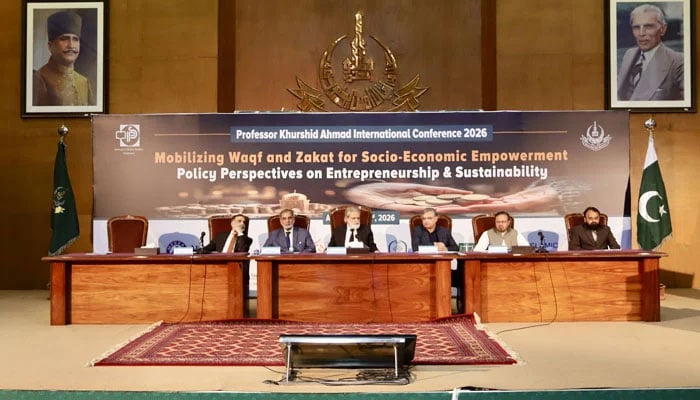
The experts converged on the Professor Khurshid Ahmad International Conference 2026 on day two to discuss ‘Mobilising Waqf and Zakat for Socio-Economic Empowerment: Policy Perspectives on Entrepreneurship and Sustainability.’
Speakers at the hybrid event, jointly organised by the Institute of Policy Studies and Allama Iqbal Open University, included Prof Tahir Mansoori (Askari Islamic Bank), Dr Shahid Naeem (Ministry of Poverty Alleviation), Dr Khaleequzaman (Inclusive Resource Management), Dr Tariq Naseem (SECP), Prof Abdul Quddus Sohaib (BZU), Prof Muhammad Ayub (RIU), Mufti Shakir Jakhura (Bahrain), Prof Abdulhamit Birisik (RIU), Dr Hendri Tunjang and Dr Yuki Rahmawati (Indonesia), Dr Ibrahim Bulushi (Kenya), Dr Husam Helmi (UAE), Ayaz Lashari (Rawalpindi), Prof Anwar Shah and Dr Irum Saba (IBA Karachi) and Dr Ali Salman (Prime Institute).
They said Pakistan’s waqf and zakat landscape faces regulatory challenges and governance inefficiencies. Experts argued that social protection programs are operating in silos, resulting in the underutilisation of waqf and zakat benefits.
It was noted that despite a decades-old instituted zakat system and substantial annual contributions, poverty alleviation outcomes remain limited. At the same time, significant informal contributions continue to flow outside formal systems, highlighting issues of trust and institutional credibility.