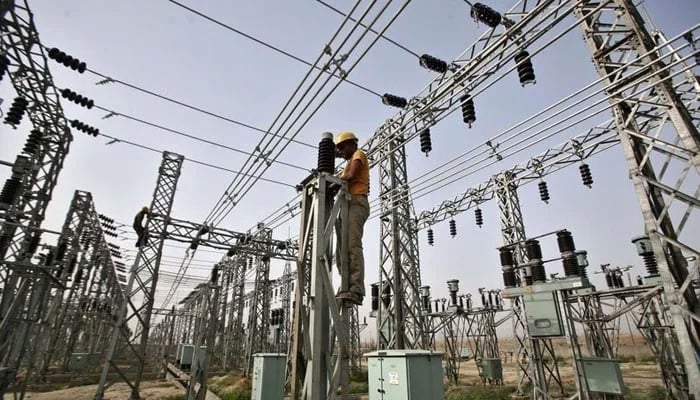
ISLAMABAD: Pakistan’s Surplus Power Package, launched in December 2025, has delivered nearly Rs20.83 billion in combined financial relief to factories and farms in just three months, as industries consumed an extra 2,164 gigawatt-hours of electricity at a heavily discounted rate, official data showed.
The package, offered at Rs22.98 per unit on incremental usage, was designed to put idle generation capacity to productive use while easing the cost burden on manufacturers and agricultural consumers. That strategy appears to be working: the additional consumption equals 23 per cent of all electricity sold to industrial and farm customers between December 2025 and February 2026.
January saw 12 per cent year-on-year (YoY) growth; February followed at 11 per cent, the clearest signal yet that grid power is winning back customers from expensive private generators.
Officials say the back-to-back double-digit demand increases in January and February signal that companies are switching away from costly self-generation, diesel generators and captive power plants, in favour of cheaper grid electricity. That shift reduces pollution and boosts government electricity revenues at the same time.
Industries alone pocketed Rs19.6 billion in savings, while agricultural consumers saved Rs1.14 billion. Among industrial categories, large B3 consumers led with Rs8.76 billion saved, followed by B2 at Rs5.34 billion, B4 at Rs4.02 billion, and B1 at Rs1.48 billion.
The uptake is particularly striking among the largest factories: 67 per cent of B4 consumers, 83 out of 123, enrolled in the package, the highest participation rate of any group. Similarly, 52pc of B3 (1,812 out of 3,470), 48pc of B2 (33,449 out of 69,124), and 43pc of B1 industries (98,718 out of 229,282) availing the package.
Nearly a third of farm consumers (82,334 out of 242,451) also joined, a strong showing for a sector that often relies on diesel-run pumps. In terms of energy consumption share under the package, B1 industries led at 27 per cent, followed by B4 at 25 per cent, B2 at 24 per cent, B3 at 22 per cents, and agriculture at 21 per cent.
The Power Division described the package as a “targeted initiative to boost electricity consumption, optimise available generation capacity, and provide financial relief” over an extended period. It did not say how long the discounted rate would remain in place.
Meanwhile, Leghari also said in a statement on X that the energy crisis is not limited to oil but is also affecting gas and furnace oil, which could impact electricity prices. He added that consultations with provinces are ongoing on changing market hours and other energy-saving measures. Leghari said that the government is making every possible effort to shield the people from this burden and will continue to do so. He further said that if everyone conserves energy, pressure on the country will ease and improvement will come soon.