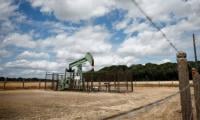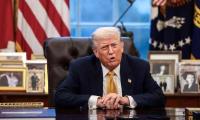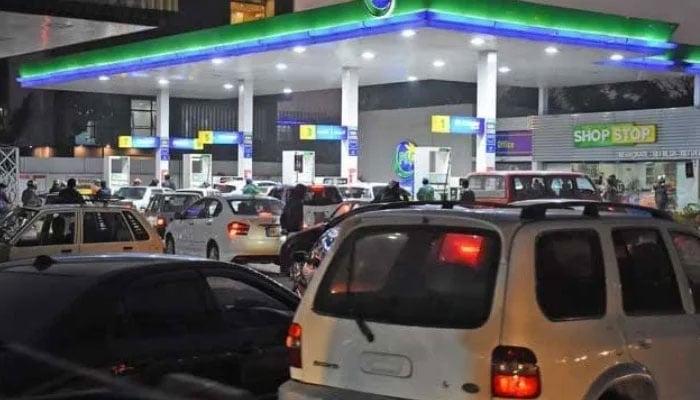
ISLAMABAD: Pakistan sharply raised the fuel prices Thursday, hiking petrol by Rs137.24 per litre to Rs458.41 per litre and high-speed diesel by Rs184.49 to Rs520.35 per litre, as the government scrapped blanket subsidies and pivoted to targeted relief for low-income groups battered by a global energy shock triggered by the Middle East conflict.
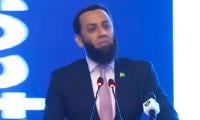
Petroleum Minister Ali Pervaiz Malik and Finance Minister Muhammad Aurangzeb announced the increases in a televised briefing, attributing the surge to record-high oil prices in Dubai and Oman markets, Pakistan’s primary import sources, and warning that the crisis timeline remains uncertain. Pakistan imports 80-90pc of its fuel needs, leaving it acutely exposed to international price swings.
Malik described the increases as “difficult and responsible” decisions forced by circumstances beyond Pakistan’s control, noting that diesel in international markets has exceeded $250 per barrel. He warned the conflict has already dented Pakistan’s recent economic stabilisation gains.
To cushion the blow, the finance minister unveiled a targeted subsidy package. Motorcycle and rickshaw users will receive Rs100 per litre on up to 20 litres monthly for three months. Small farmers will get Rs1,500 per acre during harvest season. Freight trucks will receive Rs100 per litre in fuel relief plus monthly cash support of Rs70,000 to Rs80,000, while public passenger buses will receive Rs100,000 per month. Pakistan Railways will also receive assistance.
Aurangzeb said the government had spent Rs129 billion on petroleum subsidies since March 1 but could no longer sustain universal relief, stressing the need to protect food and energy security while directing support to the most vulnerable.
He further said the government is also weighing energy conservation measures, including revised market operating hours to reduce electricity consumption, with a formal plan expected after provincial consultations next week.
Meanwhile, the Oil and Gas Regulator Authority (Ogra) also raised the maximum ex-depot price of kerosene by Rs34.08 to Rs433.40 per litre, with higher rates permitted in remote areas under freight equalisation rules.
Earlier, addressing a high-level meeting attended by federal and provincial leadership, Prime Minister Shehbaz Sharif said that Chief of Army Staff and Chief of Defence Forces (COAS & CDF) Field Marshal Asim Munir has been playing a key role in helping secure a ceasefire in the region and reduce tensions.
“Deputy Prime Minister and Foreign Minister Muhammad Ishaq Dar spoke several times with his Iranian counterpart and the foreign ministers of other countries. He is working very hard in this regard. He visited China and also sustained an injury to his arm, but he did not care about it. Similarly, COAS & CDF Field Marshal Syed Asim Munir is also playing a key role. Pakistan has made every possible effort to secure a ceasefire, and these efforts are still ongoing. With the grace and blessings of Allah Almighty, success will be achieved in this matter,” the premier said.
He said two Pakistani vessels were stranded in the Strait of Hormuz but had safely crossed due to the efforts of Deputy Prime Minister Ishaq Dar and Field Marshal Asim Munir. He said that there would also be some progress with regard to another 20 vessels.
Shehbaz outlined a series of policy measures to shield Pakistan’s economy from the adverse effects of the ongoing regional conflict, emphasizing austerity, protection of vulnerable segments, support for agriculture and national unity to sustain economic stability and growth.
The prime minister said Pakistan’s economy, which had stabilised over the past two years through coordinated efforts by federal and provincial governments, was now facing renewed pressure due to global uncertainty and supply disruptions. He stressed that the government had already taken difficult decisions to manage fuel prices and maintain stability in essential sectors.
He said the government absorbed a major portion of the fuel price shock by reducing the petroleum development levy and equalising diesel and petrol prices through a Rs55 adjustment.
He described it as a necessary step to protect citizens from a heavier financial burden.
The prime minister also announced a range of austerity measures adopted by the government, including voluntary surrender of two months’ salaries by federal cabinet members, a 50 percent reduction in government fuel consumption, and restrictions on the use of official vehicles.
He said members of parliament had also contributed to national savings efforts in solidarity with the public.
The prime minister said the federal government had allocated Rs129 billion in the past three weeks to provide a financial cushion against the economic impact of the crisis, while Rs100 billion savings were generated through cuts in the Public Sector Development Programme (PSDP) to support urgent national priorities.
He underscored the importance of national political consensus in responding to the evolving situation, appreciating the constructive role played by political leaders, including Pakistan Peoples Party Chairman Bilawal Bhutto Zardari, and acknowledging the supportive consultations held at the Presidency with participation from provincial leadership. The prime minister said the government’s foremost priority was to safeguard low-income households and emphasized a policy shift toward protecting vulnerable groups. He called on affluent segments of society to demonstrate sacrifice and solidarity during the challenging period. He directed authorities to prioritise funding for agriculture, public transport and goods transport sectors to control inflation and ensure uninterrupted economic activity. He stressed the urgency of the harvesting season, and said farmers must be ensured adequate diesel supplies to sustain crop production and support a quick economic turnaround. The prime minister further urged federal and provincial governments to postpone non-essential development projects and redirect savings toward relief measures for the poor and stabilisation initiatives.
He said continued political stability was essential for sustaining economic stability and growth, adding that coordinated national action and disciplined implementation of conservation policies would help protect workers, widows and underprivileged communities during the crisis.
Earlier, the prime minister welcomed the deputy prime minister, field marshal, chief ministers of all the four provinces including Gilgit Baltistan, the AJK prime minister and federal cabinet members who participated in the meeting.
Meanwhile, the Federal Investigation Agency (FIA) along with Oil and Gas Regulatory Authority, local administrations and other relevant authorities has initiated countrywide crackdown against hoarding of petroleum products.
Authorities have carried out a series of operations targeting illegal storage and distribution activities different cities, including Islamabad and the Rawalpindi Division, a spokesman for the FIA said.
During the crackdown, FIA officials conducted targeted raids that resulted in recovery of heavy quantity of petroleum products, the spokesman maintained adding, 16 targeted raids, resulted in the recovery of approximately 25,000 litres of petroleum products. Additionally, 16 illegal storage and distribution centres were identified and subsequently sealed.
The agency’s director general has issued strict instructions, emphasising that no individual or group will be allowed to engage in hoarding, profiteering, or overpricing of petroleum products, maintaining that legal action will be taken without discrimination against those found violating the law.
Meanwhile, Punjab Senior Minister Marriyum Aurangzeb has praised Prime Minister Shehbaz Sharif for delaying the impact of rising global oil prices on domestic consumers for nearly a month through fiscal management and austerity measures. In a statement, she said the government created fiscal space by curbing unnecessary expenditures and maintaining stable fuel supplies despite international market volatility.
Aurangzeb noted that while a price increase has now become unavoidable, the government has sought to cushion its impact through targeted subsidies. She said relief has been extended to motorcycle users, small farmers owning less than 25 acres of land and the transport sector.