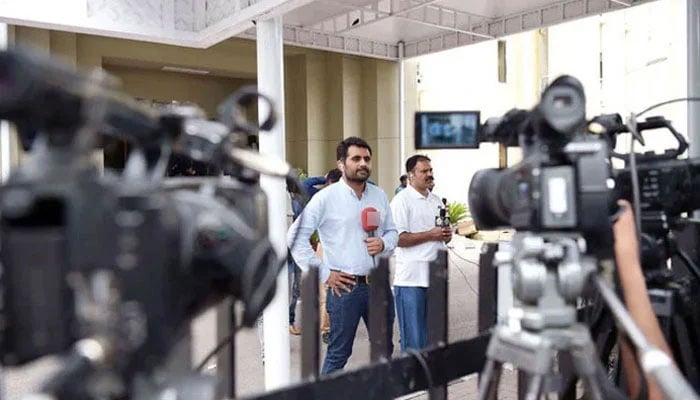
A provincial convention on media laws, regulation and ethics unanimously rejected amendments to the Pakistan Electronic Crimes Act (Peca) 2025, describing them as a draconian black law designed to intimidate journalists and curtail the independent role of Pakistan’s media.
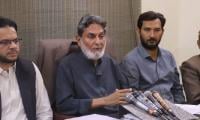
The convention, which was organised by the Pakistan Federal Union of Journalists (PFUJ) and Karachi Union of Journalists (KUJ) at the Karachi Press Club, also adopted a resolution demanding that all cases registered against journalists under Peca be immediately and unconditionally withdrawn.
The convention demanded that Peca be withdrawn, subjected to a detailed and transparent debate within the relevant committees of the National Assembly and the Senate. It resolved that institutions responsible for enforcing Peca should publicly disclose what action had been taken against officials involved in the misuse of the law.
It resolved that the government cease using advertising policies as a lever to punish or pressure independent media organisations. It also demanded that the recently introduced stringent defamation legislation in Punjab perceived as an attempt to curtail journalism be reopened for debate.
It resolved that media workers be protected from the financial hardships generated by government policies affecting the media sector. The participants also emphasised that all outstanding salaries and dues owed to media workers be cleared without delay, warning that economic pressure had increasingly become a potent mechanism for undermining media freedom.
The gathering reaffirmed that the protection of freedom of expression and the right to access information were indispensable pillars of a functioning democracy. The convention was attended by a large number of journalists, human rights activists, lawyers, legal experts and representatives of civil society.
Participants in the convention expressed concern that the state had earlier assured the journalistic community that the law would not be deployed against the press. Sindh Labour Minister Saeed Ghani said that for the ideal freedom of the press in the country, we needed to remove all the defects from society.
He said it was the responsibility of the state and governments to solve the problems of media workers and ensure that the support it was giving to media owners, newspapers and social media reached the media workers.
Pakistan Peoples Party leader Senator Raza Rabbani said it seemed that the constitution had been held in abeyance as not only the freedom of press but also other provisions of the constitution, including implementation of the National Finance Commission award, and provincial autonomy had not been implemented in letter and spirit.
The Muttahida Qaumi Movement’s leader of the opposition in the Sindh Assembly, Ali Khurshidi, emphasised the need for consensus on freedom of expression and press. Among those who addressed the convention were senior journalists Mazhar Abbas and Nasir Zaidi, academic Dr Tauseef Ahmed Khan, former Supreme Court Bar Association president Yaseen Azad, social activist Younus Bandhani of the organisation Bahbeli, Ahmed Chinoy, and actor Mustafa Qureshi.