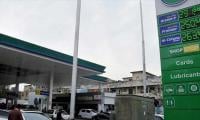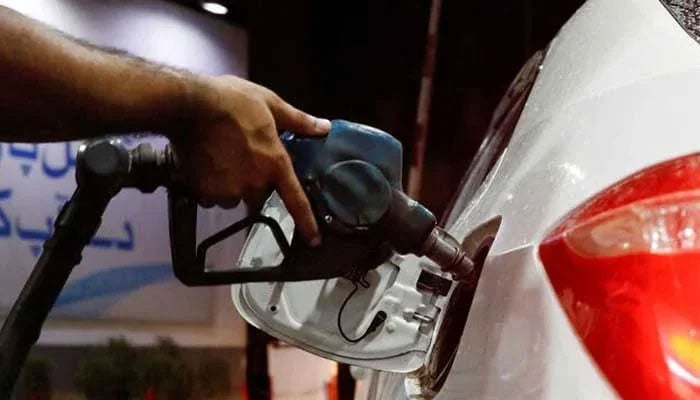
LAHORE: The ongoing global fuel shock has exposed the economic fault lines of South Asia with remarkable clarity. Countries in the region have responded in sharply different ways — revealing both their strengths and vulnerabilities. For Pakistan, the contrast offers not just insight, but a warning.
Sri Lanka, still recovering from its devastating economic collapse in 2022, has responded with urgency and severity. Fuel rationing is firmly in place, enforced through a digital quota system. Weekly limits on petrol purchases, reduced working days and restrictions on mobility reflect a country in crisis-management mode. Prices have increased substantially, and electricity tariffs have followed suit. The objective is simple: conserve scarce foreign exchange and ensure that essential sectors continue to function.
Bangladesh, though economically more stable than Sri Lanka, has also moved decisively. It has introduced controlled rationing, limited fuel station hours, and imposed restrictions on consumption. Administrative measures, such as promoting remote work and reducing transport usage, are aimed at curbing demand without causing panic. At the same time, Dhaka is aggressively diversifying its fuel import sources to avoid supply shocks.
India, by contrast, has taken a fundamentally different route. With stronger foreign exchange reserves and greater fiscal space, it has chosen to shield its population from the immediate impact of rising oil prices. The government has cut fuel taxes and absorbed part of the cost increase, while oil companies bear some burden. There is no rationing, and supply chains remain stable. India’s strategy reflects economic strength: it is buying time and stability through fiscal intervention.
Pakistan, however, finds itself in a far more precarious position, yet without a clearly defined strategy. So far, the government has opted for a partial pass-through of rising fuel costs. Prices have increased, but not to the extent required to fully reflect global realities. Subsidies, though reduced, continue to burden an already strained fiscal system. Unlike Sri Lanka and Bangladesh, there is no formal rationing. Unlike India, there is no fiscal capacity to absorb prolonged shocks.
Instead, Pakistan is drifting into what may be called “implicit rationing”. High fuel and electricity prices are suppressing demand, while chronic gas shortages, particularly for industry, are forcing adjustments. This is not policy by design, but adjustment by compulsion.
By avoiding explicit decisions, Pakistan risks the worst of both worlds: rising inflation without effective demand control, and mounting fiscal pressure without economic relief. The absence of a clear strategy also fuels uncertainty — discouraging investment, disrupting industrial planning and eroding public confidence.
The lesson from regional peers is stark. In times of crisis, indecision is more damaging than unpopular decisions.There must be a transparent and phased alignment of fuel prices with global markets. Artificially suppressing prices only delays the inevitable while worsening fiscal imbalances. Targeted subsidies, limited to the most vulnerable segments, are far more effective than blanket relief.
The government should seriously consider structured demand management. This need not take the extreme form of Sri Lanka’s rationing system, but calibrated measures, such as reduced working hours, promotion of remote work, and fuel conservation incentives, can significantly ease pressure.
Energy diversification must move from rhetoric to urgency. Pakistan has already demonstrated potential in alternate energy sources, particularly in agriculture-based biomass and solar power. These initiatives must be scaled up rapidly, especially for industrial consumption.
Finally, and most importantly, policymakers must communicate honestly with the public. Energy crises cannot be managed through denial or short-term fixes. Public cooperation is essential, and that can only be secured through transparency and trust.
The current fuel crisis is not just an external shock; it is a test of economic governance. Countries that act decisively, even at political cost, are better positioned to recover. Those that delay are eventually forced into harsher adjustments under worse conditions. Pakistan still has a window to act. But that window is narrowing.