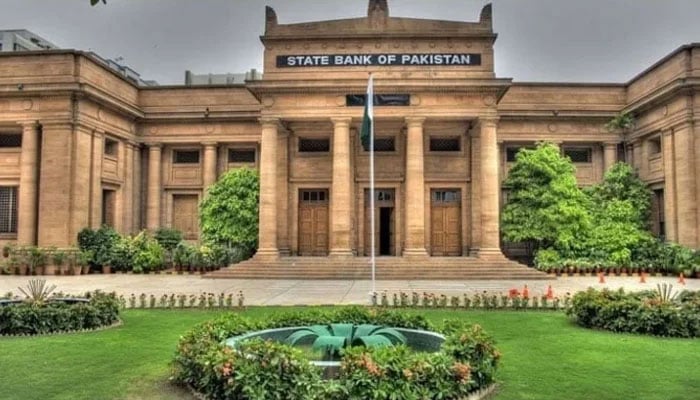
KARACHI: The State Bank of Pakistan bought $6.9 billion from the interbank market last year, with purchases reaching $1.024 billion in December alone, data showed on Tuesday.
The SBP bought $620 million from the market in November.“[The] SBP increased the purchases during December in order to fund the external interest payments and dividend repatriation, along with increasing the central bank reserves,” said Awais Ashraf, director of research at AKD Securities Limited.
According to Saad Hanif, head of research at Ismail Iqbal Securities, the central bank’s dollar buying increased, possibly due to improved liquidity conditions in the interbank market. Conversely, he believes that robust remittance inflows, the realisation of export proceeds, and the materialisation of official inflows may also contribute to the billion-plus figure. “SBP appears to be leveraging this window to rebuild its foreign exchange reserves, indicating a proactive reserve accumulation strategy,” Hanif said.
The SBP’s latest FX intervention numbers come following a staff-level agreement between the International Monetary Fund and Pakistan on the country’s loan programme, which is a crucial step toward unlocking $1.2 billion in funding. This agreement, pending approval from the IMF board, will grant Pakistan access to $1 billion through the Extended Fund Facility and $210 million from the Resilience and Sustainability Facility. If approved, this would bring the total disbursements under the ongoing programme to $4.5 billion.
The IMF, in a statement issued last week, said that the exchange rate flexibility should continue to serve as the primary shock absorber, including against spillovers from the conflict in the Middle East, while the SBP should ensure that the banking system remains able to accommodate import financing and other external payments amid potentially elevated balance of payments pressures.
The impact of the US-Iran war on Pakistan has so far remained contained, as authorities have effectively managed the energy supply chain. However, the expected decline in remittances and higher import payments amid elevated oil prices may put pressure on the external account.