ISLAMABAD: The federal government on Monday decided against imposing a proposed nationwide smart lockdown aimed at reducing fuel consumption, opting instead for alternative austerity measures amid concerns that restrictions could hurt industrial output and exports.
The meeting, chaired by President Asif Ali Zardari, was attended by Prime Minister Shehbaz Sharif, federal ministers, chief ministers of all four provinces and Gilgit-Baltistan, the prime minister of Azad Kashmir, the national security adviser, and other senior officials.
Participants assessed the mounting pressure on global oil and gas supply chains and its potential spillover effects on Pakistan’s economy. Despite these challenges, the government decided to ensure uninterrupted availability of fuel across the country. Proposals to increase petroleum prices were discussed but ultimately rejected in a bid to protect consumers, particularly low-income groups.
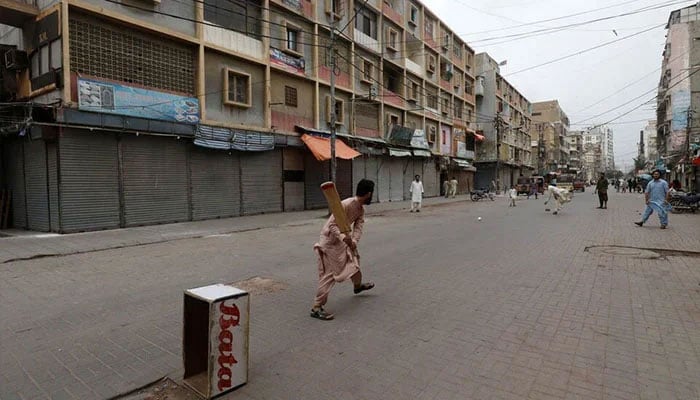
Sources said the meeting also considered proposals aimed at curbing fuel consumption, including the introduction of two weekly holidays — Saturday and Sunday — along with a nationwide smart lockdown on those days.
However, the proposal triggered a debate among participants. Several members cautioned that such restrictions could disrupt industrial activity, dampen exports, and slow down economic momentum at a critical time.
Provincial governments, in particular, expressed reservations about the potential adverse impact on production and trade. The meeting ultimately decided against imposing a smart lockdown, opting instead for targeted austerity and administrative measures to manage fuel consumption without hurting economic activity.
An interesting revelation during the discussion was that despite an increase in petroleum prices, the country’s fuel consumption has surged by around 25 per cent, underscoring inefficiencies and rising demand pressures.
President Asif Ali Zardari directed that, amid oil and gas supply pressures, escalating energy costs, and the evolving regional environment, all possible measures should be taken to ease the burden of rising prices on the common man, especially for essential goods and services.
The president made these remarks while chairing an expanded consultative meeting at Aiwan-e-Sadr on Monday, which was attended by Prime Minister Shehbaz Sharif and the leadership of the provinces, as well as Gilgit-Baltistan and Azad Jammu and Kashmir (AJK).
Other participants included Deputy Prime Minister Ishaq Dar, Minister for Defence Khawaja Asif, Minister for Interior Mohsin Naqvi, National Security Advisor Lt Gen Asim Malik, Pakistan Peoples Party (PPP) Chairman Bilawal Bhutto Zardari, Minister for Finance and Revenue Muhammad Aurangzeb, Minister for Information and Broadcasting Attaullah Tarar, Minister for Law Azam Nazeer Tarar, Minister for Planning Ahsan Iqbal, Minister for Petroleum Ali Pervaiz Malik, Minister for Economic Affairs Division and Establishment Senator Ahad Khan Cheema, Punjab Chief Minister Maryam Nawaz, Sindh Chief Minister Syed Murad Ali Shah, Khyber Pakhtunkhwa Chief Minister Sohail Afridi, Balochistan Chief Minister Sarfraz Bugti, Gilgit-Baltistan caretaker Chief Minister Justice (retd) Yar Muhammad, AJK Prime Minister Faisal Mumtaz Rathore, Minister for Climate Change Musadik Malik, Minister for IT Shaza Fatima Khawaja, Minister for Power Sardar Awais Ahmed Leghari, Advisor to PM Dr Syed Tauqir Shah; Advisor to PM Rana Sanaullah Khan, SAPM Tariq Bajwa, Punjab Senior Minister Marriyum Aurangzeb, Senator Saleem Mandviwala, Dr Asim Hussain and senior officers of ministries and divisions concerned.
The meeting was briefed on the steps being taken by the governments of the four provinces, as well as Gilgit-Baltistan and AJK, to manage price pressures, ensure the availability of essential supplies, and mitigate the impact on the public, enabling a coordinated national response.
The meeting also reviewed the broader regional situation and its potential effects on Pakistan’s security environment, economic outlook and food security. The meeting was assured that despite the global crisis, timely decisions have ensured no disruption to fuel supply, and that adequate fuel stocks are currently available to meet the country’s needs, with arrangements for the future also under way.
DPM Dar informed the meeting about the government’s proactive diplomatic outreach, including his recent engagements with the leadership of Türkiye, Saudi Arabia and Egypt, as well as leaders of countries involved in the conflict. He also briefed the meeting on his upcoming visit to Beijing.
The meeting was informed that proposals to increase oil prices had repeatedly been rejected by the prime minister, and that funds saved through austerity measures were being channeled toward public relief.
It was noted that the spirit of austerity had begun with the government cutting down its own expenditure, including cuts to the development budget and the immediate grounding of 60 percent of official vehicles.
President Zardari reiterated that the economically vulnerable would not be left alone in this difficult time. He directed that coordinated decision-making be pursued, with alignment between economic management, energy planning, food security measures and security preparedness.
The president also called for public awareness efforts, focusing on reducing fuel consumption, encouraging the use of public transportation, and promoting shared mobility practices as part of a broader demand management approach.
Separately, chairing a meeting to review the impact of the Middle East situation on petroleum products, availability of current stocks, and public relief measures, the prime minister said that by using digital systems, public relief would be delivered directly to the common man.
He said that the government was making every effort to provide further relief to the poor and middle-income class, and vowed not to abandon them in this challenging time.
The prime minister said that the proposals to hike fuel prices had been repeatedly rejected, and the funds saved through austerity measures were being utilised for public relief.
He said that owing to the timely decisions, the disruption in the supply of fuel had been averted despite the global crisis. He told the participants of the meeting that Pakistan was making vigorous diplomatic efforts to restore regional peace.
A detailed briefing was given to the participants on the implementation of government measures for fuel conservation, future course of action, and the current stock position. It was told that the coordination was underway with the provincial governments to expedite the ownership registration of motorcycles and rickshaws to provide them with swift relief.
An Intelligence Bureau audit report was also presented to the meeting regarding the implementation of the prime minister’s fuel-saving and austerity campaign. It was informed that the strict implementation of the drive was being ensured.
The meeting was told that sufficient stocks of fuel were available to meet the country’s needs, and arrangements were also being made for the future. Despite an increase in the levy on the high-octane fuel used in the luxury vehicles, the prices of the jet fuel remained unchanged.
It was also informed that an adequate stock of medicines was available to fulfill the country’s requirements, and proposals regarding the future course of action were also presented to the meeting.
The meeting was attended by DPM Dar, federal ministers Khawaja Asif, Ahsan Iqbal, Musadik Malik, Ahad Khan Cheema, Syed Mustafa Kamal, Muhammad Aurangzeb, Ataullah Tarar, Ali Pervez Malik, Shaza Fatima Khawaja, Rana Mubashir Iqbal, Sardar Awais Khan Leghari, Advisor to PM Rana Sanaullah, Minister of State Bilal Azhar Kiani, Special Assistants Tariq Fatemi and Talha Burki, MNAs Engineer Qamar-ul-Islam, Riaz-ul-Haq and Hafiz Muhammad Numan, and other senior officials.
Earlier, President Zardari and Prime Minister Shehbaz held a separate meeting and reviewed the national security situation, evolving regional situation and its impacts on Pakistan.
DPM Dar, Bilawal Bhutto Zardari, Mohsin Naqvi and NSA Lt Gen Asim Malik were also present. The meeting also discussed the overall national security situation and other matters of national importance.
The participants also held consultations on the economic, energy and security challenges facing the country. They emphasised the need for a coordinated national strategy and enhanced institutional harmony.
Meanwhile, the prime minister received a telephone call from the European Council president, PM Office Media Wing said in a press release.
Shehbaz and Antonio Costa expressed their deep concerns over the ongoing hostilities in Iran and the Gulf countries, and their impact on the global economy. They stressed upon the need to resolve the crisis through dialogue and diplomacy.
During their warm and cordial conversation, the two leaders discussed the ongoing hostilities in the Middle East as well as exchanging views on Pakistan-EU relations. The prime minister also shared with the EU Council president, the latest developments in Pakistan’s mediation efforts to de-escalate the Middle East crisis.
The EU Council president endorsed Pakistan’s peace efforts while reaffirming that the EU supported all diplomatic efforts, aimed at restoring peace and stability in the region.
Highlighting the importance of GSP Plus, the prime minister said that he looked forward to inaugurating the first ever Pakistan-EU Business Forum in Islamabad on April 28-29, this year. While highlighting that Pakistan attached high significance to its relations with the EU, the prime minister recalled that his scheduled visit to Brussels had to be postponed last month.
The EU Council president said that he looked forward to welcoming him in Brussels on mutually convenient dates. The prime minister also conveyed his good wishes for European Commission President Ursula von der Leyen
In a tweet, European Council President Antonio Costa said he had held a ‘good call’ with Shehbaz Sharif regarding the war in Iran. “Good call today with the Prime Minister of Pakistan Shehbaz Sharif to hear his assessment on the Iran war, as well as the outcome of the recent consultations between the Foreign Ministers of Egypt, the Kingdom of Saudi Arabia, Pakistan and Turkey held in Islamabad,” wrote Costa.
“The EU is gravely concerned over the prolongation of the war and its increasing global impact,” added Costa. Meanwhile, Pakistan’s fuel reserves have risen to over four weeks, with supplies for both March and April fully secured, Adviser to the Finance Minister Khurram Schehzad said, terming the situation stable and improving.
“Earlier, stocks stood at 24 days, which increased to 28 days and have now exceeded four weeks,” Schehzad said while speaking on Geo News programme “Geo Pakistan”. His remarks came a day after Deputy Prime Minister and Foreign Minister Senator Ishaq Dar announced that Iran has agreed to facilitate additional Pakistani vessels through the Strait of Hormuz, calling it a positive step towards peace and stability.
“I am pleased to share a great news that the Government of Iran has agreed to allow 20 more ships under the Pakistani flag to pass through the Strait of Hormuz; two ships will cross the Strait daily,” Dar said in a post on X.
Speaking to Geo News, Schehzad added that crude oil inflows were continuing and being refined into petrol and diesel, further increasing stock cover. “Consider March and April fully covered; we are now looking ahead,” he said.
The adviser highlighted improved logistics, noting that Pakistan was receiving facilitation through the Strait of Hormuz. He said Iran — which has blocked the sea route for “enemy nations” — was allowing Pakistani oil shipments to move on priority, which would further strengthen fuel reserves and ensure timely supplies to refineries.
Schehzad maintained that despite limited resources, the country had avoided supply disruptions seen elsewhere. “Supplies are intact, in fact, they are improving… you stay worry-free, your stocks will not decrease,” he said.
On the fiscal side, he said the government was managing the burden of maintaining petroleum prices through expenditure cuts and austerity measures rather than calling it a subsidy. He pointed to reductions in development spending and a 20 percent cut in non-employee related expenditures to offset the impact.
He also outlined broader conservation steps, including reduced fuel usage by government departments, salary contributions by public officials, and work-from-home measures, saying these had collectively eased pressure.
Responding to questions on targeted relief and demand management, Schehzad said multiple strategies were under consideration but not immediately required, given the improving supply situation.
He stressed that continued cooperation between the government, provinces, and private sector would be key to managing the challenge, adding that Pakistan had so far handled the situation effectively and would continue to do so.
Meanwhile, Pakistan’s fuel supply system is facing fresh uncertainty as the government considers overhauling the existing weekly petroleum pricing mechanism amid heightened global market volatility linked to tensions around the Strait of Hormuz.
According to official and industry sources, a proposal is under review to replace the current Platts-based weekly pricing formula with a system based on average inventory cost, calculated on a monthly or fortnightly basis. A committee constituted by the prime minister is examining the move, with Musadik Malik playing a key role in consultations.
The issue has gained urgency, with back-to-back meetings held between government officials, the Oil and Gas Regulatory Authority (Ogra) and representatives of oil marketing companies (OMCs). However, the industry has firmly opposed the proposed change, warning that it could disrupt fuel supplies if implemented under current conditions.
Stakeholders argue that the existing system aligns domestic prices with international benchmarks, ensuring that import costs are adequately reflected. Moving to an inventory cost-based model, they say, could create a mismatch between procurement costs and selling prices, discouraging imports and potentially leading to shortages.
The concerns come amid a sharp rise in global logistics and insurance costs. Freight charges have surged significantly, with shipments from Yanbu increasing from about $4 million to nearly $10 million, while costs from Fujairah have climbed from around $1 million to $4 million. Insurance premiums have also escalated from roughly 0.5 percent to close to 10 percent, further increasing the cost of imports.
However, official sources claim that Petroleum Minister Ali Pervaiz Malik is not in favour of the proposed change, as it could unsettle the OMCs and risk disrupting fuel supplies. The minister did not respond to queries on the matter. Officials at Ogra have also shown little support for the move, fearing it could prove detrimental to supply stability.
Industry officials caution that introducing a new pricing mechanism in the current environment would add pressure to an already strained supply chain. Sources said that instead of moving toward full deregulation of petroleum product prices, the government appears inclined to revert to a monthly or fortnightly pricing regime, effectively retaining a more direct role in price-setting.
“There is no room for misalignment between cost and price in the current scenario,” an industry source said, adding that any sustained losses would make imports commercially unviable.
Analysts point to a recent increase in petroleum levy on high-octane blending component (HOBC) as an example of unintended consequences from abrupt policy changes. The move led to a shift in consumer demand toward subsidised petrol, resulting in a decline in HOBC sales and distortions in the market.
Market participants emphasise that policy predictability is critical for the sector, as frequent changes affect procurement planning, inventory management and financial forecasting. They also highlight unresolved structural issues, including delays in input tax adjustments and limited mechanisms to address exchange rate losses.
Some officials have also floated the idea of targeted subsidies for specific consumer segments, such as motorcyclists and rickshaw drivers. However, industry representatives say such measures would be difficult to implement effectively without robust systems to ensure transparency and prevent misuse.
Experts suggest that a more sustainable approach would focus on strengthening domestic refining capacity and rationalising import premiums to reduce reliance on costly imports.
For now, the proposed pricing shift remains under consideration. However, industry stakeholders have urged the government to proceed cautiously, warning that any abrupt change could undermine the stability of Pakistan’s fuel supply system at a time when external risks remain elevated.
Separately, the Cabinet Committee to Monitor Petrol Prices was informed on Monday that international oil markets remain highly volatile and tight, with notable increases in benchmark prices and cargo premiums in recent days.
A meeting of the committee was held under the chairmanship of Finance Minister Muhammad Aurangzeb as part of the ongoing daily review of petroleum stocks and developments in the energy sector amid evolving geopolitical conditions.
The committee undertook a comprehensive review of petroleum product stocks, supply arrangements and import plans. It was noted that the current supply position remains stable, with diesel stocks providing approximately 23–24 days of cover, while petrol availability continues to remain comfortable. The committee was informed that crude oil stocks currently provide around 11 days of cover, with additional cargoes in transit and committed volumes expected to sustain refinery operations and product availability through April.
The Petroleum Division briefed the committee that import plans for April are being actively managed, with significant volumes already secured through commercial and government-to-government engagements. Refinery operations are being maintained at optimal levels, with efforts underway to maximise throughput and ensure conversion of crude into refined products to support domestic demand.
Members noted that prevailing market conditions reflect supply-side uncertainties linked to regional developments, resulting in elevated premiums for both diesel and petrol cargoes.
The committee also reviewed procurement strategies and noted ongoing efforts to secure favourable supply arrangements under existing contracts, including government-backed engagements that offer comparatively lower costs than prevailing spot market rates. At the same time, members emphasised the importance of prudent procurement decisions in view of variations in pricing across suppliers and tightening market conditions.
Operational aspects of fuel imports were also discussed, including shipping arrangements, insurance considerations and logistical coordination. The committee considered proposals relating to the use of national shipping capacity and agreed that all such arrangements will be guided by commercial prudence, transparency and the imperative of ensuring uninterrupted supply.
The committee reviewed demand patterns in the domestic market and noted an increase in offtake in recent weeks. Members emphasised the need for close monitoring to discourage speculative stockholding and ensure smooth distribution across the country. Provincial administrations and regulatory authorities have been directed to intensify oversight and enforcement measures to maintain market discipline.
The committee also reviewed progress on strengthening monitoring mechanisms across the petroleum supply chain. Particular emphasis was placed on improving real-time data visibility, including at the retail level, through the development of a digital dashboard. Relevant authorities were directed to ensure the timely sharing and integration of data to support informed and responsive decision-making.
In addition, the committee took note of a proposal relating to fuel specification and pricing optimisation aimed at enhancing efficiency in domestic consumption patterns and supporting local refining capacity. It was decided that the proposal would be examined further in consultation with stakeholders, including refineries and OMCs, before being brought back for consideration.
The committee also emphasised the need to initiate work on a strategic petroleum reserves framework as a parallel workstream, in line with directions received from the prime minister. The Petroleum Division was tasked with developing a structured framework for consideration in upcoming meetings.
Chairing the meeting, the finance minister reiterated that the government’s foremost priority remains ensuring the uninterrupted availability of petroleum products across the country while minimising the impact of global price volatility on the public. He emphasised that, despite challenging international market conditions, proactive planning and coordinated efforts have helped maintain a stable domestic supply position.
The meeting was attended by Ali Pervaiz Malik, Musadik Masood Malik, Federal Minister for National Food Security and Research Rana Tanveer Hussain, Federal Minister for Maritime Affairs Muhammad Junaid Anwar Chaudhry (virtually) and Federal Minister for Commerce Jam Kamal Khan (virtually), along with federal secretaries and senior officials from relevant ministries, divisions and regulatory authorities.