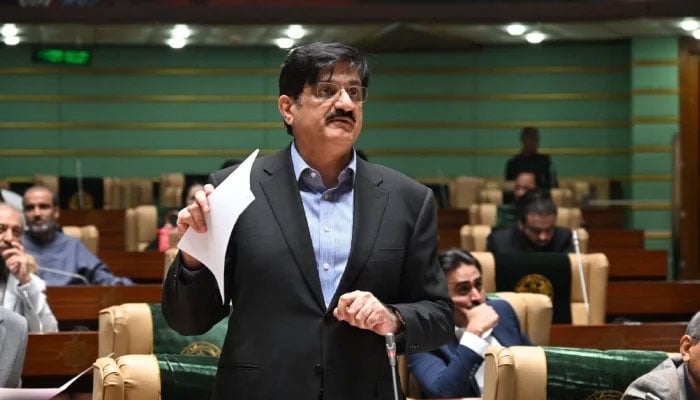
Sindh Chief Minister Syed Murad Ali Shah and Sindh Governor Syed Muhammad Nehal Hashmi urged the citizens, businesses and institutions to adopt responsible consumption habits and take collective action to reduce waste, particularly food waste as the world observed International Day of Zero Waste on Monday.
In his message issued on the occasion, the CM said that preventing food waste was a shared responsibility and called for immediate behavioural change at the household level where the bulk of food wastage occurs.
He described the annual wastage of one billion tonnes of food worldwide as a matter of grave concern and stressed that the movement towards zero waste must begin “from our own plates”.
“Nearly 60 per cent of food waste takes place in homes, and this trend must change,” Shah said, urging the public to demonstrate greater responsibility in the use and consumption of food.
He said a sustainable and circular food system had become an urgent necessity, adding that reducing food waste was not only essential for food security but also critical for environmental protection.
The CM appealed to the public to ensure that leftover food reached the needy instead of being discarded, and called upon businesses and commercial establishments to set clear targets for reducing food waste.
Shah reaffirmed that the Sindh government remained committed to promoting zero-waste policies saying that the future demanded a collective effort to build a cleaner and more sustainable province.
“Let us together lay the foundation for a clean and sustainable Sindh,” he said. Meanwhile, in his separate message on International Day of Zero Waste, the governor underscored the importance of reducing waste at the domestic, industrial and urban levels, terming it indispensable for environmental protection and public health.
He said the promotion of zero-waste practices required joint action and collective responsibility, adding that reducing waste could significantly curbed environmental pollution, improved the use of natural resources and helped secure a safer future.
The governor noted that the government was encouraging education, public awareness and sustainable initiatives to help achieve zero-waste goals and foster environmentally responsible lifestyles.
In his message, Sindh Solid Waste Management Board (SSWMB) Managing Director (MD) Tariq Ali Nizamani said International Day of Zero Waste was a timely reminder that unchecked waste generation, poor disposal practices and growing pressure on urban infrastructure posed a serious threat to environmental sustainability, public health and the future of cities.
He said the concept of zero waste must now be treated not as a symbolic slogan but as a practical and urgent framework for action, policy and public behaviour. He said Karachi alone generated more than 14,000 tonnes of municipal waste every day, making solid waste management one of the most critical urban challenges confronting the province. He noted that handling such an enormous quantity of waste demanded not only a strong operational mechanism, but also a shift towards scientific, sustainable and resource-oriented waste management systems.
Nizamani said the SSWMB had been working vigorously in Karachi and other major urban centres of Sindh to strengthen collection, transportation, disposal and environmentally sound waste processing mechanisms, while simultaneously pursuing long-term projects aimed at significantly reducing the quantity of waste ending up at landfill sites.
He said the board was actively promoting segregation of waste at source and advancing a range of sustainable interventions, including food waste-to-composting projects, biogas plants, plastic waste recycling facilities and waste-to-energy initiatives in Karachi.
He said these projects were designed to convert waste into usable resources, reduce environmental damage, cut landfill dependency and support the transition towards a more efficient and circular waste economy.
“Waste should not be seen merely as something to be discarded. With proper planning, segregation and processing, it can be turned into compost, fuel, energy and recyclable material, thereby reducing both environmental and economic losses,” he said.
He added that no waste management system could achieve lasting success without meaningful public cooperation. In this regard, he said, the SSWMB continued to conduct awareness sessions, educational campaigns and community outreach activities to sensitise citizens, institutions and commercial stakeholders about responsible waste disposal, cleanliness, recycling and the importance of environmental stewardship.