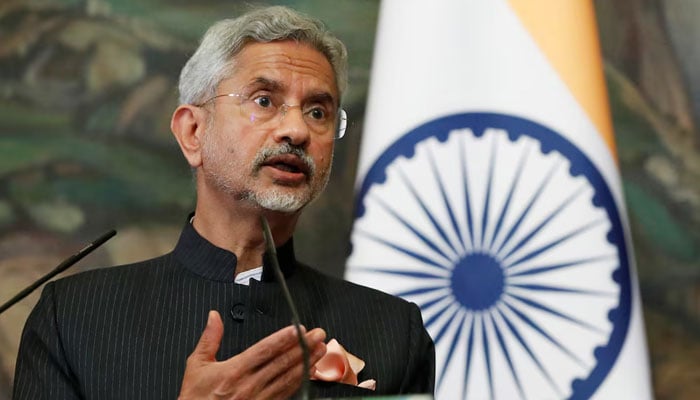
When the Indian media reported on Indian External Affairs Minister S Jaishankar’s reaction during an all-party meeting, it was hard not to think of words like jealousy, pettiness, resentment, frustration and anger. India’s opposition members had pressed him with tough questions regarding the failure of India’s foreign policy amid the US-Israel war on Iran. Rather than respond with the calm diplomacy one might expect from a seasoned foreign minister, Jaishankar’s remarks were both undiplomatic and revealing. His response showed that he could not reconcile his own failures and the underperformance of India’s diplomatic efforts during his tenure. Asked about Pakistan’s mediatory role in the ongoing conflict between the US and Iran, Jaishankar, who often presents himself as an unmatched ‘seasoned diplomat’, chose to dismiss Pakistan’s involvement by using a slur against Pakistan. The outburst was so striking that even his fellow cabinet members reportedly looked taken aback. A spokesperson from Pakistan’s Foreign Office has rightly said that Jaishankar’s choice of words revealed a deep sense of frustration. The spokesperson added that Pakistan, by contrast, does not engage in “megaphone theatrics" but rather practises diplomacy grounded in “restraint and decorum”, free from “rhetorical excesses”.
Jaishankar and the Modi government have been under increasing pressure, particularly after India’s recent setbacks, both foreign and domestic. Following India’s defeat in last year’s war with Pakistan and the diplomatic debacle over the Trump-India trade negotiations, Jaishankar’s ministry has come under fire. India’s deteriorating relations with Bangladesh only added fuel to the fire. However, the real diplomatic misstep came just before Israel and the US launched their aggressive stance against Iran. In a controversial move, Prime Minister Narendra Modi visited Israel during a time of escalating violence in Gaza, a conflict exacerbated by Israeli actions against Iran. The optics were dismal: the close relationship between Modi and Israeli PM Benjamin Netanyahu was seen by many as emblematic of Modi’s Hindutva, which seeks to emulate Israel’s Zionist tactics in the most damaging ways possible. Opposing voices, both within India’s media and politics, questioned whether this was Modi’s personal decision or whether the foreign ministry had advised him to make such a visit, given the looming crisis.
India and Iran have historically shared a strong relationship, but Modi’s visit to Israel raised uncomfortable and justified questions about India’s commitment to its long-standing allies. The criticism grew when news broke that Pakistan has now assumed a central role in facilitating backdoor diplomacy between the US and Iran. When asked why India has not been involved in such diplomatic efforts and why Pakistan seems to be taking centre-stage, Jaishankar’s response was both pointed and petty. In a moment that could have seen India embracing the peace process, Jaishankar’s words reflected his jealousy and frustration rather than diplomatic foresight. The global energy and economic crisis sparked by the US-Israel attack on Iran shows just how critical such diplomatic efforts are to global stability. Yet, Jaishankar’s remarks betrayed a deep-seated insecurity. In more short-sightedness, Jaishankar also recently dismissed a legitimate question from an Indian journalist about the US sinking an Iranian ship – one that had previously been a diplomatic guest of the Indian Navy – as “non-serious”. India needs to stop BJP-ing its foreign policy and foreign policy comms.