Pakistan is emerging as an indispensable diplomatic actor in one of the most consequential conflicts of our time. And yes, Pakistan is now the architect of the ceasefire framework that is in the making.
Consider this: Pakistan requested Israel, via Washington, not to target Iranian Foreign Minister Abbas Araqchi and Parliamentary Speaker Mohammad Baqer Qalibaf. Apparently, the Israelis had their coordinates and wanted to take them out. Pakistan told the US if they are also eliminated then there is no one else to talk to. The message travelled through Washington -- and was heeded. Yes, Israel listened, via Washington. That is a stunning demonstration of leverage.
Red alert: This is not a minor diplomatic courtesy. This is Pakistan intervening in an active war to save the lives of the top two Iranian civilian officials capable of negotiating peace.
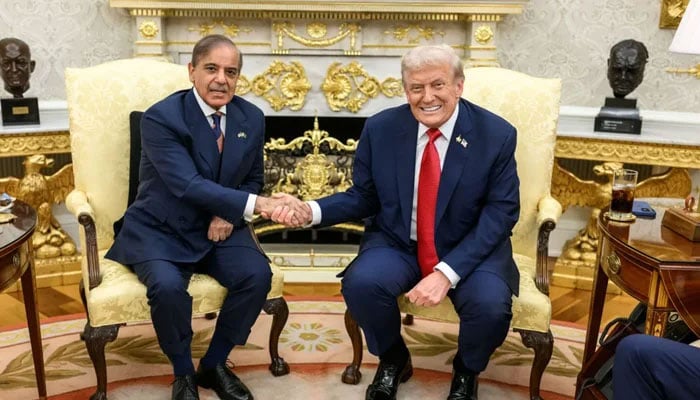
Pakistan is now the only trusted conduit between the US and Iran -- the two warring parties that have no direct communication. In diplomatic terms, that makes Islamabad irreplaceable. Trump’s 15-point US proposal to end the conflict was sent through Pakistan to Iran. And, an Iranian embassy official in Islamabad said talks in Islamabad were still on the table and Pakistan was the preferred destination for Tehran.
Pakistan is a Muslim-majority nuclear state with deep historical ties to Iran. Pakistan is a country with strong ties to the US and the Gulf Arab states. Pakistan is not a member of any Western alliance, giving it credibility with Tehran. Pakistan is close enough to China to not be seen as a purely Western instrument. Yes, Pakistan sits in a geopolitical space no other country occupies simultaneously.
For the record, neither Turkey, Qatar, nor Oman can claim this exact combination of relationships -- particularly the nuclear state dimension, which gives Pakistan a certain gravitas with Iran that smaller states lack.
UN Secretary-General Antonio Guterres warned: “The world is staring down the barrel of a wider war. It is time to stop climbing the escalation ladder -- and start climbing the diplomatic ladder.” Pakistan's role is fundamentally to slow the escalation ladder -- precisely what the UN
Secretary-General called for but cannot deliver. For the record, Pakistan is the only actor currently climbing that diplomatic ladder with any traction.
Yes, Pakistan benefits enormously from this role. The role elevates Pakistan’s international stature at a time when it has been economically struggling. The role gives Islamabad leverage with Washington -- the US needs Pakistan to keep this channel open. The role positions Pakistan as a serious diplomatic power in its own region, independent of India’s shadow.
Imagine Pakistan’s ability to persuade Israel, through Washington, to stand down a live assassination operation. Yes, that is arguably the most concrete proof of diplomatic influence any state has demonstrated in this conflict so far. To be sure, it is a moment that will be studied in foreign policy circles for years.
This is Pakistan’s moment. Not as a supplicant or a spectator, but as a serious diplomatic heavyweight shaping the outcome of one of the most dangerous crises of our time.
Pakistan did not just insert itself into this conflict -- it carved out a unique, indispensable space at the very centre of it. A nuclear-armed Muslim state with credibility in Tehran, leverage in Washington, and independence from any bloc has done what no other nation could.
History may or may not remember the missiles that flew or the threats that echoed. It will remember Pakistan -- the quiet channel that remained open when every other door had slammed shut.
The writer is an Islamabad-based columnist.