ISLAMABAD: Pakistan on Wednesday categorically rejected the life sentence awarded to Aasiya Andrabi, a prominent Kashmiri political leader, as well as 30-year prison terms given to her two associates, Fehmeeda Sofi and Nahida Nasreen, by a Delhi court under stringent Unlawful Activities (Prevention) Act.
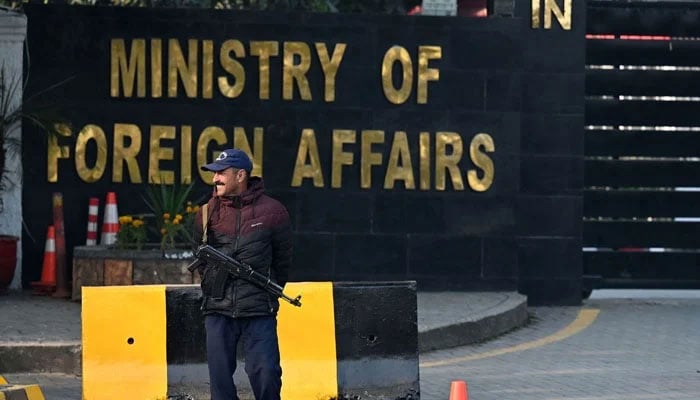
“The verdict constitutes a grave miscarriage of justice and reflects continued suppression of fundamental rights in Indian Illegally Occupied Jammu and Kashmir (IIOJK). Pakistan views this decision as part of a broader pattern of politically motivated prosecutions aimed at silencing dissenting voices and intimidating those advocating for legitimate rights of Kashmiri people,” the Foreign Office said.
The sentencing raises serious concerns on due process, judicial independence and compliance with international human rights obligations, the FO said.The Foreign Office noted Aasiya Andrabi has long been a vocal advocate for Kashmir cause. “Her conviction and harsh sentencing underscore shrinking space for political expression and civil liberties in IIOJK,” it added. Pakistan believes such actions further exacerbate tensions and undermine prospects for peace and stability in South Asia.
Pakistan urged the international community, including United Nations and global human rights organisations, to take immediate notice of development and hold India accountable for its actions in IIOJK. It also called for protection of political, social and human rights of Kashmiri people, including rights to freedom of expression and a fair trial. Pakistan reiterated its unwavering support for people of Jammu and Kashmir in their just struggle for self-determination, as outlined in relevant United Nations Security Council resolutions.
Foreign Office spokesperson Tahir Andrabi, commenting on X, said: “Pakistan stands in full solidarity with Aasiya Andrabi Sahiba, Fehmeeda Sofi Sahiba and Nahida Nasreen Sahiba, and strongly condemns court verdict under a draconian law as a grave miscarriage of justice. This decision is part of a broader pattern of politically-motivated actions”.
Andrabi, who founded all-women separatist organisation Dukhtaran-e-Millat (DeM) in 1987 — later banned by Indian government — was arrested by India’s National Investigation Agency in April 2018.
Meanwhile, Pakistan once again called for dialogue and diplomacy as the only viable solution to the ongoing Middle East conflict. Deputy Prime Minister/Foreign Minister Ishaq Dar held telephonic conversations with Malaysia’s Foreign Minister Mohamad Hasan and EU High Representative/Vice President Kaja Kallas.
“The leaders discussed recent regional and international developments of mutual interest and emphasised importance of de-escalation, dialogue and diplomacy to address ongoing challenges, which remain essential for maintaining peace and stability,” the Foreign Office said.
The spokesperson also urged the media to avoid speculation regarding ongoing conflict, particularly where Pakistan is concerned. “Many media outlets are spreading speculation and rumors about ongoing conflict in Middle East/Persian Gulf, including false information about Pakistan. I am receiving numerous calls seeking comments or confirmation on these so-called developments”.
“I respectfully reiterate my message from yesterday: diplomacy and negotiations require discretion and confidentiality. The media is therefore urged to refrain from speculation and to wait for official announcements regarding any decisions or outcomes,” he cautioned.