The Iran war has done more than ignite another Middle East conflict; it has shaken the foundations of the global energy system.
What began as a military escalation has rapidly evolved into a crisis with worldwide economic consequences, exposing the fragility of energy supply chains and the risks of geopolitical brinkmanship. The conflict, which began on February 28, has already disrupted oil and gas flows, damaged infrastructure across the region and pushed energy markets into a new phase of insecurity.
For Pakistan, this is a moment of reckoning. The crisis began with coordinated US-Israel strikes on Iran, targeting nuclear facilities, military infrastructure and senior leadership. The expectation in Washington and Tel Aviv was that overwhelming force would quickly and completely obliterate Iran’s capabilities and compel submission. That has not happened. Instead of a short, contained campaign, the war has widened and deepened, producing consequences far beyond the battlefield.
Iran’s response has fundamentally reshaped the trajectory of the war. Rather than being neutralised, Iran has demonstrated resilience, endurance and strategic depth. Despite heavy bombardment, it has continued to launch waves of missiles and drones at Israel, together with its strategic control and blockade of maritime traffic in and around the Strait of Hormuz.
That matters because the Strait of Hormuz is not just another shipping lane. It is the single most critical chokepoint in the global energy system. Around 20 per cent of global oil supply passes through it, along with a significant share of LNG. Once Iran moved to restrict tanker movement and threaten broader maritime disruption, the war ceased to be merely a military conflict and became a global economic event. Reuters has reported that pre-war tanker traffic has fallen by roughly 95 per cent.
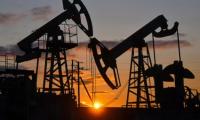
The immediate effects are severe. Tanker traffic slowed sharply. Insurance premiums surged. Oil prices moved above $100 per barrel. LNG markets tightened even more dramatically. The International Energy Agency has warned that damage to at least 40 major energy sites across nine Middle Eastern countries could keep prices elevated for a prolonged period, even if the fighting stops soon.
This is not a temporary disturbance. It is the emergence of a more volatile energy order. What stands out in this conflict is Iran’s ability to absorb punishment and continue to impose costs. Even after sustained attacks on military and state targets, Iran has maintained missile and drone capabilities, continued attacks on Israel and GCC countries and kept the Strait of Hormuz substantially closed. It has shown that it cannot be subdued – and that is precisely what has turned this regional war into a global crisis.
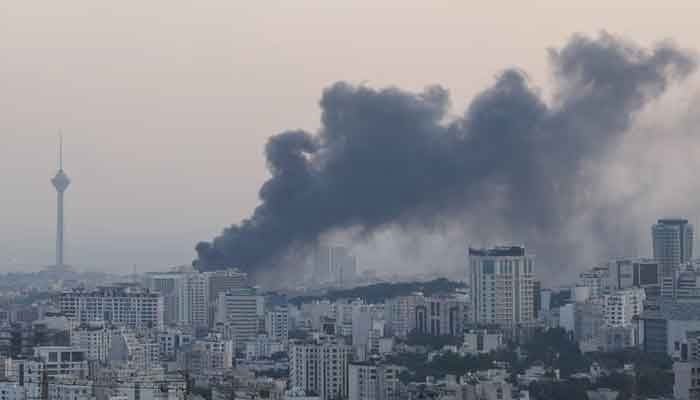
The conflict has also spread beyond the initial battlefield. Israel-Iran exchanges continue. Lebanon has become another front. Gulf infrastructure faces rising risk. Shipping, aviation and logistics networks are under strain. It has exposed that the Gulf can no longer be treated as a stable energy hub temporarily touched by war. Countries such as Saudi Arabia, the UAE, Bahrain, Qatar, Kuwait and Iraq now sit in a zone of elevated danger, where ports, power systems, export terminals and supply chains are all exposed.
Against this backdrop came one of the war’s most striking developments. On March 22, President Donald Trump issued a direct ultimatum: Iran must reopen the Strait of Hormuz within 48 hours or face the destruction of its power infrastructure. This was a blunt and unprecedented message that signalled escalation from military pressure to attacks on civilian-scale energy systems.
But as the deadline approached, the narrative shifted. Trump then announced a five-day pause in planned strikes on Iran’s power plants, claiming there had been “very good and productive conversations”. Markets responded immediately. Oil eased and broader risk sentiment improved. Yet Tehran flatly denied that any negotiations had taken place.
At a time when the region stands on the edge, there are emerging signs of quiet diplomacy. Pakistan has reportedly been engaged in facilitating backchannel contacts between the parties. If these efforts succeed, it would not only mark a significant diplomatic achievement for Pakistan, but also a vital service to a world grappling with what could become the most serious global crisis since World War II.
Iran’s public response, however, remained unequivocal. It denied any negotiations or concessions, rejected reopening the strait under pressure and warned that any attack on its infrastructure would trigger wider retaliation across the region, including against energy systems in the Gulf. Meanwhile, missile exchanges continue. The conflict itself did not pause; only the rhetoric changed.
This is the reality of the current moment: the pause is not peace. It is strategic recalibration under pressure.
The US appears to have recognised that further escalation carries global economic risks it may not fully control. Iran, on the other hand, has shown that it can withstand pressure and continue to impose costs. The result is a fragile equilibrium defined by uncertainty and the constant risk of a broader global rupture. If the strait remains materially disrupted into April, analysts warn Brent could reach $150.
The economic consequences are already unfolding. Oil above $100 is becoming the baseline. LNG markets are tightening. Shipping and insurance costs are rising. Supply chains are under stress. If the disruption persists for months, the global economy could slide into stagflation – high inflation combined with recession.
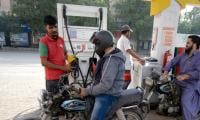
For Pakistan, the implications are especially severe. The country imports a large share of its energy and spends roughly $15-20 billion annually on petroleum products, with much of that dependence tied directly or indirectly to Gulf routes. In such an environment, higher oil prices widen the import bill, raise domestic fuel prices, intensify inflation, increase industrial costs and weaken competitiveness. Growth, already fragile, could stall or even reverse. A prolonged shock would also threaten remittances from Gulf economies, weakening one of Pakistan’s critical external buffers.
But the real problem is deeper than this war. Pakistan has, for decades, built an energy system around imported oil, LNG and imported coal despite possessing significant domestic resources. That has created a recurring cycle of import dependence, external pressure, currency weakness, inflation and repeated balance-of-payments crises.
At the same time, Pakistan’s domestic potential remains underused: solar, hydropower and Thar coal. The issue is not resource scarcity. It is fragmented policy, weak governance and the absence of strategic clarity. The same failure is evident in the power sector, where high tariffs have reduced demand, pushed users towards captive generation and solar, shrunk grid consumption and further raised per-unit fixed costs. Expensive electricity is no longer just a power-sector problem; it is an economy-wide constraint on industry, exports and investment.
The lesson from this war is clear. Energy security is no longer optional. It is foundational to economic resilience.
Pakistan must undertake a decisive reset: accelerate domestic energy, especially solar and hydropower; scale up Thar coal as a baseload resource to replace imported coal and reduce LNG dependence; restore affordability in electricity by reducing tariffs and reforming governance; and gradually electrify transport to cut oil imports over time.
The Iran war has changed the equation. Global energy systems are no longer stable, and geopolitics can suddenly and severely disrupt supply chains. For Pakistan, this is not just a warning but a turning point.
Continuing with an import-dependent energy model in this environment is no longer viable. Pakistan’s challenge is about control, cost and resilience – because in today’s world, energy security is economic security.
The writer is a former managing partner of a leading professional services firm and has done extensive work on governance in the public and private sectors. He tweets/posts @Asad_Ashah