LONDON: In the nearly five years since the Taliban retook power in Afghanistan the world has paid scant attention to developments in the region, still less managed to influence them. In that time the hardline Islamic movement has reimposed grim restrictions on women in public life and education. It has also fallen out badly with its old sponsor, neighbouring Pakistan. With the two states now close to all-out war the world has no option but to re-engage with the region — however difficult the options and distasteful the Taliban’s governing ethos, the Financial Times Editorial Board said.
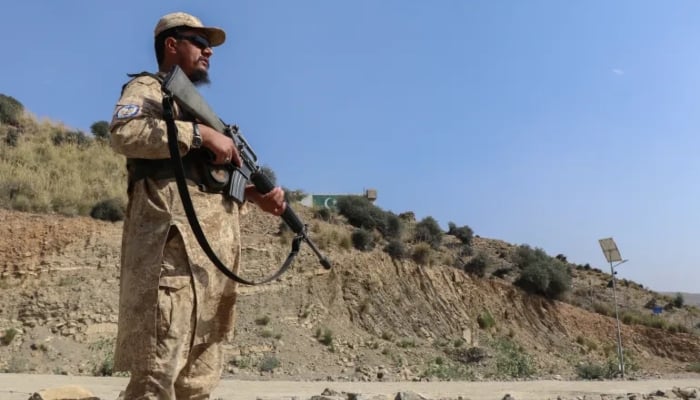
According to FT, there is a bleak irony to Pakistan’s dire relations with its neighbour. During the two decades of the ill-fated US-led Nato intervention in Afghanistan, which ended with an ignominious withdrawal in 2021, Islamabad worked with Washington while also backing the Taliban, assuming it would be able to control it. But since 2021, relations with its old proxy have deteriorated rapidly. Islamabad accuses Kabul of hosting separatist militants who have killed 4,000 people in Pakistan in the last four years.
Taking advantage of the west’s disengagement from the region, Pakistan has in recent months taken matters into its own hands and launched a series of air strikes across the border. More than 1,000 people are estimated to have been killed in the past three weeks of fighting between the two states, and over 100,000 people have been displaced. In the single bloodiest incident, 400 people were killed last week, Afghan officials say, in an air strike on a Kabul drug rehabilitation centre. Pakistan denies responsibility. The Taliban, just as unconvincingly, denies it shelters the militants who have been destabilising swaths of western Pakistan.
Against the backdrop of the war in the Gulf, the west is distracted. So are the regional powers such as China, Qatar, Saudi Arabia and Turkey who have tried ineffectually in the past few years to reduce the tensions. But this crisis cannot be allowed to metastasise. An all-out war in Afghanistan threatens stability across south and central Asia. There is also the very real risk that it becomes, again, an incubator for terrorism.
Pakistan seems to think it can shore up its security by a bombing campaign. But that will never quell the insurgencies. A shaky truce is in place for the festival of Eid al-Fitr. A first step is for this to endure. Then there have to be face-to-face talks. This will require the intervention of both the great powers, the US and China.
The Trump administration has close ties with the most powerful figure in Pakistan, the military leader Field Marshal Asim Munir. It needs to lean on him to stop the cross-border attacks. Maybe privately it can make clear to Islamabad that the war with Afghanistan complicates the war on Iran. Simultaneously, if it is to crack down on the militants, the Taliban will have to be presented with both sticks and carrots; it is desperate for funds.
In all this there is also an important role and opportunity for China as the emerging superpower. Pakistan is a client state. Beijing equally has strategic interests in Afghanistan: it hopes to extend its Belt and Road Initiative south through Afghanistan. It also worries Afghanistan could become a haven for Uyghur separatists. China has long floated the idea of itself as a responsible great power and a leader of the global south. It has tried shuttle diplomacy, but could this be the moment for it to step forward and prove itself as a serious mediator on the world stage?
The precedents for a settlement are not inspiring. A truce last autumn did not last long. The Taliban is a mercurial movement. Pakistan is enraged. But the stakes are too high for the world to keep looking away.