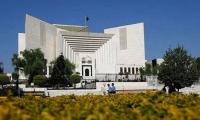
ISLAMABAD: The Federal Board of Revenue (FBR) on Monday challenged in the Federal Constitutional Court (FCC), the judgment of Peshawar High Court in Tobacco Enforcement cases.
The FBR filed three petitions under Article 175-F (1) of the Constitution for leave to appeal against the judgment dated 18 December 2025 rendered by the Peshawar High Court. Filed through Hafiz Ehsan Ahmed Khokhar advocate, the FBR has made Ms Khyber Tobacco Company Ltd Nowshera Road Mardan and Federation of Pakistan through Ministry of Finance as respondents
The FBR submitted that three different petition, the three different respondent companies operates a cigarette manufacturing unit at Nowshera Road, Mardan, which is subject to the regulatory framework established under the Federal Excise Act, 2005.
It was submitted that acting upon credible information regarding possible evasion of federal excise duty, the departmental authorities obtained a search warrant from a court of competent jurisdiction and conducted a search operation on 12 December 2025 in exercise of powers conferred under Sections 26 and 27 of the Federal Excise Act.
“The search was carried out under the supervision of an Assistant Commissioner and resulted in the recovery of approximately 2.75 million kilograms of unmanufactured tobacco from five godowns located at Sang-e-Mar Mar on the Swabi-Mardan Road, opposite Samson GLT”, the FBR claimed
It further submitted that the authorized managers present at the godowns failed to produce documentary evidence showing payment of federal excise duty or other applicable taxes as required under Sections 16 and 17 of the Federal Excise Act, 2005.
The FBR contended that the recovered stock was allegedly linked with the GLT unit operated by M/s Samsons Re-Drying and Processing Company (Pvt) Ltd, which had been leased by the respondent company.
“In view of the unreconciled and undeclared stock, and the absence of duty-paid documentation, the competent officer formed a “reason to believe” within the contemplation of Rule 28A(6) of the Federal Excise Rules, 2005 that the goods were clandestinely stocked and that the GLT machinery and cigarette manufacturing unit were being used in contravention of the provisions of the Act and the Rules framed thereunder”, the FBR submitted.
Consequently, the petitioner submitted that the GLT unit as well as the cigarette manufacturing premises were sealed in exercise of statutory authority under Rule 28A(6) read with Sections 26 and 27 of the Federal Excise Act, 2005.
The department subsequently issued a show cause notice under Section 24 read with Section 33 of the Act, thereby initiating adjudicatory proceedings in accordance with the statutory procedure prescribed for determination of liability and enforcement of excise duty.
It was however, submitted that the respondent companies challenged the Regional tax action/departmental action before the Peshawar High Court by filing different constitutional petitions under Article 199 of the Constitution.
After hearing the parties, the High Court partly allowed the petitions and declared the sealing of the manufacturing units illegal while observing that the revenue authorities could proceed with inquiry and assessment in accordance with law if violations were established.
The FBR contended that the High Court exceeded the limits of its constitutional jurisdiction by entertaining the writ petition despite the existence of adequate and efficacious alternate statutory remedies provided under Sections 33, 34 and 35 of the Federal Excise Act, 2005, which establish a complete statutory hierarchy for adjudication, appeal and revision.
It prayed the court to grant leave to appeal and set aside the impugned judgments in the interest of justice and proper enforcement of revenue laws.