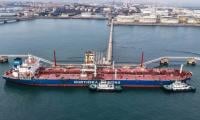
KARACHI: Pakistan’s consumer price inflation is expected to reach 7-7.5 per cent in March, the highest monthly reading in 19 months, as Brent oil prices, the global benchmark, soar above $100 a barrel amid supply disruption triggered by the Middle East war.
Inflation rose to 6.99 per cent in February from 5.8 per cent in January.
According to a report from Topline Securities, the transport segment is likely to significantly contribute to the year-on-year (YoY) inflation in March. Month-on-month(MoM), transport is expected to see an 18 per cent increase, largely attributed to rising international oil prices amid escalating tensions in the Middle East. Within this, petrol prices are up 26.7 per cent and high-speed diesel 25 per cent.
The report estimates that if Brent oil prices remain at $100 per barrel, the average inflation rates in the upcoming four quarters are expected to be 10.92 per cent in the fourth quarter of FY26, 9.33 per cent in the first quarter of FY27, 7.47 per cent in the second quarter of FY27, and 8.22 per cent in the third quarter of FY27.
“With inflation expectations of 7-7.5 percent for March 2026, real rates will surge to 300-350 bps, higher than Pakistan’s historical average of 200-300 bps” the report said.
The State Bank of Pakistan (SBP) kept its key interest rate unchanged at 10.5 percent on Monday and expects inflation to remain above 7.0 per cent in the remaining months of FY26 and into FY27.
Although interest rates do not just follow the inflation trajectory, as factors like external account, economic growth, and fiscal conditions also play a role. However, in the current scenario, for a country like Pakistan, external stability and inflation dynamics will determine the interest rate path, the Topline report said.
The report indicates that Pakistan is currently in a relatively strong position in terms of its external accounts, evidenced by foreign exchange reserves of $16.4 billion, a controlled current account deficit of just 0.5 per cent of GDP in annual expectations, and remittances exceeding $40 billion. Nonetheless, the outlook for external accounts remains precarious, as over 50 per cent of Pakistan’s remittances come from GCC countries that are affected by conflict.
“On the inflation side, the impact could be immediate, as the government has already passed on a sizeable impact of the oil price hike, while another hike is also likely before April 2026, assuming oil prices sustain,” the report said.
“Considering inflation impact and risk to external accounts, we believe a hike in the interest rate would be required with sustained oil prices of $120/barrel and above,” it said. “At the level of $120 and above, real rates start getting compromised and shall be avoided, in our view.”