DUBAI: Long before the US and Israel attacked Iran, the Islamic Republic had devised its own weapon: holding the world’s main oil lifeline hostage to offset its foes’ military superiority, three regional sources familiar with Iranian planning said.
For decades Iran has signalled that if pushed into a confrontation, it would restrict tanker traffic in the Strait of Hormuz, the chokepoint where its adversaries are most exposed because disruptions there reverberate instantly through global energy markets.
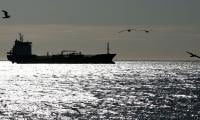
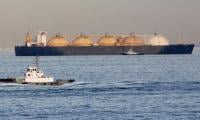
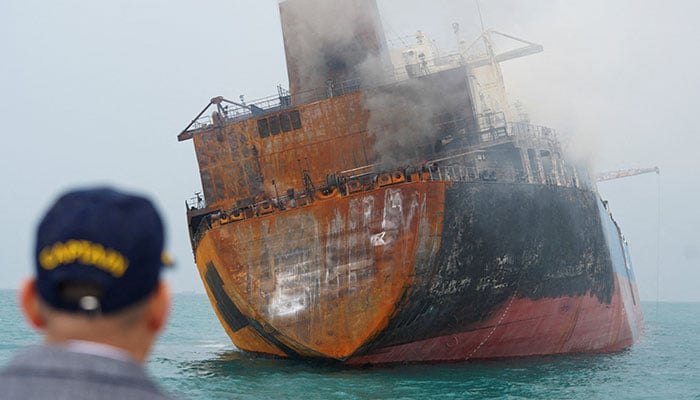
With the Gulf’s main export artery in the crosshair, Tehran has turned the region’s greatest economic asset into its most powerful deterrent, the sources said. About a fifth of global oil and liquefied natural gas normally passes through the vital Strait, and Iran, which lies on its northern coast, has now effectively closed it. Traffic via the strait has dropped by 97% since the war against Iran began on February 28, according to United Nations data.
Iran has used similar tactics before. In the “Tanker War” of the 1980–88 Iran Iraq conflict, attacks on vessels turned the Gulf into one of the world’s most dangerous waterways, forcing Washington to escort tankers through the Strait. But Iran now wields far more potent tools, including large arsenals of cheap missiles and drones capable of threatening shipping across a far wider area. Its attacks this month have shown how quickly Tehran can disrupt traffic through the strait without heavily mining it.
“Iran is outgunned -- there is no way it can defeat them in a direct confrontation,” said Ali Vaez, the International Crisis Group’s Iran Project Director. Anticipating further U.S.-Israeli strikes after a 12-day war in June last year, Tehran examined how to extend any conflict “in time and space”. “If Iran takes the global economy hostage, Trump would blink first,” added Vaez. The regional sources said Iran’s powerful Islamic Revolutionary Guards Corps (IRGC) had long prepared for a showdown with Israel and Washington. Tehran’s planners seek to pressure oil flows while inflicting asymmetric attacks on USassets stationed across the region. It seeks to conjure economic pressures -- both at home and overseas -- on President Donald Trump to halt the war.
Rather than concentrate forces on a single battlefield, Tehran is dispersing its campaign with waves of low-cost missile and drone strikes across the Gulf, of the kind once outsourced to Iran-allied forces in Iraq, Yemen, Syria and Lebanon. The approach reflects a doctrine shaped over decades by the IRGC, built on the assumption that a stronger foe would try to decapitate Iran’s leadership and command structure at the outset of any war, the sources said. The Guards are applying lessons from years of shadow conflict with the U.S., they said. But this time, instead of relying mostly on regional proxies that once formed its forward line of defence, Tehran is now executing the playbook itself.
Ali Vaez said the US had entered the war unprepared, driven by “a lot of wishful thinking and not a lot of well-thought-through strategies.” Washington, he said, failed to anticipate drone attacks on Gulf states, disruptions to shipping lanes or the need to evacuate citizens, shortcomings he said reflected a failure to absorb lessons from the risk of drones in modern warfare.
By contrast, Iran’s decentralised “Mosaic” doctrine --dispersing command and control to withstand decapitation -- remains in place, under one coordinating hub. Even after Khamenei’s death, two sources said Parliament Speaker Mohammad Baqer Qalibaf, a former Guards commander, and Ali Larijani, head of Iran’s national security council, continued to direct the war effort from Tehran. Vaez argued that while the US can significantly weaken Iran, total defeat would need a land invasion involving up to a million troops operating in unforgiving terrain, a commitment Washington has shown “it doesn’t have the stomach for.”
Iran’s immediate objective is survival, Vaez said. Beyond that, its broader aim is to force Washington to accept that coercion, whether through military force, economic pressure or diplomatic isolation, does not work. Whether such a lesson is learned remains uncertain. But by weaponising the world’s most critical energy corridor and stretching the battlefield far beyond Iran’s borders, Tehran is betting it can endure longer than a far stronger enemy.