If mediation efforts move in the right direction before April 20, sustainable peace can be established in the region. This is what I highlighted previously based on Vedic astrology. Unfortunately, the right time to finalise the Islamabad Draft has passed, and once again the clouds of war are beginning to loom.
At such critical moments when astrologers declare April a high-risk, high-action and high-conflict month, Pakistan’s peace-loving role is fully highlighted before the international community for the first time. It is, in fact, a good sign that Pakistan’s top leadership appeared active on every front even after the inconclusive end of the first round. Prime Minister Shehbaz Sharif is continuously seeking international support. Simultaneously, Field Marshal Asim Munir’s unexpected yet courageous visit to Tehran captured global attention and astonished the world.
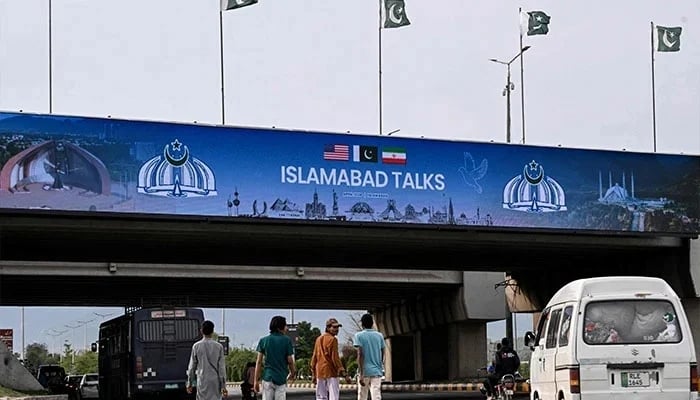
Although the first round of talks ended without a final agreement, the broader achievement cannot be overlooked. For the first time in nearly four decades, the US and Iran engaged in direct, face-to-face negotiations. International media described this alone as a historic breakthrough with Pakistan’s support. The seriousness of both sides during the Islamabad Talks was evident in lengthy negotiations lasting over 20 hours.
Trump’s decision to extend the ceasefire also reflects an acknowledgement of Pakistan’s growing significance as a peace mediator. According to him, the extension was made at Pakistan’s request. Several US media reports suggest the Trump administration is now seeking a dignified resolution to end the war. Historically, the American public has shown limited tolerance for prolonged wars, often increasing pressure on leadership to seek a safe exit. Iran also faces internal and external pressures, including economic challenges and sanctions.
In my view, the real significance of the Islamabad Talks should not be measured in immediate outcomes, but as a crucial ice-breaker effort in the context of a decades-long tussle. Undoubtedly, Pakistan succeeded in bringing two long-standing adversaries to the same dialogue table. It is a remarkable achievement that, in itself, marks a historic shift. Both sides have directly communicated their positions, an essential first step towards resolving deeply rooted tensions. However, such complicated disputes cannot be resolved in a single round; they require patience, continuity, tolerance, understanding and sustained diplomatic engagement.
Looking ahead, China’s role may also become increasingly critical in the coming days, particularly given its economic interests in the Strait of Hormuz’s stability. I believe that if China joins Pakistan in facilitating future negotiations, the Islamabad process could gain even greater momentum.
From an astrological perspective, however, the situation appears complex. According to Vedic astrology, the situation entered a more challenging phase in the last week of April. Astrologers also point to the current tussle between Mars and Saturn, which is expected to persist until the end of this month.
Astrologically, the influence of Mars may manifest as aggression, threats, misunderstandings and heightened tensions, while the effects of Saturn represent patience, restraint and the continuation of the ceasefire. This suggests that the current ceasefire is less a state of complete peace than a phase of psychological pressure between the two sides.
The alignment of Mercury and Jupiter appears favourable for Pakistan, indicating more diplomatic successes. Pakistan will likely continue urging both the US and Iran that war is not a viable solution. A nation once portrayed in segments of Western media through the lens of conflict and instability is now being recognised for its credible and effective diplomatic role across the globe.
The writer is a member of the National Assembly and patron-in-chief of the Pakistan Hindu Council. He tweets/posts @RVankwani