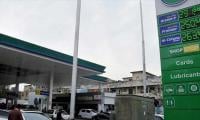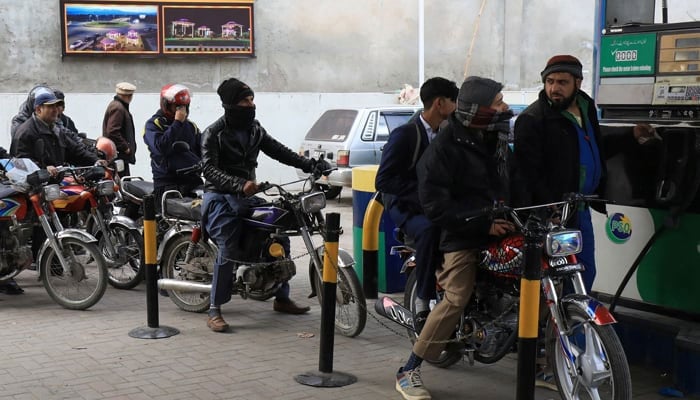
ISLAMABAD: The government enforced the weekly petroleum pricing mechanism with immediate effect from Saturday, replacing the existing fortnightly revision system, by increasing the price of petrol by Rs55 per liter.
As part of the adjustment, the government reduced the Petroleum Levy (PL) on High-Speed Diesel (HSD) by Rs21.21, bringing it down from Rs76.21 to Rs55.24 per liter. However, the overall price of HSD was still increased by Rs55 per liter because the impact of international price fluctuations on HSD stood at Rs80 per liter. In contrast, the impact of international price fluctuations on MS (petrol) was Rs30 per liter, but its price was raised by Rs55 per liter.
The new price of HSD will be Rs335.86 per liter, and petrol will cost Rs321.17 per liter under a framework that will also allow insurance costs, higher premiums, freight charges and other exceptional import-related expenses to be adjusted through the Inland Freight Equalisation Margin (IFEM) mechanism. This aims to cushion the impact of disruptions in global energy supply chains.
The announcement about the increase in petrol and diesel prices by Rs55 per liter each was made by Petroleum Minister Ali Pervaiz Malik at a press conference held alongside Deputy Prime Minister Ishaq Dar and Finance Minister Muhammad Aurangzeb. Under the new rates, petrol will cost Rs321.17 per liter, up from Rs266.17, while diesel will rise to Rs335.86 per liter from Rs280.86.
Aurangzeb stated that the government has been closely monitoring the rapidly evolving regional situation and its implications for global energy markets and the national economy, emphasising that proactive planning and coordinated action are underway to safeguard the country’s economic stability and energy security.
He said that a high-level committee constituted by Prime Minister Shehbaz Sharif has been meeting daily over the past several days to assess developments in international petroleum markets, supply chain dynamics and domestic energy requirements.
He noted that the ongoing conflict in the Middle East has led to a sharp escalation in global petroleum prices and increased uncertainty in supply routes, necessitating continuous monitoring of energy stocks, procurement options and price trends. The committee, which includes key federal ministers, the State Bank of Pakistan governor and representatives from relevant ministries and institutions, is reviewing the short- medium- and long-term implications for Pakistan’s economy, including potential impacts on inflation, foreign exchange reserves, trade flows and broader macroeconomic indicators.
Senator Aurangzeb reassured the nation that Pakistan currently maintains adequate energy stocks and macroeconomic stability, stressing that the government’s approach is based on preparedness rather than panic. He added that scenario planning and coordinated policy responses are being undertaken across the government to ensure that Pakistan remains proactive in managing the evolving situation. Aurangzeb also announced that the minister for petroleum and he will soon engage with all four provincial governments to ensure effective implementation of demand management and energy conservation measures.
DPM Dar, speaking on the broader regional context, said that the ongoing conflict, which began with recent attacks on Iran and has since expanded across the region, has significantly disrupted global energy markets, causing petroleum product prices to surge by as much as 50 to 70 percent internationally. He emphasised that the Government of Pakistan has been actively engaged in diplomatic efforts to de-escalate tensions and restore stability in the region.
Dar said that Prime Minister Shehbaz has remained in close contact with international partners and regional leadership to support efforts aimed at reducing tensions and preventing further escalation. He added that Pakistan is coordinating closely with friendly countries and regional stakeholders while simultaneously reviewing domestic measures to mitigate the impact of global developments on the Pakistani public.
Petroleum Minister Malik stated that the Petroleum Division, under the guidance of the prime minister, deputy prime minister and finance minister, has been continuously monitoring national fuel reserves and supply routes to ensure uninterrupted availability of petroleum products in the country.
He noted that Pakistan entered the current crisis with comfortable energy reserves due to proactive planning in recent weeks. However, given the uncertainty surrounding the duration of the regional conflict and the sharp increase in international petroleum prices, the government has been compelled to adjust domestic fuel prices in order to maintain supply continuity and avoid disruptions in the energy market.
Highlighting the scale of the international price surge, the petroleum minister said that global petrol prices have increased from approximately $78 per barrel on March 1 to around $106.8 per barrel, while diesel prices have risen significantly to about $150 per barrel. In light of these developments and to ensure the smooth functioning of supply chains and economic activity, the government has increases the prices of petrol and diesel by Rs55 per litre.
He emphasised that the government has taken special care to balance the burden on citizens, particularly considering the critical role of diesel in agriculture, transportation and public mobility. He also warned that strict action will be taken against any elements attempting to hoard fuel or manipulate supply for profiteering.
Malik further said that the government has taken proactive measures to secure additional supplies through international partners and maritime logistics, including arrangements with Saudi Aramco and deployment of Pakistan National Shipping Corporation (PNSC) vessels to facilitate crude imports and sustain refinery operations.
He added that two crude oil shipments are on the way to Pakistan—one from Fujairah and the other from Yanbu in the Red Sea—destined for Parco. Saudi Arabia has assured Pakistan that a large vessel will be stationed in Pakistani waters, allowing PNSC vessels to safely transfer the fuel for delivery to domestic ports.
The ministers collectively assured the nation that the government remained fully committed to protecting energy security and economic stability during this challenging period. They reiterated that petroleum prices will be reviewed more frequently, potentially on a weekly basis, and any relief resulting from improvements in global market conditions will be promptly passed on to the public.
The government also urged citizens to exercise responsible energy consumption as the country navigates the current global energy volatility.
Under the new framework, Oil Marketing Companies (OMCs) will be allowed reimbursement for extraordinary increases in import costs — including premiums, freight charges, insurance and Customs duties — if these exceed the benchmark costs associated with imports by Pakistan State Oil (PSO). Such reimbursements will be processed through IFEM after verification and auditing by the Oil and Gas Regulatory Authority (Ogra).
International oil markets have already reacted to the growing uncertainty. Prices of high-speed diesel have increased by around 34 percent to approximately $118.5 per barrel, while petrol prices have risen by about 27 percent to nearly $90 per barrel. At the same time, shipping costs for transporting refined petroleum products from the Persian Gulf have surged as tanker operators reassess routes due to rising security risks.
After receiving a nod from Prime Minister Shehbaz Sharif, the Economic Coordination Committee (ECC), which met here on Friday, approved the Petroleum Division’s summary seeking the implementation of the weekly petroleum pricing mechanism. Officials say the move is intended to manage extraordinary volatility in global fuel prices and ensure the continuity of domestic fuel supplies during the ongoing geopolitical crisis.
This marks the first weekly review of fuel prices since regional tensions threatened major global energy flows following the closure of the Strait of Hormuz. Previously, the federal government had adjusted petroleum prices on a fortnightly basis.
The ECC summary notes that Pakistan’s current fortnightly pricing system creates a time lag between international price movements and domestic price adjustments. During periods of sharp volatility, this delay can result in under-recovery of import costs for the OMCs, placing financial pressure on importers, and potentially discouraging timely procurement of petroleum shipments, thereby posing risks to the country’s fuel supply chain.
The policy shift comes against the backdrop of growing instability in global energy markets following disruptions in the Strait of Hormuz, one of the world’s most important maritime energy corridors.
During the first eight months of fiscal year 2025-26, the country imported about 3.6 million metric tonnes of motor spirit (petrol) — roughly 70 percent of domestic consumption — and nearly one million tonnes of high-speed diesel, accounting for about 21 percent of total demand. Domestic consumption during the same period reached 5.2 million tonnes of petrol and 4.8 million tonnes of diesel, highlighting the country’s reliance on external energy supplies.
Freight rates have climbed sharply as insurers raise risk premiums and shipping companies adopt more cautious operational strategies in the conflict-affected region. The cost of transporting refined petroleum products from the Persian Gulf to major global markets has risen significantly due to heightened geopolitical risk, increased insurance costs, and limited tanker availability. Such increases have a direct impact on import-dependent economies because freight and insurance charges form a significant portion of the final landed cost of petroleum products.
To address these challenges, the new weekly pricing system shortens the adjustment cycle and aligns domestic fuel prices more closely with international benchmarks. Under the framework, Ogra will calculate petroleum prices based on the five-day average of Arab Gulf benchmark prices. The regulator will submit indicative price calculations every Friday, with final prices to be announced before midnight each week following government approval.
The petroleum products prices were hiked after the International Monetary Fund (IMF) had asked Pakistan to do so on an immediate basis.
According to the IMF, Pakistan can neither dole out any subsidy nor slash the petroleum levy in a big way, so there is no other option but to pass on the escalating international POL prices to consumers without delay.
Meanwhile, the IMF and Pakistani side are heading toward evolving a consensus on a further reduction in the FBR’s envisaged annual tax collection target for the second time in the current fiscal year. “Both the sides are discussing the possibilities of a downward revision in the FBR’s tax collection target in the range of Rs13,400 to Rs13,500 billion for the current fiscal year, from the earlier revised target of Rs13,979 billion for FY26.
“The Ministry of Finance has briefed the IMF on the macroeconomic framework, but divergent views persisted on the real GDP growth figures so far,” top official sources confirmed while talking to ‘The News’ here on Friday. The IMF insists that the country’s GDP growth will hover around 3.2 percent for the ongoing fiscal year, against the Ministry of Finance’s projection of almost 4 percent.
The IMF, during the ongoing virtual parleys, has asked Islamabad to adopt a weekly adjustment in POL prices, keeping in view the upsurge in international prices following geopolitical tensions and the blockade of the Strait of Hormuz in the wake of the war between the US and Iran.
“The IMF has made it crystal clear that Pakistan can neither dole out a subsidy on POL products nor slash the Petroleum Levy in a big way during the remaining period,” said official sources while quoting the IMF’s mission chief.
The government collected Rs823 billion on account of petroleum levy in the first half (July–Dec) of the current fiscal year. The full-year target has been set at Rs1,468 billion.
On the FBR’s tax collection target, the tax machinery faced a revenue shortfall of Rs428 billion in the first eight months of the current fiscal year. Now both sides are exploring the possibility of revising the FBR’s tax collection target downward from Rs13,979 billion to somewhere between Rs13,400 billion and Rs13,500 billion. The Ministry of Finance will have to cut expenditure proportionately to achieve the primary balance target of 2.4 percent of GDP by the end of June 2026.
All four provinces also briefed the IMF on their fiscal framework and the surplus generated during the current fiscal year. The Ministry of Finance also briefed the Washington-based lender on the progress achieved so far on fiscal arrangements in the context of ongoing negotiations under the NFC Award.
The power sector also came under discussion, whereby the losses of power distribution companies, the inability to recover bills, and capacity payments were deliberated upon. The IMF made it clear that untargeted subsidies will not be allowed, so the government will have to devise a mechanism to provide subsidies to the poorest of the poor through the BISP mechanism.
Earlier, chairing a meeting regarding petroleum products, the prime minister directed provincial governments to take strict legal action against hoarders of petroleum products.
He said any petrol pumps involved in the nefarious practice of creating artificial shortages should be immediately closed, and Ogra should cancel its licence and initiate legal proceedings, the PM media office in a statement said.
He instructed the petroleum minister to visit the provinces and, in coordination with provincial governments, develop a plan of action for petroleum products’ conservation and ensuring their uninterrupted supply to the public.
He also directed that a dashboard be created to monitor the movement of petroleum products, through which real-time data will be shared with the provinces and the transportation of petroleum products will be closely supervised.
A detailed briefing was given regarding the reserves of petroleum products in light of the changing regional situation.
It was informed that adequate reserves of petroleum products are available to meet the country’s requirements.
Deputy Prime Minister Ishaq Dar, federal ministers Muhammad Aurengzeb, Jam Kamal Khan, Awais Khan Leghari, Ahad Cheema, Attaullah Tarar, Ali Parvaiz Malik, Minister of State Bilal Azhar Kiani, Special Assistant Haroon Akhtar, State Bank of Pakistan Governor Jamil Ahmad and chief secretaries of four provinces, Azad Jammu and Kashmir and Gilgit-Baltistan also attended the meeting.
Meanwhile, Pakistan Peoples Party (PPP) Parliamentarians central spokesperson Shazia Marri expressed strong concern over the increase in petroleum prices, rejecting the government’s decision and terming it an additional burden on the public.
“The increase of Rs55 per litre in petrol and diesel prices will place a heavy financial strain on the people,” she said in a statement.
Marri said the rise in prices during Ramazan was particularly unfortunate, noting that this was the second increase in petroleum prices during the holy month. “The latest hike will trigger a fresh wave of inflation and further aggravate the difficulties faced by the people,” she said.
She demanded that the government immediately withdraw the decision to raise petroleum prices, warning that the move would negatively affect both the economy and the public.
Meanwhile, the government on Friday discussed a range of fuel-saving measures including allowing up to 50 percent work from home, declaring Friday as an additional weekly off during Ramazan, and closing markets earlier in the evening as part of a strategy to reduce petroleum consumption in the wake of rising global oil prices.
The options were reviewed in a high-level meeting chaired by Prime Minister Shehbaz Sharif as authorities assessed the potential economic impact of the surge in international crude prices following the recent US-Israel attack on Iran.
According to official sources, no final decision was taken during Friday’s meeting and further consultations are under way. Authorities are expected to meet again today (Saturday) to review the proposals and finalise a set of measures.
Sources said the government is primarily concerned about the rising petroleum import bill and the pressure it could place on Pakistan’s already strained foreign exchange reserves if the Middle East conflict continues and oil prices climb further.
International crude prices have already risen to around $84 per barrel, and officials fear that prolonged tensions in the region could push prices significantly higher in the coming weeks.
Among the measures discussed were allowing up to 50 percent of employees in government and private offices to work from home, introducing an additional weekly holiday on Fridays during Ramazan to reduce commuting, and directing markets and commercial centres to close earlier at night to conserve fuel and electricity.
Officials emphasised that the issue is not an immediate shortage of petroleum products but the financial burden of importing expensive oil. Pakistan relies heavily on imported fuel, making the economy highly vulnerable to global price fluctuations.
Government officials said any sustained increase in oil prices could widen the current account deficit, weaken the rupee and add to inflationary pressures through higher transport and energy costs.
Authorities are therefore examining ways to reduce overall fuel consumption without significantly disrupting economic activity.
The final decisions are expected after today’s follow-up meeting as the government seeks to strike a balance between economic necessity and public convenience while preparing for the possibility of prolonged instability in global energy markets.
Meanwhile, the United Kingdom has instructed its staff in Pakistan to restrict their movements due to rising security risks linked to street protests against ongoing US-Israel airstrikes on Iran. In a travel advisory, the UK’s Foreign, Commonwealth and Development Office (FCDO) said British nationals should exercise caution around protests, rallies and religious gatherings over the risk of unrest and terrorism.
It also noted growing regional tensions that could affect travel and security conditions.
According to the FCDO, developments involving Iran, as well as tensions between Pakistan and Afghanistan, have increased security risks in the region.
Also, flights have faced disruption due to airspace closures in parts of the Middle East, so travellers should check with airlines before departure.
The FCDO also warned of potential security concerns in Karachi, especially around key infrastructure and transport hubs.
It noted that areas around Jinnah International Airport recently saw security threats and an enhanced security presence, so travellers should remain cautious when using public transport and transit points, including airports.
The FCDO cautioned that in the event of a major crisis, conditions in Pakistan could change rapidly and affect the ability to travel.
It said practical support from the British government, including face-to-face consular assistance or evacuation, might be severely limited during a crisis, so British nationals should be prepared to arrange their own departure from Pakistan at short notice if the situation deteriorated.