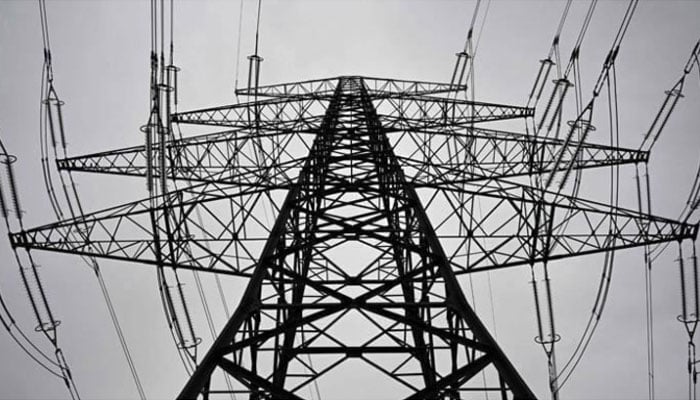
Energy crises and circular debt are always in the news, and so far, there is no sustainable solution to that problem. The principal reason is the electricity shortage, but the lack of institutional alignment is also a factor.
According to the FY 2024–25 State of Industry and Transmission Performance report issued by Nepra, Pakistan generated more than 56 terawatt-hours of electricity last year. Installed capacity exceeds peak demand by several thousand megawatts, yet nearly Rs80 billion worth of 2.8 billion units were wasted because the transmission network could not transmit them. During peak hours, approximately 8,500MW of available power remained stranded. Therefore, the problems are not just technical losses but structural distortions.
Electricity generation in Pakistan’s south is significantly cheaper than in the north, which relies heavily on imported fuels. Yet transmission constraints prevent this cheaper power from reaching northern demand centres. The resulting mismatch added more than $1.3 billion to the fuel import bill in FY2024–25, intensifying pressure on foreign exchange reserves, contributing to currency volatility, and ultimately raising electricity tariffs.
Businesses, particularly exporters competing in global markets, are bearing the cost of these structural failures. A textile mill in Faisalabad, paying higher tariffs despite cheaper power, is not facing a supply shortage but a governance failure. Transmission congestion has therefore become a macroeconomic liability rather than merely a sectoral inefficiency.
Institutionally, electricity generation has expanded faster than transmission capacity under the National Transmission and Despatch Company (NTDC). Procurement delays, financing constraints, sovereign-guarantee bottlenecks and circular debt have slowed grid expansion and squeezed capital expenditure. Transmission investment, estimated at $4–6 billion over five years, has remained politically invisible compared with the fanfare of new power plants. The persistence of this imbalance is ultimately political: transmission reform and tariff rationalisation promise long-term stability but offer little short-term political reward.
Historically, Pakistan has tended to pursue reforms only in response to crises rather than as a preventive policy. When balance-of-payments pressures intensify, foreign exchange reserves fall, or negotiations with the IMF deepen, corrective measures are introduced. Once the immediate pressure subsides, however, reform momentum fades. The result is a pattern of short-term stabilisation rather than long-term structural transformation.
Breaking this cycle requires stronger statecraft and modern governance. Parliament should legislate an institutionally insulated system operator, separating grid management from ownership interests in the power sector. Introducing such reforms through statute, rather than executive discretion, would enhance regulatory credibility, strengthen investor confidence and ensure continuity beyond electoral cycles.
A Grid Modernisation Fund is also needed, with financing ring-fenced from the pressures of circular debt. The fund could draw support from multilateral institutions such as the World Bank and the Asian Development Bank, alongside infrastructure bonds and regulated private participation. Mobilising roughly $1 billion annually over five years could significantly reduce transmission congestion. Even modest improvements would cut fuel imports, ease balance-of-payments pressure and reduce macroeconomic risk – making transmission investment not merely a cost, but a form of long-term economic stabilisation.
Without a transparent procurement structure, nothing can be achieved. The procurement process must accelerate through transparent, competitive bidding for priority 500 high-voltage corridors. Through a competitive procurement process and synchronised planning, India reduced transmission bottlenecks by 60 per cent within five years. Nepra’s regulatory framework too permits similar contraptions and the Indian model can be replicated, but sustained political authorisation has been missing.
Institutional incentives must also be aligned with performance. Capacity payments should gradually incorporate dispatch-linked metrics so that producers share operational risk. Leadership positions in transmission entities should have fixed tenures to ensure continuity. At the same time, procurement decisions carried out through due process must be protected from retrospective investigations by bodies such as NAB, which often discourage administrative initiative.
Federal-provincial coordination is equally critical. A national grid reform agenda should be endorsed by all major political parties and ratified by the Council of Common Interests, which serves as the constitutional forum for resolving intergovernmental issues. Through this mechanism, corridor approvals and land protocols for transmission expansion can be formalised, framing grid development as a shared economic project rather than a federal intrusion.
In a region where manufacturing competitiveness increasingly depends on energy costs and reliability, transmission capacity is a key industrial strategy. Solar capacity is expanding rapidly across Pakistan, and without a flexible grid, renewable curtailment will rise and investor confidence will weaken. Transmission congestion reportedly cost about Rs80 billion in undelivered electricity last year, adding over $1.3 billion in fuel imports. Addressing it is therefore not just a tariff issue but one of economic stability, export competitiveness, and energy security.
Alongside transmission reform, Pakistan must address the mounting circular debt in the power sector. The stock has crossed Rs2.6 trillion, while annual capacity payments exceed Rs2 trillion. Without reforming DISCOs, improvements in transmission will have a limited impact, as persistent inefficiencies in distribution will continue to undermine the system. Transmission and distribution losses remain around 17–19 per cent in several DISCOs. These entities require customised restructuring, including privatisation of high-loss DISCOs. Smart metering and automated loss-reduction systems should also be made mandatory. If losses can be reduced from 18 per cent to 12 per cent within five years, even a one-percentage-point decline would save billions of rupees in fiscal costs.
Parliament has a crucial role to play. Cross-party ownership of a National Grid Reform agenda would reduce the risk of policy reversals and elevate transmission reform from a technocratic issue to a national priority. Public reporting – such as dashboards showing congestion points and fuel substitution costs – could make inefficiencies politically visible and improve accountability.
Reforms must also protect vulnerable households through targeted subsidies to limit social backlash. Industrial consumers, already burdened by high tariffs, require relief to sustain productivity and exports. Recent steps to reduce electricity prices for industry by eliminating cross-subsidies move in the right direction, but timing remains critical.
Pakistan is currently navigating fiscal stabilisation and programmes supported by the IMF, creating an opportunity to introduce deeper reforms. Grid modernisation should therefore be integrated into broader structural reforms rather than treated as a purely technical matter. Ultimately, the central challenge is governance: Pakistan has generation capacity and regulatory frameworks, but lacks the institutional alignment and political consensus needed to use them effectively.
There must be a five-year reform roadmap to achieve measurable structural change. In the first year: Parliament legislated ISO-enabling legislation, the Grid Fund was capitalised, two priority transmission corridors were tendered and a quarterly congestion transparency dashboard was launched. By the second year, HVDC expansion would be underway, performance-based DISCO management contracts introduced in the weakest zones; by year three, transmission and distribution T&D losses would be reduced to 15 per cent, and congestion would be cut by roughly 30 per cent. Finally, by the fourth to fifth years, full corridor completion would drive curtailment below one per cent, T&D losses to 12 per cent or lower, annual fuel import savings toward $1 billion and, critically, a halt in circular debt growth.
In any country, the infrastructure reflects political order and statecraft. Pakistan certainly does not need more megawatts; what it needs is a grid capable of moving transmission and distribution with efficiency.
The writer is a political economist, public policy commentator and advocate for principled leadership and regional cooperation across the Muslim world.