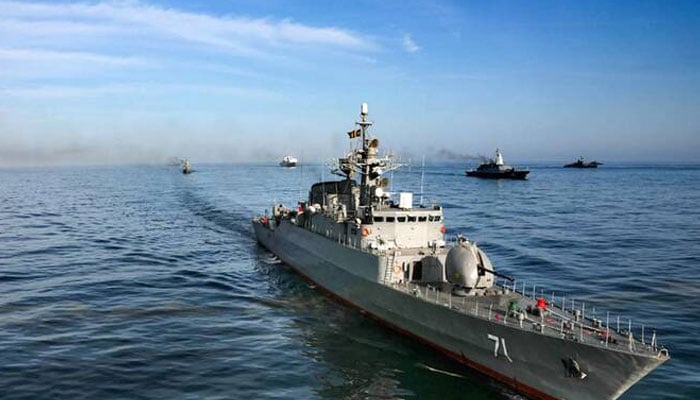
It keeps getting worse. In the latest reports, US Defence Secretary Pete Hegseth has confirmed that an American submarine sank the Iranian frigate IRIS Dena with a torpedo in international waters off the coast of Sri Lanka. The ship was returning to Iran after participating in the 2026 International Fleet Review hosted by the Indian Navy. The Sri Lanka has Navy reported that at least 87 Iranian sailors were killed in the attack, with dozens seriously injured. Nearly 180 crew members had been aboard the vessel. Iran’s foreign minister has described the strike as an “atrocity at sea”, noting that it took place some 2,000 miles from Iran’s shores – far from any plausible claim of immediate threat. Whether viewed through the lens of law, diplomacy or simple humanity, this is a terrible indictment of the Western world. A naval vessel returning from an international event hosted by a third country was attacked in international waters by a state that was not directly threatened by it. If such acts become normalised, they risk eroding the fragile framework that governs maritime conduct and prevents oceans from becoming unregulated battlefields.
The political fallout has also exposed uncomfortable silences. Narendra Modi, whose government hosted the naval review, has faced criticism for failing to condemn the strike against a ship that had been present in India as a guest. To date, New Delhi had issued no message or communication following the attack. For a country that frequently speaks of strategic autonomy, the absence of even a symbolic expression of concern has raised questions about where its diplomatic priorities now lie. Meanwhile, the wider war shows no sign of slowing. According to Iranian state media, the death toll from just five days of US-Israeli attacks has exceeded 1,000, with thousands more wounded. Israeli and American strikes continue across Iranian territory, while Iranian counterstrikes have begun to disrupt oil flows across the Middle East. Diplomatic appeals have emerged, but they remain tentative. The reality is that such escalation often follows the logic of military alliances and overseas bases. If the Middle East becomes a theatre for attacks launched from foreign facilities, retaliation and expansion of the conflict become almost inevitable.
Equally striking is the lack of enthusiasm for the war within the US itself. A Reuters/Ipsos poll suggests that only about a quarter of Americans support the attacks. Even senior lawmakers appear uneasy. Richard Blumenthal has warned after a closed-door briefing that he is “more fearful than ever” that American forces could eventually be deployed on the ground in Iran – a scenario that would carry unpredictable and potentially catastrophic consequences. The confusion surrounding the war’s origins and objectives only deepens the unease. Some officials in Donald Trump’s administration have framed the conflict in ideological or religious terms, while others have justified it on the basis of vague perceptions of an imminent threat. Such explanations do little to reassure a world already weary of wars launched on shifting rationales. What is clear, however, is that the attack on the IRIS Dena represents a dangerous precedent. If powerful states can torpedo foreign naval vessels in international waters with impunity, the foundations of maritime security and international order itself crumble. The international community must move urgently to halt further escalation. Someone, somewhere, must find the political courage to put an end to this madness before the precedent set in the waters off Sri Lanka becomes the spark for a far larger catastrophe.