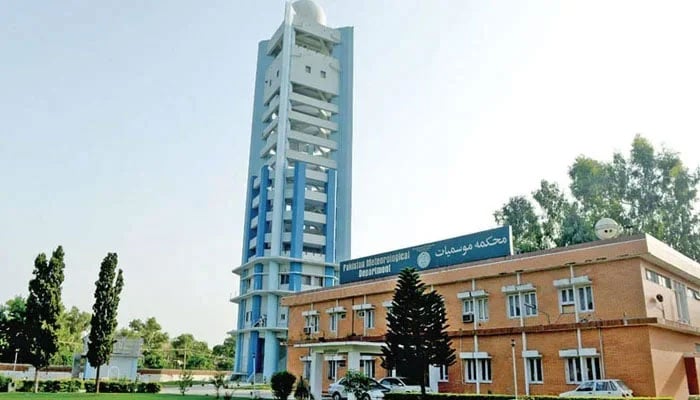
Islamabad:As the country enters the spring season, the Pakistan Meteorological Department (PMD) has forecast near-normal rainfall coupled with above-average temperatures across much of the country, raising both optimism for agriculture and concerns over heatwaves and accelerated glacier melt.
In its March-April-May 2026 outlook released on Wednesday, the PMD highlighted that while precipitation is expected to remain close to seasonal averages, temperatures are likely to stay above normal, particularly in northern regions.
The spring outlook follows a relatively dry winter. During the December-January-February (DJF) 2025-26 period, Pakistan recorded 57 mm of rainfall against the seasonal norm of 77.2 mm, reflecting a 26 percent deficit. Punjab faced the largest shortfall at 52 percent below normal, while Gilgit-Baltistan saw a 48 percent deficit. Khyber Pakhtunkhwa, Balochistan and Azad Jammu and Kashmir also received below-average rainfall. In contrast, Sindh recorded 50 percent above-normal rainfall, thanks to two moderate rainfall spells, though the province’s winter totals remain relatively low.
Winter temperatures across the country were warmer than usual, with a national average anomaly of +1.2°C. Gilgit-Baltistan experienced the highest deviation at +2.2°C. Looking ahead, PMD’s multi-model ensemble forecast suggests that most regions can expect near-normal to slightly above-normal rainfall during spring. Southern Khyber Pakhtunkhwa, adjoining central Punjab, and northern Balochistan may experience positive rainfall anomalies linked to increased westerly disturbance activity. Other regions, including Sindh, central and southern Balochistan, northern KP, Azad Jammu and Kashmir, and Gilgit-Baltistan, are expected to see rainfall close to seasonal norms.
However, temperatures are projected to remain above normal nationwide, with the highest warming signals in northern parts of the country, particularly Gilgit-Baltistan, Azad Kashmir and northern KP, and parts of Sindh.
The PMD warned that elevated temperatures could shorten the Rabi crop season in the plains and accelerate pest activity. Simultaneously, near-normal rainfall may help improve soil moisture and sustain reservoir levels.
The department also cautioned against potential heat waves in southern Punjab and Sindh, early pollen peaks in urban centers, and rapid snowmelt in northern regions, heightening glacier-related risks.
It emphasised that seasonal forecasts indicate general trends and probabilities. Citizens and planners are advised to combine these outlooks with short-term weather updates for effective preparedness.