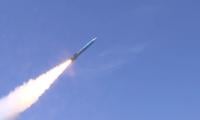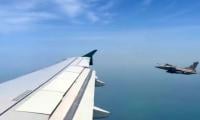
WASHINGTON: The US-led invasions of Afghanistan and Iraq in 2001 and 2003 underlined the dangers of “regime change” wars. But those operations look meticulously planned, compared to the current US and Israeli assault on Iran, the Financial Times reported.
In both Afghanistan and Iraq, the US and its allies were prepared to deploy ground forces — first to overthrow the government and then to restore order and oversee a transition to a new political system.
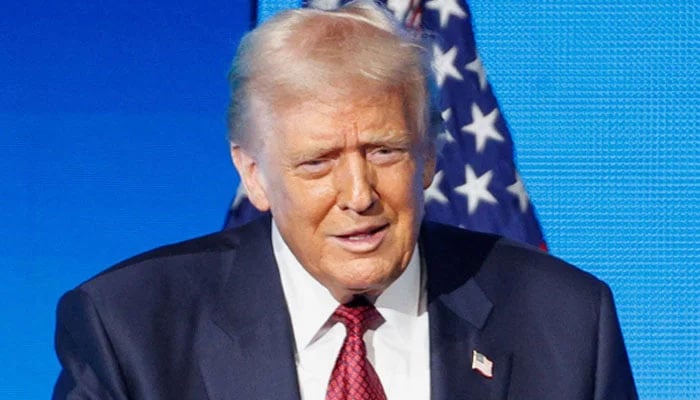
The loss of American lives in the Afghan and Iraq wars — and the subsequent failure of nation building — seems to have convinced Donald Trump that it would be folly to put US soldiers on the ground in Iran. But that means that Trump is now committed to a process for which there is no real precedent: regime change brought about by air power alone.
The killing of Ayatollah Ali Khamenei and several key Iranian military and political leaders on the first day of the war has left the regime reeling. But it does not answer the question of what comes next. “Lay down your weapons” was Trump’s instruction to the Islamic Revolutionary Guard Corps in Iran.
“Take over your government” was his advice to the people of Iran. These instructions were tellingly short on specifics. The IRGC is being bombed from the air. Even if its troops decided to abandon their weapons, there is no alternative authority or army inside Iran to surrender them to.
The Iranians who have been protesting so bravely against the Islamic regime might also legitimately wonder, how they are meant to simply take over the government. Trump assured them that: “When we are finished, it will be yours to take.” Really?
The hope seems to be that the decapitation of the Iranian leadership, and the destruction of the regime’s military might, will lead to some kind of organic and spontaneous transition to a new political system — without the need for further US intervention. But there is little reason to believe that will work.
From the point of view of the Netanyahu government, the current set of circumstances is a historic opportunity to take out a dangerous foe. The Israelis presumably have calculated that they can handle Iran’s retaliatory missile assaults. And it is highly unlikely that Israeli troops will ever be called upon to deploy in Iran. So it will be others who are left to deal with the chaotic aftermath of the bombing campaign.
The strategic calculations for the Gulf states and the US itself are much more complicated. The United Arab Emirates, Qatar, Bahrain and Saudi Arabia have marketed themselves to the world as affluent safe havens for people and capital. But they have all now been hit or targeted by Iranian missiles.
If the conflict is somehow brought to a swift conclusion — or Iran runs out of missiles and drones — then the Gulf states may be able to dismiss the current hostilities as a bad few days and return to business as usual. But if they are permanently affected by a prolonged war, their safe-haven status will be at serious risk.
For some years, two very different Middle East have existed side by side. Countries like Syria, Libya and Lebanon were engulfed by conflict, even as the Gulf and Saudi Arabia boomed. The Trump administration hoped to spread the peace and prosperity of the Gulf outwards to the rest of the Middle East — with diplomatic normalisation with Israel at the heart of the process.