The establishment of new hospitals on the outskirts of Rawalpindi city has become need of the hour as the city’s population has grown rapidly but healthcare infrastructure has not been expanded at the same pace.
As the decades-old allied hospitals of Rawalpindi Medical University are struggling under a patient load far beyond their capacity. Institutions that once stood as symbols of reliable public healthcare are now stretched to their limits.
In this situation local residents feel the pressure most deeply. Many believe that as taxpayers and permanent residents, they should at least have timely access to basic medical care in their own city. Instead, they find themselves competing for appointments in hospitals that were meant to serve their community first. The frustration is growing, and it is understandable because healthcare is a basic right, not a luxury.
Keeping in view the situation, modern facilities in the city suburbs could absorb a significant portion of patients and ease congestion at the allied hospitals.
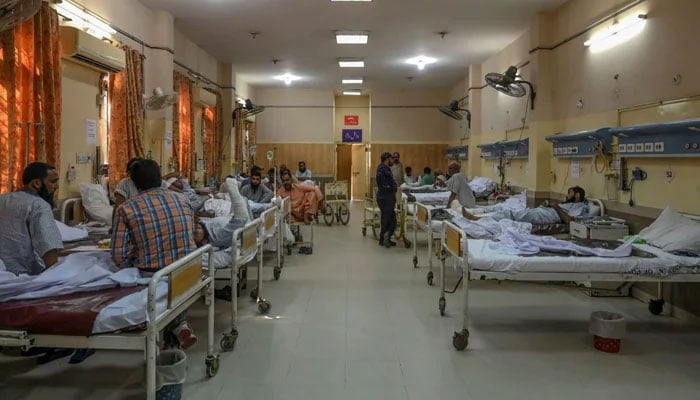
Hapless patients sit for hours in crowded corridors of the Holy Family Hospital, Benazir Bhutto Hospital and District Headquarters Hospital. The situation is painful to witness as many of them having travelled long distances, only to be told to return another day or given surgery dates months away.
Every morning, families arrive soon after the sunrise to secure a place in the queues. Some come from remote villages while others travel more than 30 kilometres from different tehsils of the district, hoping that these major hospitals will provide the treatment they cannot find elsewhere.
For many, this journey means spending money they can barely afford on transport, food and medicines. By the time they reach the registration counter, exhaustion and anxiety are already visible on their faces.
The crisis did not develop overnight. These hospitals have earned a reputation for offering comparatively better care at low cost. As a result, patients come not only from Rawalpindi but also from other districts and even neighbouring regions — Khyber Pakhtunkhwa and Azad Kashmir.
In recent years, influx from tribal areas and parts of KPK has further increased the burden. While it is natural for public hospitals to serve anyone in need, the sheer number of incoming patients has overwhelmed the existing facilities.
The consequences are serious. Wards remain full, emergency rooms are overcrowded and doctors are forced to attend large number of patients than is humanly possible in a day. Those who need operations are often given dates several months ahead.
In some cases, patients return home without consultation because there are simply too many people waiting. Long queues outside OPDs have become a daily scene, reflecting both the demand for affordable healthcare and the system’s inability to cope with it.
There are practical steps that can help ease this burden. One proposal is to introduce a priority mechanism for local residents, perhaps through separate counters where domicile certificates can be verified at the time of registration. This would not deny treatment to anyone, but it could ensure that the local population is not left behind in its own public hospitals.
Another important measure is to strengthen and upgrade Tehsil Headquarters (THQ) hospitals so they can handle more cases independently.
With better infrastructure, equipment and trained staff, many patients would not need to travel to tertiary care hospitals in the first place. Decentralising services would allow people to receive treatment closer to their homes and reduce the daily influx into Rawalpindi’s major hospitals.
A major challenge remains the shortage of doctors, nurses and paramedical staff. The government could address this by hiring fresh medical graduates as paid internees. This would provide immediate manpower to overcrowded hospitals while giving young doctors valuable hands-on experience.
Compared to recruiting senior specialists, this step would be relatively cost-effective and could be implemented quickly.At the same time, increased investment in healthcare infrastructure is essential. More beds, updated diagnostic equipment and improved management systems would strengthen service delivery.
A clear and well-enforced referral system is equally important. Patients should be directed to tertiary care hospitals only when necessary, while routine and less complicated cases are handled at THQs.
The situation at the RMU’s allied hospitals is a warning sign. Without timely intervention, the strain will only intensify as the population continues to grow. The people of Rawalpindi deserve accessible and dignified healthcare.
It is now up to the government to recognise urgency of the matter and take meaningful action. The pressure on these hospitals is visible every day while the cost of inaction will be measured in human suffering.
The writer can be reached at [email protected]