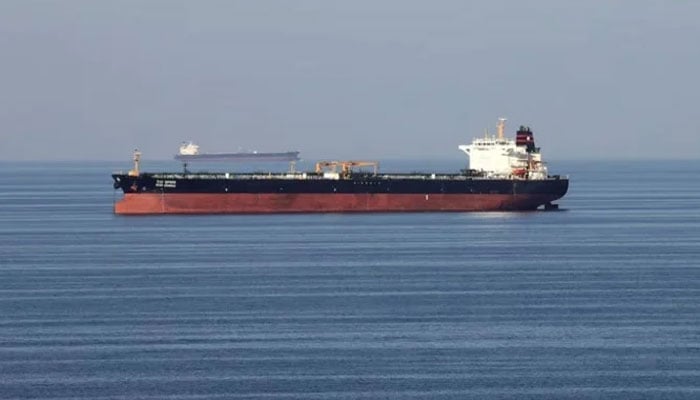
KARACHI: Iran has officially announced the closure of the Strait of Hormuz, a key waterway responsible for 20 per cent of global LNG shipments and a major portion of the world’s oil exports.
Iran’s Revolutionary Guards issued radio warnings to vessels, stating that no ship would be allowed to pass through the strait, escalating tensions over this vital global shipping chokepoint. This move poses an immediate threat to international energy markets, particularly Europe, which has become heavily reliant on LNG imports following the shutdown of Russian pipelines. With European gas storage already critically low, the closure could spark a severe energy crisis, sending natural gas prices soaring.
The global shipping industry braces for massive disruptions, with airlines and maritime routes across the Middle East set to halt operations, exacerbating the strain on global trade. The International Maritime Organization is expected to issue urgent alerts to vessels, urging them to avoid the area or reroute, adding additional pressure to an already volatile global economy. Its closure would have profound economic consequences, especially for Europe’s natural gas markets. The strait serves as a critical transit route for both oil and liquefied natural gas (LNG), and its disruption would ripple through global energy markets, sending prices soaring and causing supply shortages across key regions.
Analysts at Independent Commodity Intelligence Services (ICIS) investigated the impact of a three-month closure of the Strait of Hormuz on European gas markets using the Gas Foresight modelling suite, running a Hormuz disruption scenario alongside a base case. Potential three-month closure of the Strait of Hormuz could cause a major disruption to Europe’s natural gas market, according to a new analysis from ICIS. The closure could lead to a sharp rise in the price of natural gas traded on Europe’s leading hub, the Dutch TTF.
This heightened competition would likely result in a bidding war for available cargoes, with Europe facing the challenge of outbidding Asian nations for limited LNG supplies. The reduced availability of LNG could result in prolonged energy shortages, especially during peak demand periods.
In addition to LNG, the Strait of Hormuz is a vital route for the transportation of crude oil and condensates, with approximately 20 million barrels of oil transiting the strait daily — equating to nearly $500 billion in annual trade. The closure of this key artery would not only send oil prices skyrocketing but also trigger broader economic repercussions, especially for countries that depend heavily on Gulf oil and gas exports. Iran, Iraq, Saudi Arabia and the UAE are among the largest exporters of crude through Hormuz, and any interruption to this flow would impact global energy prices.
The strait’s closure would lead to significant disruptions in oil markets, particularly in Asia, where 84% of crude oil passing through Hormuz is destined. In turn, global trade, manufacturing, and energy production would face supply chain disruptions, leading to inflationary pressures and potentially triggering a recession in major economies.