Over the past decade, Middle Eastern wars have come with short timelines. In 2024, Iran’s Islamic Revolutionary Guards Corps (IRGC), working alongside allied groups in Iraq, Lebanon and Yemen, exchanged fire with Israel. The confrontation lasted six days.
In 2022, the Gaza-Israel flare-up known as Operation Breaking Dawn lasted three days. In 2021, fighting between Hamas and Israel continued for 11 days. In 2020, the United States and Iran faced off after the killing of Qassem Soleimani. Seven days.
In 2019, the Saudi Arabia-Houthi escalation ran for about a week. Only in 2014 did Operation Protective Edge stretch into a prolonged campaign — 50 days of sustained combat.
In 2006, the Israel–Hezbollah War lasted 34 days. In the Middle East, war has become compressed — measured not in years, but in days.
The current conflict has already seen joint US-Israeli strikes on Iran and Iranian missiles and drones fired towards Israel and US bases across the Middle East. This pattern suggests a tit-for-tat dynamic, not an automatic slide into an all-out regional war. In historical precedent, even sizable military exchanges stayed contained rather than cascading into full regional conflagration.
Since 2006, the script has been predictable. An opening strike. A high-visibility shock.
Calibrated retaliation. Urgent mediation. Ceasefire. Duration? Usually three to 14 days.
Two exceptions stand out: 2006 stretched to 34 days. 2014 ran for 50.
The region has repeatedly chosen escalation with ceilings. Yes, force is demonstrated — but total war is avoided.
The most likely trajectory of the current conflict is escalation followed by negotiation pressures, temporary ceasefires, rather than total annihilation. Gulf states, Turkey, Europe, and China will push for de-escalation if conflict risks oil disruption.
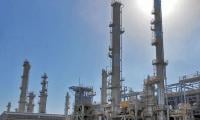
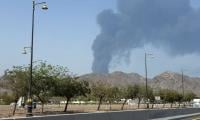
No regional capital wants burning oil fields, collapsing currencies and suspended trade routes. Escalation may occur. Annihilation is unlikely. Escalation, if it comes, is more likely through proxies than through formal state-on-state invasion.
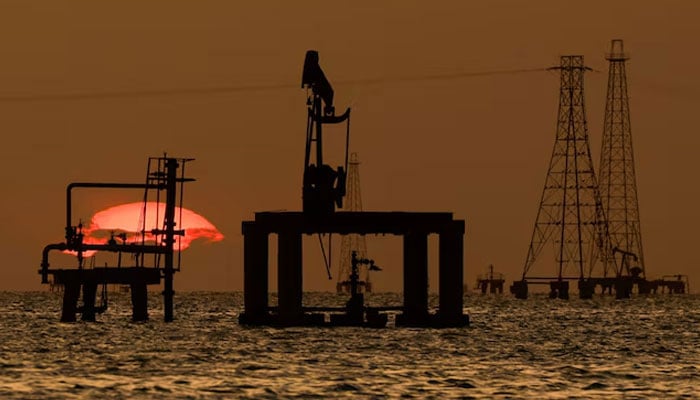
Remember, the true escalation trigger is not rhetoric; it is Hormuz. If tanker traffic is disrupted, escalation ceases to be military and becomes global. For oil-importing economies like Pakistan a sustained energy shock could reverse fragile gains within weeks.
A total regional war serves no major actor. Israel risks multi-front saturation. Iran risks infrastructure devastation. Saudi Arabia and the Gulf states would see oil infrastructure and Vision 2030 ambitions exposed. Europe fears another energy shock. China depends on uninterrupted Gulf energy flows. Even the United States faces inflation, election cycles and fiscal constraints. Total war destroys balance sheets before it redraws borders. The region’s powers understand this arithmetic.
The only variable that breaks this pattern is miscalculation — a missile that hits a high-value target, mass civilian casualties, or a strike that forces leadership into domestic overreaction.
Red alert: History suggests restraint. It does not guarantee it.
The most realistic outcome is not total regional war. It is a period of heightened military exchange and deterrence, followed by intense economic and diplomatic pressure to de-escalate. In the Middle East, wars begin loudly. They usually end before they consume the region.
The writer is an Islamabad-based columnist.