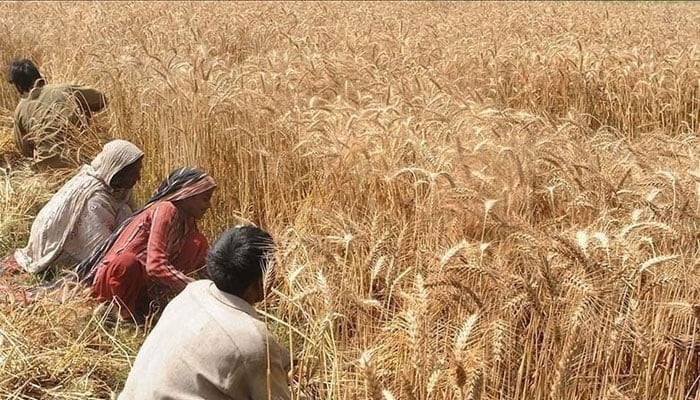
HYDERABAD: Wheat harvesting has begun in southern Sindh, and the new crop is ready to enter markets, but the Sindh government has not announced the wheat price.
The Sindh Chamber of Agriculture has demanded that the government fix the wheat support price at a minimum of 4,000 rupees per 40kg and open wheat procurement centers across the province from March 15, besides purchasing at least 1.5 million metric tonnes of wheat from growers.
In a press statement issued from The Sindh Chamber of Agriculture headquarters in Hyderabad, Patron-in-Chief and Central President Professor Dr Syed Nadeem Qamar said wheat harvesting has started in several parts of southern Sindh, including Jhuddo taluka of Mirpurkhas district, Kunri taluka of Umerkot district, and Tando Bago taluka of Badin district.
The growers said the harvested wheat is ready to be supplied to markets. They appealed to Chief Minister Syed Murad Ali Shah to immediately announce a minimum support price of 4,000 rupees per 40kg and ensure the official purchase of at least 1.5 million metric tons of wheat from farmers to avert any potential food security crisis in the country.
The growers further stated that wheat cultivation this year has declined by 32 percent, which could pose serious risks to national food security. They urged the government to promptly establish procurement centres from March 15 and purchase wheat from growers at the proposed rate.
Prof Qamar said that due to flawed wheat cultivation and pricing policies, a record decline in wheat acreage has been observed, which is not a good sign for the country. He expressed confidence that the government, which has always supported farmers, would again fix the wheat price at 4,000 rupees per 40kg, procure 1.5 million metric tons, and maintain sufficient stocks in government godowns to prevent any future food security crisis.