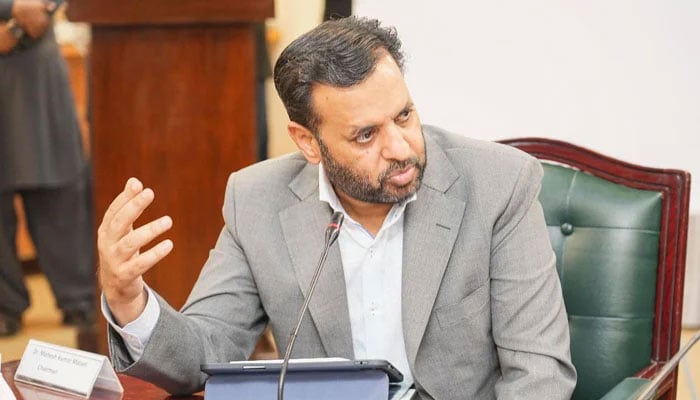
ISLAMABAD: The reuse of contaminated syringes at Kulsoom Bai Valika Hospital in Karachi triggered an HIV outbreak that infected 84 children, Federal Health Minister Syed Mustafa Kamal told lawmakers on Friday, saying all affected children had been traced, registered and put on antiretroviral treatment.
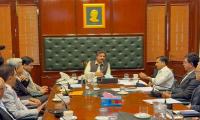
The disclosure came during a meeting of the National Assembly Standing Committee on National Health Services, Regulations and Coordination, where members sharply criticised the health ministry over what they described as serious gaps, missing provincial data and weak follow-up in its latest briefing on the country’s HIV situation.
Lawmakers said the ministry’s written submission regarding HIV situation failed to present a complete national picture, with key figures either missing or poorly explained. Members noted that provincial data from Balochistan was absent, while information on several previously identified patients and outbreaks was either incomplete or not updated.
MNA Dr Shazia Soomro said the report was so poorly prepared that if shared with international partners, it would raise questions about Pakistan’s credibility and capacity to manage the epidemic.
According to details discussed in the meeting, around 350,000 HIV cases have been reported over time from Sindh and Punjab, reflecting a steep rise in infections. Members were told that 20,000 new cases were recorded in 2018–19, while another 9,700 cases were reported in the first nine months of 2024. However, the committee observed that the ministry’s documentation did not adequately explain trends, transmission routes or the response in high-burden districts.
The committee also flagged missing follow-up on patients identified in previous outbreaks and members pointed out that dozens of HIV-positive patients identified at a major tertiary care hospital in Multan were mentioned without any update on their treatment status, while data relating to hundreds of cases reported during the Kot Momin outbreak in Sargodha in 2018–19 was not included in the ministry’s submission. Lawmakers questioned how such gaps could persist years after major outbreaks had already drawn national and international attention.
Female members of the committee expressed particular concern over what they described as the under-reporting of cases from Khyber Pakhtunkhwa,Islamabad and Balochistan, saying thousands of infections in recent years did not find proper mention in the report placed before the committee.
They also warned about the growing number of HIV cases among children and young people, linking several outbreaks to unsafe injection practices, reuse of syringes and poor infection control in healthcare settings.
Responding to the criticism, Health Minister Mustafa Kamal said the rise in reported cases was partly the result of expanded screening and testing, as the number of HIV screening and treatment centres had been increased significantly in recent years. He said more people were now coming forward for testing, leading to higher detection of cases.
The minister acknowledged that the problem was long-standing and could not be resolved within a few months, but said the ministry was working to strengthen surveillance, expand access to treatment and improve coordination with provinces.
Officials briefed the committee that reported cases were being tracked and that screening facilities had been expanded across the country. The committee directed the ministry to submit a consolidated progress report at its next meeting, detailing actions taken to curb HIV transmission, improve treatment coverage and strengthen monitoring of programmes, including the role of non-governmental organisations and the use of donor funds.
The meeting also highlighted broader governance concerns in the health sector. Members criticised the Islamabad Healthcare Regulatory Authority for providing outdated information and failing to submit clear progress reports on enforcement and clinical oversight. The committee asked the ministry to ensure that future submissions were backed by complete documentation and on-ground assessments rather than generic summaries.
Separately, lawmakers raised concerns over governance issues in the Pakistan Nursing and Midwifery Council, calling for verification of credentials of some council members and seeking a detailed briefing on reforms in the nursing sector. The health minister suggested that the matter be taken up in an in-camera session to allow frank discussion on sensitive regulatory and legal issues.
Members also expressed alarm over delays and weak preparedness in projects under the Public Sector Development Programme, urging the ministry to present detailed briefings on utilisation of funds, stalled schemes and timelines for completion. The minister told the committee that budgetary constraints in the past year had affected the pace of development work, but said new schemes had recently been approved and tenders would be floated shortly.
As the committee wrapped up its deliberations, members made it clear that the country’s HIV response could not be built on partial data and reactive measures. They called for credible surveillance, strict enforcement of infection control in healthcare facilities and transparent reporting to prevent repeat outbreaks like the one that infected dozens of children in Karachi, warning that the cost of inaction would continue to be paid by the most vulnerable.