Balochistan requires rapid economic development to improve the lives and living standards of its people. It has often been argued underdevelopment is one of main causes of unrest and terrorism in the province. The state has been aware of this narrative and has attempted to counter it by creating economic opportunities, allocating additional resources, and even drawing support from other provinces.
To further strengthen these efforts and ensure rapid growth, Pakistan and China, while designing China–Pakistan Economic Corridor (CPEC), paid special attention to development of Balochistan.
Analysis of CPEC’s first phase (CPEC-I) indicates it opened the door to transformative opportunities for Balochistan.
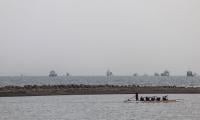
Several economic and connectivity projects were launched, including Gwadar International Airport, Gwadar Port, Gwadar Free Zone, an extensive road network, and Bostan Special Economic Zone (SEZ). Gwadar Port was developed to become one of Pakistan’s major ports, and establishment of Free Zone has further enhanced its importance. The zone is expected to attract around $10 billion in investment in coming years. Gwadar International Airport was constructed with a $230 million grant from China.
The port and airport are rapidly transforming Gwadar into a connectivity hub. Once road and railway infrastructure is fully completed, Gwadar is expected to become a focal point of regional — and to some extent global — connectivity and trade. This would generate enormous opportunities for both Balochistan and Pakistan. An international study examining the use of CPEC route and Gwadar highlighted its potential benefits for Pakistan and China.
According to the study, Gwadar Port and CPEC route could significantly reduce China’s shipping time: from 27 to 7 days for Oman, 33 to 12 days for Saudi Arabia, 32 to 8 days for Kuwait, 49 to 28 days for the Netherlands, 50 to 29 days for Germany, and 48 to 27 days for France. Reduced travel time would lower transportation costs. Estimated savings per container (in US dollars) would be 1,857 for Oman, 1,457 for Saudi Arabia, 1,457 for Kuwait, 1,357 for the Netherlands, 1,357 for Germany, and 1,357 for France. Overall, China and its trade partners could potentially accrue benefits worth $71 billion.
These developments are also projected to generate $10–12 billion annually for Balochistan and Pakistan through fees and services. As a focal region, Balochistan stands to be a primary beneficiary.
Gwadar and its port also hold special appeal for landlocked Central Asian states, which view it as a gateway to global markets. Their interest was highlighted during recent visits of presidents of Kazakhstan and Uzbekistan to Pakistan. Countries from ASEAN region have also shown interest in linking with Gwadar Port and investing in Gwadar Free Zone, as it would provide them easier and more competitive access to European Union markets and western China.
Alongside economic projects, China and Pakistan have focused on social development in Balochistan. The Chinese government provided a $12.7 million grant for a 1.2 million gallons per day desalination plant in Gwadar and a $100 million grant for construction of a hospital designed to serve Gwadar and surrounding areas with both primary and specialised healthcare services. Additionally, 4,000 solar units were distributed to families in Gwadar to reduce electricity costs and address loadshedding. The China Overseas Port Holding Company (COPHC), in collaboration with partners, also established Pak-China Friendship Forest.
One of the most significant initiatives is a $10 million Chinese grant for modern technical and vocational institutes. The Shandong Institute of Commerce and Technology, Gwadar Port Authority, University of Gwadar, and COPHC jointly operate the institute. It offers free three-year diploma programmes and six-month short courses.
These developments suggest a transformation in people’s lives and gradual emergence of Balochistan as a future economic and connectivity hub.
Following the first phase of CPEC, several countries, including United States, have shown interest in investing in Balochistan. Once CPEC projects become fully operational, they are expected to generate opportunities across multiple sectors, potentially making Balochistan more prosperous and attractive within the region.
However, according to the author, such progress is opposed by terrorist groups and hostile foreign actors, who view positive change as a threat to their narrative of deprivation and exploitation. They allegedly seek to create instability to discourage investment and development. The article claims some foreign countries, including India and Afghanistan, provide financial, logistical, and narrative support to such elements.
The author also argues Israel has joined what he describes as an anti-Pakistan alignment, alleging it views Pakistan’s support for Gaza and Iran as contrary to its regional objectives.
The article states following the completion of CPEC-I and launch of CPEC-II, hostile actors have intensified their activities. It cites a recent attack by Balochistan Liberation Army (BLA) as part of a broader attempt to create instability and disrupt development in Balochistan, thereby undermining prospects for economic progress and improved living standards for people of the province.